Can Chickens Eat Peppers? Sweet, Hot, Seeds and Serving Tips
Yes: your chickens can have plain pepper fruit, including sweet bell peppers and hot varieties, as an occasional treat. The useful boundary is simple: serve the fruit in manageable pieces, keep it within your flock’s treat budget, and don’t toss pepper leaves or stems into the run.
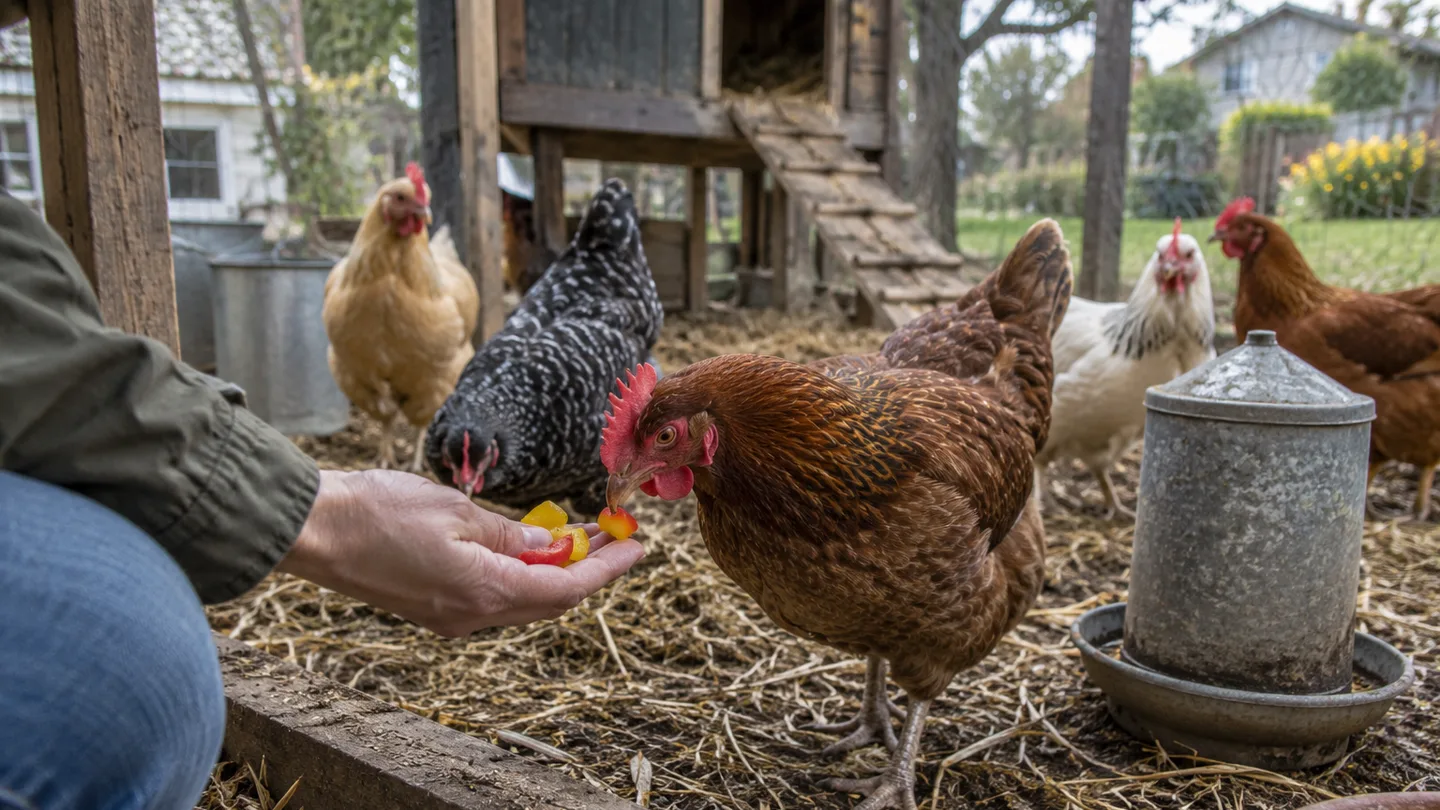
Quick answer: pepper fruit is generally safe, within the under-10% treat budget
Sweet peppers, hot peppers, and the small seeds inside the fruit can all be offered plain. Think of pepper as a bit of variety, not as feed: your birds still need a nutritionally complete ration suited to their age and purpose. The practical rule is to keep treats, peppers included, to a modest share of what your flock eats overall.
That answer applies to the pepper fruit, not automatically to every green part of the plant. A pepper in your kitchen and a handful of pulled-up garden foliage are different offerings. If you aren’t sure what plant a clipping came from, leave it out of the run.
Green, red, yellow, or orange: color and ripeness don’t change the basic answer
Green bell peppers are simply less ripe than the colored fruits you may find on the counter. Red, yellow, and orange peppers are fine to offer too. For serving purposes, color mostly matters because birds may prefer one texture or flavor over another; it doesn’t change the portion rule.
You don’t need to wait for a pepper to change color before sharing a little. A firm green pepper can be chopped just like a ripe one. If it’s unusually tough, cut it smaller so your smallest or least assertive bird can manage a piece.
Keep the distinction clear: green pepper fruit is not the same thing as pepper leaves or a green stem. “Green” describes both in everyday speech, but it doesn’t make the plant parts interchangeable. If you’re comparing other garden foods, can chickens eat tomatoes is another useful question to check before sharing kitchen or garden produce.
Hot peppers: chickens may not sense the burn, but the treat limit still applies
Jalapeños and other hot pepper fruits aren’t automatically off the menu just because you find them hot. Your own taste is a poor test of what a chicken will find appealing, so offer a small plain piece and watch whether your birds choose to eat it. Individual interest can vary.
Don’t turn that into a reason to serve more. Hot peppers are still treats, not a parasite treatment, health tonic, or substitute for feed. Skip hot sauce, chili seasoning, and pepper products with salt, sugar, oil, or ingredients you can’t identify. A plain pepper is easy to assess; a prepared human dish is not.
I’d also avoid using a bird’s reaction to hot food as a home remedy test. If a hen seems unwell after eating an unknown plant or a questionable leftover, take away the food and contact a veterinarian or your local extension office for advice.
Seeds, pith, and stalk: sort edible fruit from the parts to skip
You don’t need to pick the small seeds out of a pepper before serving it. The soft pale ribs inside, often called pith, are part of the fruit too. The tough green stalk is different: trim it off because it’s fibrous, awkward to peck, and offers little reason to include it.
That’s a practical sorting rule, not a warning that every seed is alike. Seeds from an edible pepper fruit aren’t a reason to reject the whole pepper. Don’t generalize from them to unidentified seeds, garden clippings, or the seeds of unrelated plants. When you can’t identify a plant or food, don’t make your flock the test.
The garden rule: keep pepper leaves and vines out of the run
Keep pepper foliage, stems, and vines out of your birds’ feed. The safe, useful part to share is the fruit; the rest of the plant isn’t a treat you need to offer. This is a cautious boundary around garden plants, especially when you’re pruning or clearing a bed and might be tempted to toss a bundle of green material to the hens.
That caution matters with unfamiliar ornamental peppers too. A plant may look like a kitchen pepper, but appearance alone doesn’t tell you what it is or whether it has been treated with a product unsuitable for birds. Don’t feed clippings from an unidentified plant. If your flock has access to the garden, use a barrier or collect trimmings before opening the run.
For the same reason, don’t assume that a food being edible for people means every part of its plant belongs in a chicken feeder. Keep the fruit-and-foliage distinction in mind when reading about can chickens eat tomatoes; the specific part offered still matters.
Use the under-10% treat ceiling, not a made-up pepper-per-hen dose
A useful planning rule is to keep all treats together below about 10% of your flock’s overall diet, leaving the great majority to complete poultry feed. Treat this as a practical ceiling, not a precise medical cutoff and not a conversion such as “one gram of pepper per hen.” Fresh produce contains water, birds vary in how much they eat, and a flock’s age and feed intake change what a sensible serving looks like.
That’s why a fixed pepper-per-bird number can mislead. A growing chick, a laying hen, and a bird that already fills up on scraps don’t have the same needs. Count pepper alongside every other extra—fruit, kitchen scraps, scratch grains, and treats from visitors—not as a special allowance on top of them. If treats are replacing feed at the feeder, cut back the extras.
Here’s a concrete kitchen example, not a dose: for four hens, cut a quarter of a bell pepper into small pieces and scatter them where more than one bird can reach. It’s a modest way to offer a taste without setting out a whole pepper as an open-ended snack. I wouldn’t interpret an eager flock finishing it as proof that a larger serving is nutritionally useful; appetite and a balanced ration are separate questions.
For ration-specific context, consult poultry extension guidance on complete layer rations and treat proportions. Check the guidance for your birds’ stage of life rather than applying a laying-hen ration rule to chicks.
A practical serving: wash, cut, and scatter manageable pieces
Give the pepper a rinse, remove the stalk, and cut the fruit into pieces your smallest bird can peck and swallow. Pieces around half an inch (about 1.3 cm) are a kitchen starting point, not a universal safety threshold. Go smaller for young or small birds, and adjust if your hens tend to gulp rather than peck.
- Wash the whole pepper before cutting, especially if soil or garden residue is on the skin.
- Trim away the stalk. Leave the soft inner ribs and seeds in place if you like.
- Cut a small portion into bite-size pieces rather than putting out a whole pepper.
- Scatter pieces across a clean area or shallow tray so a dominant hen can’t guard the entire serving.
Scattering is useful for access, not because your hens need a special feeding ritual. Watch the first few moments: if one bird monopolizes the pieces, spread them farther apart or offer less at once. You don’t need a fixed weekly pepper day. Treats can be occasional, and skipping them is fine.
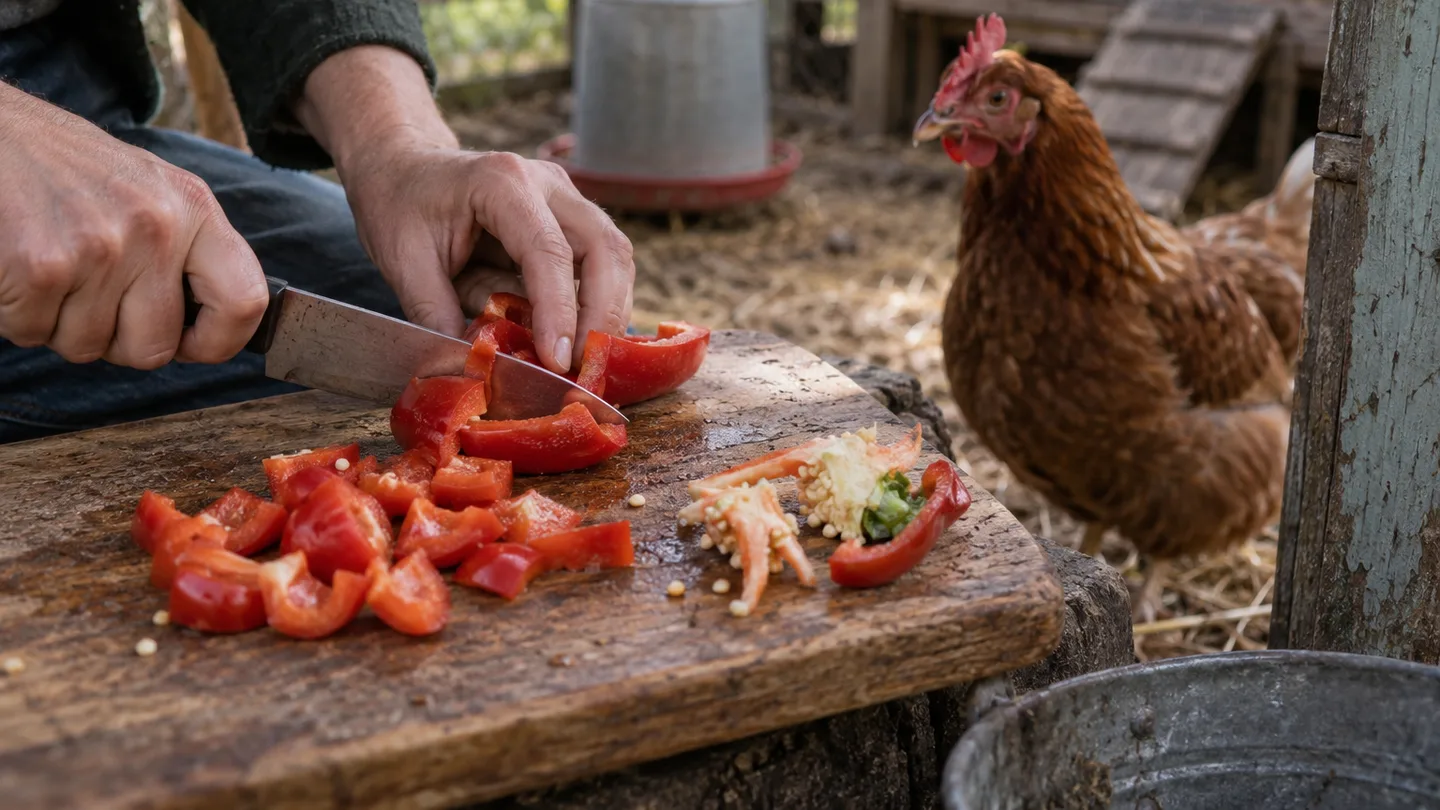
If you’re planning a varied treat plate, compare portions and preparation before adding several foods at once. For another vegetable option, see can chickens eat broccoli.
Fresh, cooked, pickled, or sauced? The preparation changes the answer
Plain fresh pepper is the simplest choice. Plain cooked pepper can also be offered once it has cooled, provided it hasn’t been cooked with ingredients you wouldn’t give your birds. Don’t serve it hot from a pan; a cooled scrap is easier to handle and assess.
Pickled peppers, salty canned peppers, hot sauce, and heavily seasoned leftovers are poor choices. They can contain salt, oil, vinegar, sugar, or spice blends, and a label or recipe may include ingredients you don’t want to feed. If you can’t verify what’s in the dish, don’t serve it. Save the seasoned portion for people and offer a small piece of plain pepper instead.
Frozen pepper is a separate preparation question, but the same ingredient check applies: plain, unseasoned pepper is different from a sauced or salted frozen mix. Thaw and cut it before offering it so you can judge the size and condition of each piece.
Clear leftovers before overnight, and don’t serve spoiled pepper
Fresh cut produce doesn’t belong in the run indefinitely. Pick up what your birds haven’t eaten before it sits overnight, especially in warm or damp weather. A brief supervised treat is easier to manage than a pile of scraps that gets trampled into bedding or forgotten behind a feeder.
Discard pepper that is moldy, slimy, or sour-smelling. Don’t try to rescue a spoiled piece by cutting off the visible patch and serving the rest. If the food’s condition is questionable, the small value of saving a scrap isn’t worth making the decision harder.
Use the same common-sense check for other leftovers: if you wouldn’t confidently identify the food or its ingredients, leave it out. This is a handling rule, not a claim that every uneaten fresh pepper becomes unsafe at a precise hour.
Peppers are enrichment, not a dewormer or a replacement for complete feed
A pepper can give your hens something different to peck at, but don’t count on it to treat worms, correct a deficiency, or improve laying. Those are health or nutrition questions, not jobs for a snack. If you suspect parasites or notice a bird acting unwell, ask a veterinarian rather than trying to solve the problem with hot peppers or another folk remedy.
Keep the 10% treat budget from the earlier section in view, and let complete feed do the nutritional heavy lifting. A varied handful of extras can look generous while quietly displacing the ration your birds rely on. My judgment: a small treat that’s easy to portion is better backyard practice than a large scatter of scraps whose ingredients and quantity you haven’t checked.
Keep a veterinarian or your local extension office in mind if a bird seems unwell after eating an unidentified plant or spoiled food. Take a photo or keep the plant label if you have one; that can help you describe what was available. Don’t wait for a home remedy to work if symptoms are concerning.
This week, try one plain, washed pepper cut into manageable pieces, and remove the leftovers afterward. Keep the leaves and stems out of reach. That’s enough to answer the practical question without turning a treat into a new feed routine.
Can baby chicks eat peppers?
Chick starter should remain the main food for young chicks. Pepper isn’t necessary. If you decide to offer a taste, keep it tiny and finely chopped, and check that the chicks have access to suitable grit for foods beyond their starter. When in doubt, wait and ask your feed supplier or veterinarian what fits the chicks’ age.
Can chickens eat frozen peppers?
Plain frozen pepper can be thawed, checked, and cut into manageable pieces. Skip frozen mixes that are salted, sauced, or seasoned. Don’t offer a hard frozen chunk that your birds can’t peck comfortably.
Will hot peppers make a hen’s eggs taste spicy?
A pepper treat isn’t a dependable way to make eggs taste hot. If an egg tastes unusual, don’t assume pepper is the cause; look at the full feed and storage picture, and seek advice if the change comes with signs that a hen is unwell.
Frequently Asked Questions
Can baby chicks eat peppers?
Their chick starter should remain their main food. If you offer pepper, wait until they’re reliably eating starter, give only a tiny finely chopped amount, and provide chick-appropriate grit for foods beyond starter.
Can chickens eat frozen peppers?
Plain frozen pepper can be offered after thawing and chopping it into manageable pieces. Avoid salted or seasoned frozen products.
Will hot peppers make a hen’s eggs taste spicy?
Normal pepper treats aren’t expected to make eggs taste hot; capsaicin’s burning sensation doesn’t transfer into an egg as a spicy flavor.