Can Chickens Eat Pears? Skip the Core and Cut Small
A ripe pear is fine for a healthy hen as an occasional treat. Cut away the core, offer small pieces of flesh, and keep the regular complete feed in the lead; pears are a snack, not a supplement your flock needs.
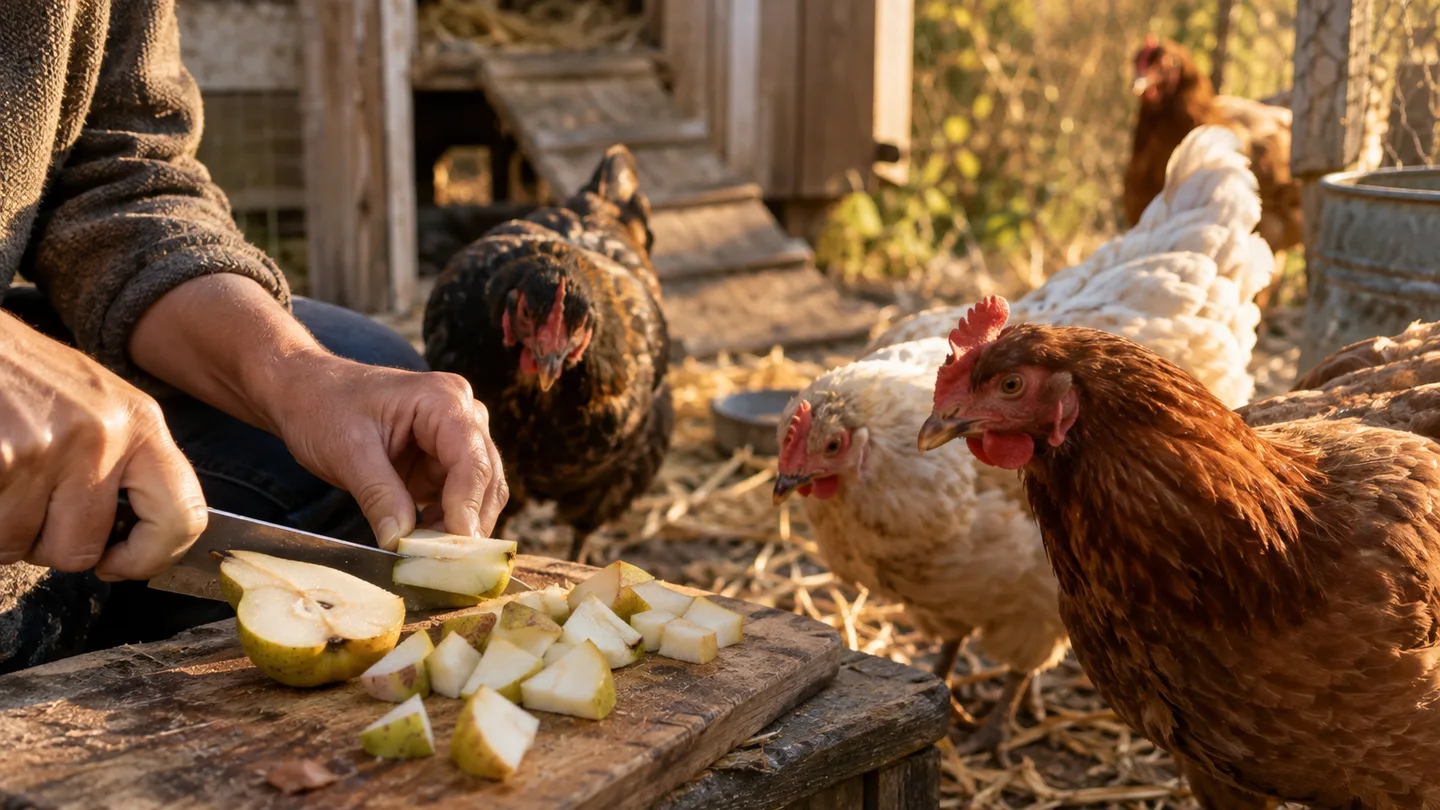
The short version of “can chickens eat pears” is yes, with a little preparation. The useful distinction isn’t pear versus no pear. It’s clean, manageable flesh versus a hard core, an oversized chunk, or fruit left to turn sticky in the run.
Yes—pear flesh is an occasional treat, not a replacement for feed
Healthy adult chickens can have ripe pear flesh now and then. Keep their normal complete ration available as the main food. A pear can add variety, but it doesn’t replace the balance of nutrients your birds get from feed formulated for their age and purpose.
I’d treat a pear as a small shared extra, not a daily feeding project. That keeps the routine simple and makes it less likely that birds fill up on scraps instead of their ration. If your hens are laying, growing, or recovering from a health problem, ask a poultry veterinarian or local extension office before making a treat a regular part of their diet.
For a quick backyard decision: if the fruit is sound, the birds are eating their usual feed, and you can prepare bite-sized pieces, a modest serving is reasonable. If any of those conditions is missing, skip the pear that day.
The core is the part to leave out—not a reason to panic over one stray seed
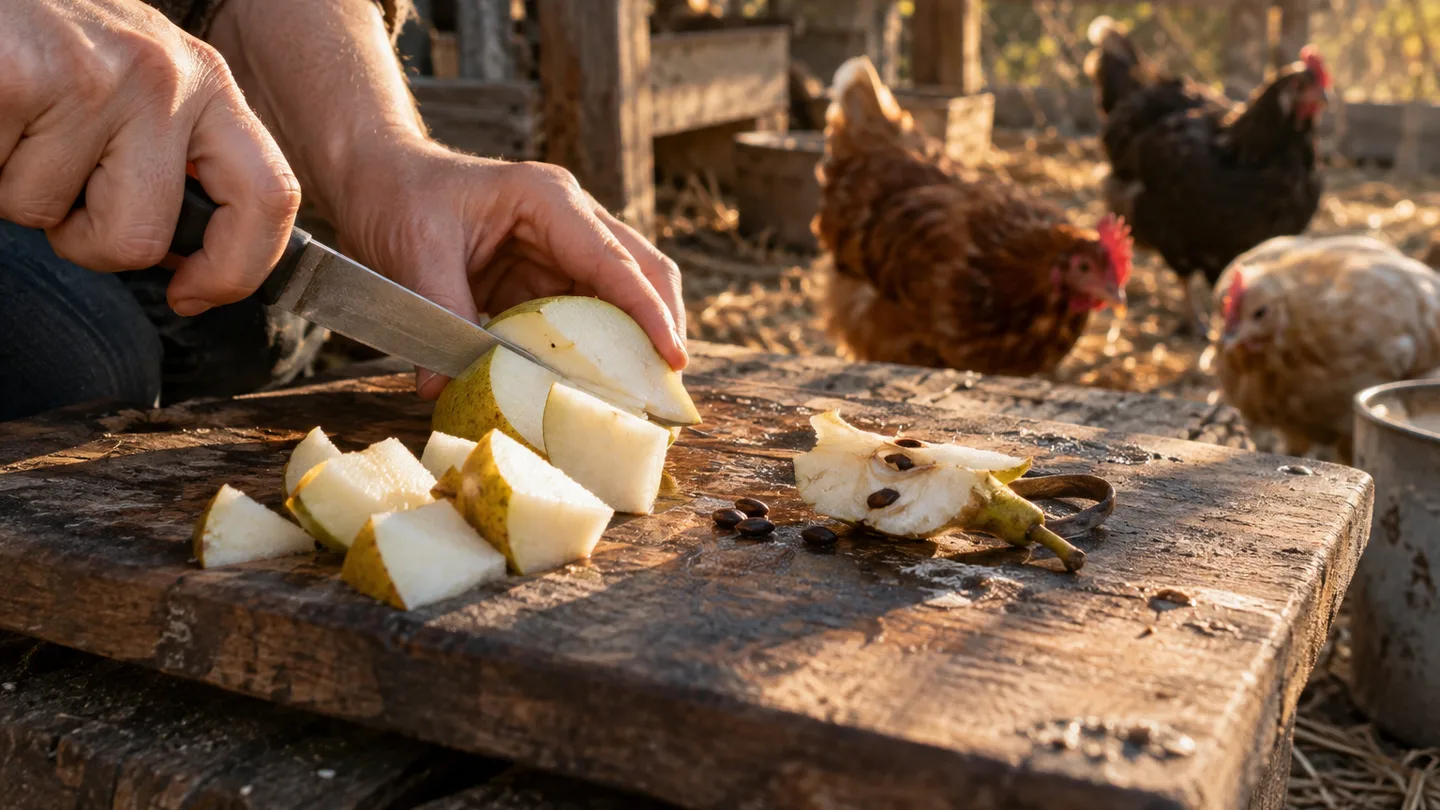
Cut around the core and discard it with the seeds and stem. The core is firm and awkward to eat, and pear seeds are a cyanogenic-seed concern. Removing them is a straightforward way to avoid offering seeds on purpose. It isn’t a reason to assume that one seed swallowed by accident has poisoned a chicken.
To prep one, halve the pear, cut the flesh away from the tough center, then check the pieces for seeds. Don’t toss the whole fruit into the run and hope the birds sort it out. The point is to control what goes into the serving, not to turn an ordinary kitchen scrap into an emergency.
If you want more detail on the broader seed question, consult a veterinary toxicology reference rather than trying to estimate risk from the number of seeds alone.
Choose ripe fruit; discard moldy or spoiled pears
Use a pear that’s ripe and sound. A little softness is not the same thing as spoilage: ripe fruit may give slightly when pressed and still be suitable to cut up. Extra-soft flesh can be messy, so serve it in a dish or make the pieces smaller and easier to pick up.
Don’t feed pears with mold, a fermented smell, or widespread decay. If there’s one small bruised or damaged spot and the rest of the fruit is clearly sound, cut that area away generously and use only the clean flesh. When you can’t tell whether the damage is limited, discard the pear. A questionable scrap isn’t worth making your feed routine harder to judge.
Keep the decision practical: ripe and intact is usable; moldy or fermenting is not. Chickens aren’t a disposal system for food you wouldn’t confidently handle yourself.
Cut pieces to suit the birds eating them
Slice the flesh into small, soft pieces your birds can pick up and swallow comfortably. A whole pear or a large, firm chunk gives them more to wrestle with than they need. There’s no single cut size that works for every breed and age, so watch how the smallest bird in the group handles a piece before you offer more.
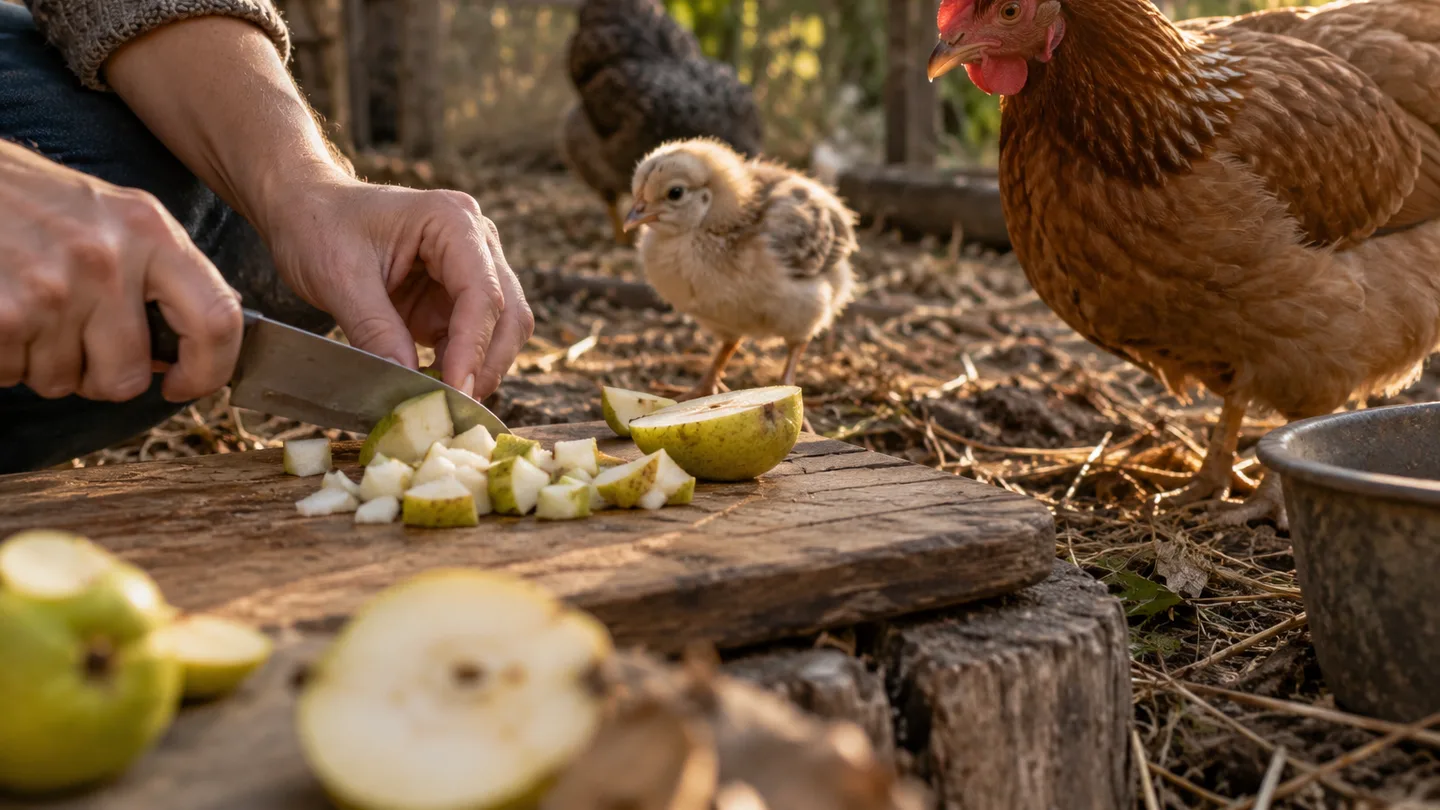
An adult hen can manage pieces that would be awkward for a young chick. For chicks, make the pieces notably smaller and softer, and don’t offer pear to birds that aren’t confidently eating their starter. If a bird has trouble swallowing, stop the treat and seek veterinary advice rather than trying to push food or water into its beak.
My practical judgment is to make the serving easy to eat before it reaches the run. That takes less time than sorting out large leftovers afterward, and it gives you a chance to remove any seeds you missed.
Use the 10% treat guideline as a ceiling for all extras combined
A useful planning rule is to keep treats to about 10% or less of a bird’s daily intake, with complete feed making up the rest. I’d use that as a ceiling for all extras together, not as a pear allowance. Count the table scraps, fruit, scratch, and other treats your birds get that day.
That 10% is a broad rule of thumb, not 10% by weight and not a fixed number of pear slices. Pear flesh holds water, so a piece can look bulky without matching the nutritional contribution of the dry feed it might displace. There’s no dependable conversion from “one slice” to a share of the ration that fits every pear and flock.
If you want to set a personal limit, start by noticing how much of the regular ration your birds are actually eating. If they leave feed after treats arrive, reduce the extras. Poultry extension guidance on balanced feed and treats can help you check the feeding approach for your birds’ age and type.
A few pieces per bird is easier to manage than a whole pear in the run
Start with a few small pieces per bird, or a small shared serving if you have a handful of hens. That’s a starting point for a cautious treat, not a universal serving size. Adjust downward if they’ve already had scraps, or if you find that the pear distracts them from their normal ration.
For example, if you have four hens and they’ve had kitchen scraps that afternoon, cut one pear around the core, offer only a small portion of the flesh, and put the rest away. If they finish the pieces and go back to their feed, that’s a more useful signal than whether they would eat a second helping. Daily pear feeding isn’t necessary.
My preference is to make treats occasional and easy to account for. A flock that gets something different every day can make it difficult to see which extra is reducing interest in feed or changing droppings.
Fresh is simplest; skip syrup-packed fruit and keep dried pear tiny
Plain fresh pear is the simplest option because you can see what you’re serving and cut around the core. Cooked pear can also be offered if it has cooled and contains no added sugar, salt, or seasoning. Keep the preparation plain; your birds don’t need a dessert recipe.
Syrup-packed pears add sweetness that isn’t useful in a treat. Dried pear is concentrated and easy to over-serve because a small-looking piece represents more fruit than the same space filled by fresh slices. If you offer dried fruit at all, keep it to a very small amount and check that it’s plain rather than coated or seasoned.
For comparisons with another familiar fruit, see our guide to can chickens eat apples. The same practical habit applies: check the food, prepare the pieces, and keep extras secondary to complete feed.
For chicks, starter feed comes first—and treats need extra caution
Chicks should get a complete starter feed as their main diet. If they’re very young or still learning to eat reliably, wait on pear. A treat adds little value at that stage and can take attention away from the feed they’re meant to be eating.
If you do offer a chick a bit of pear, use a soft, tiny piece and supervise the first try. Birds eating foods beyond an appropriate complete feed need access to appropriately sized insoluble grit to help grind food. Check a reliable guide to grit for chickens if you’re unsure what kind is suitable for their age; grit is not a substitute for starter.
Don’t confuse a chick pecking at a piece with being able to swallow it comfortably. If it’s too large or firm for the chick to manage, remove it.
Pick up leftovers before they turn into a sticky, spoiled patch
Serve pear in a small dish or scatter only a few pieces where you can find them again. After the birds have had a chance to eat, look for scraps under the feeder, along the run edge, and in bedding. Remove what remains before it becomes soft, dirty, or attractive to pests.
Warm weather makes cleanup more pressing because cut fruit softens faster. There isn’t one cleanup interval that guarantees a piece is safe in every temperature, run, or serving size. Use the condition of the fruit as your guide, and don’t leave leftovers to become part of the ground in the run.
This is one reason I favor a modest dish serving over tossing a whole pear among the birds. You can see how much you offered and what they left, which makes the next serving easier to judge.
If a bird seems unwell, stop the treat and judge the symptoms—not the pear alone
If a hen has a soft dropping after a treat or simply seems off, stop offering pear, make sure fresh water and the usual feed are available, and observe her. A single change doesn’t tell you by itself what caused it. Note when the bird ate the fruit and whether other birds or foods are involved.
Persistent diarrhea, lethargy, breathing difficulty, or trouble swallowing calls for prompt advice from a poultry veterinarian. Don’t try a home remedy or assume the pear explains every symptom. A poultry veterinarian can assess the bird and advise whether the issue needs treatment; the timing and severity matter.
If more than one bird is affected, or the symptoms are worsening, contact a veterinarian rather than waiting to see whether removing pear solves it. The treat is easy to stop. A continuing health problem deserves a proper assessment.
This week, try one small serving and keep the core out
Choose a ripe, sound pear. Cut the flesh away from the core, remove the seeds and stem, and make a modest serving of pieces suited to your birds. Offer it alongside their normal feed, then check the run and pick up whatever they leave.
That’s the whole routine: sound fruit, manageable pieces, modest extras, clean leftovers. If you’re building a wider treat list, compare your options with can chickens eat blueberries and keep the same rule in view: a treat should fit around the ration, not compete with it.
This week, try that small serving once and note whether your birds eat their usual feed afterward. If you’d rather not add another variable to the menu, skip the pear; your flock doesn’t need it.