Can Chickens Eat Mango? Safe Amounts, Prep, and Pit Risks
Yes—healthy adult chickens can have a little ripe mango flesh as an occasional treat. Start with about 1–2 teaspoons of chopped fruit per hen, serve less to bantams, and take out the hard pit first. Mango belongs beside your birds’ complete ration, not in place of it.
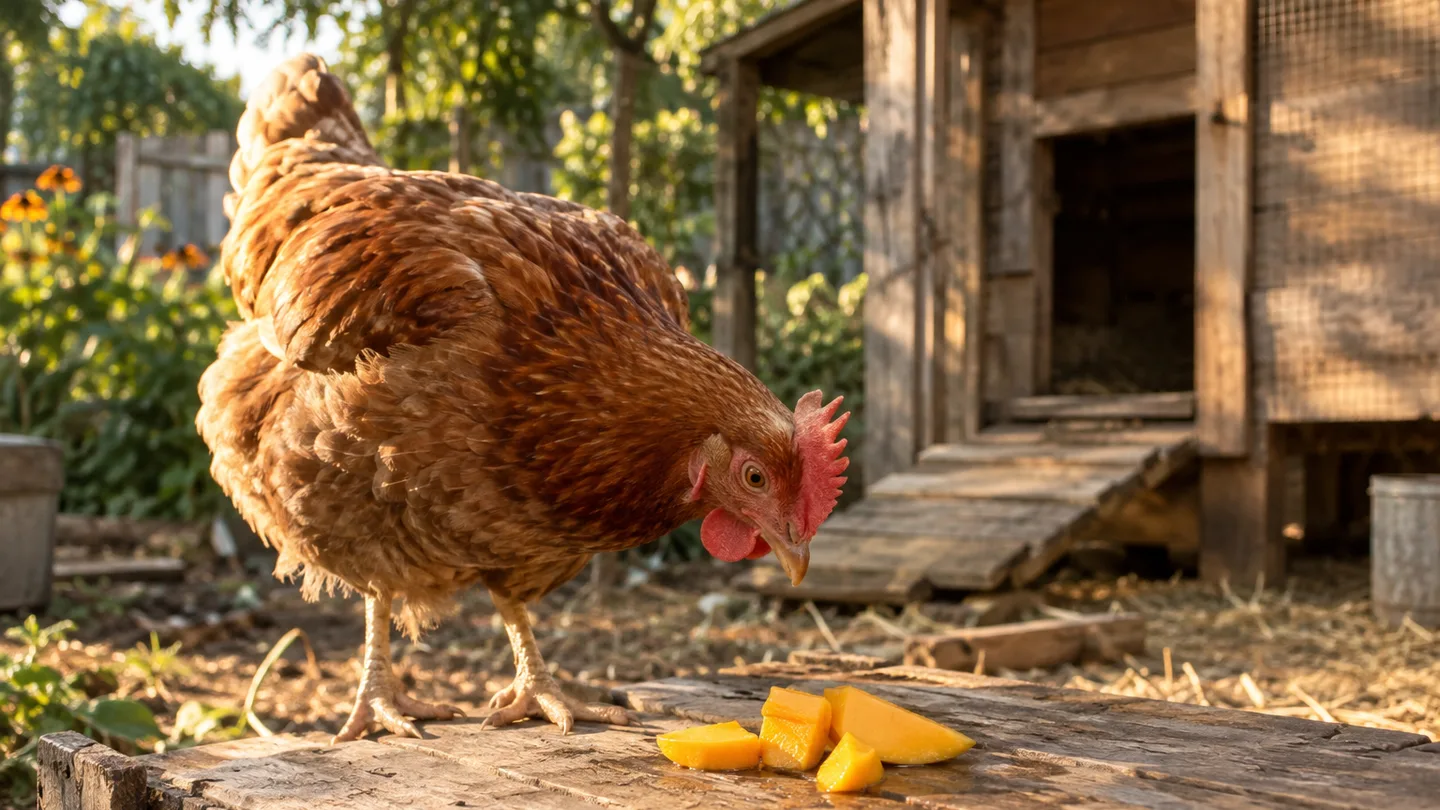
The practical question isn’t just whether a hen can peck at mango. It’s how to offer it without turning a sweet snack into a missed meal, a sticky mess, or a hazard. Here’s a simple way to handle the fruit you have on the counter.
Yes—ripe mango flesh is safe for hens as an occasional treat
For healthy adult hens, ripe mango flesh is a reasonable occasional treat. Keep the serving small and keep their regular feed available. A balanced chicken ration is formulated to do the nutritional heavy lifting; fruit is not a substitute for it.
That distinction matters more than whether the mango is fresh or especially sweet. A bird that fills up on extras may eat less of its complete feed. With a fruit treat, the sensible goal is a brief bit of variety, not a second meal.
When keepers ask, “can chickens eat mango,” they may mean the whole fruit. Don’t treat every part as interchangeable. The soft flesh is the part to offer. Remove the hard central pit, and don’t give birds a whole mango to peck apart. The pit is a solid object that can be difficult to swallow and could lodge in the throat or digestive tract.
I’d make the first offer deliberately unexciting: a few soft pieces, after the flock has had access to its normal feed. Watch how your birds manage the pieces, then decide whether mango is worth repeating. Some hens will investigate eagerly; others may ignore an unfamiliar fruit. Neither response calls for coaxing.
A practical serving: start with 1–2 teaspoons per adult hen
Try about 1–2 teaspoons of chopped mango flesh per adult hen the first time. That’s a cautious starting portion, not a mango-specific dose established by a feeding study. For a bantam, begin below that amount: its smaller size makes a full-size-hen portion a poor default.
There is no useful reason to chase an exact serving to the last piece. The amount a hen eats depends on her size, what else she has eaten, and whether the flock shares the treat evenly. Put out a modest amount, see what disappears, and make the next serving smaller if mango starts replacing normal feed or creates a mess.
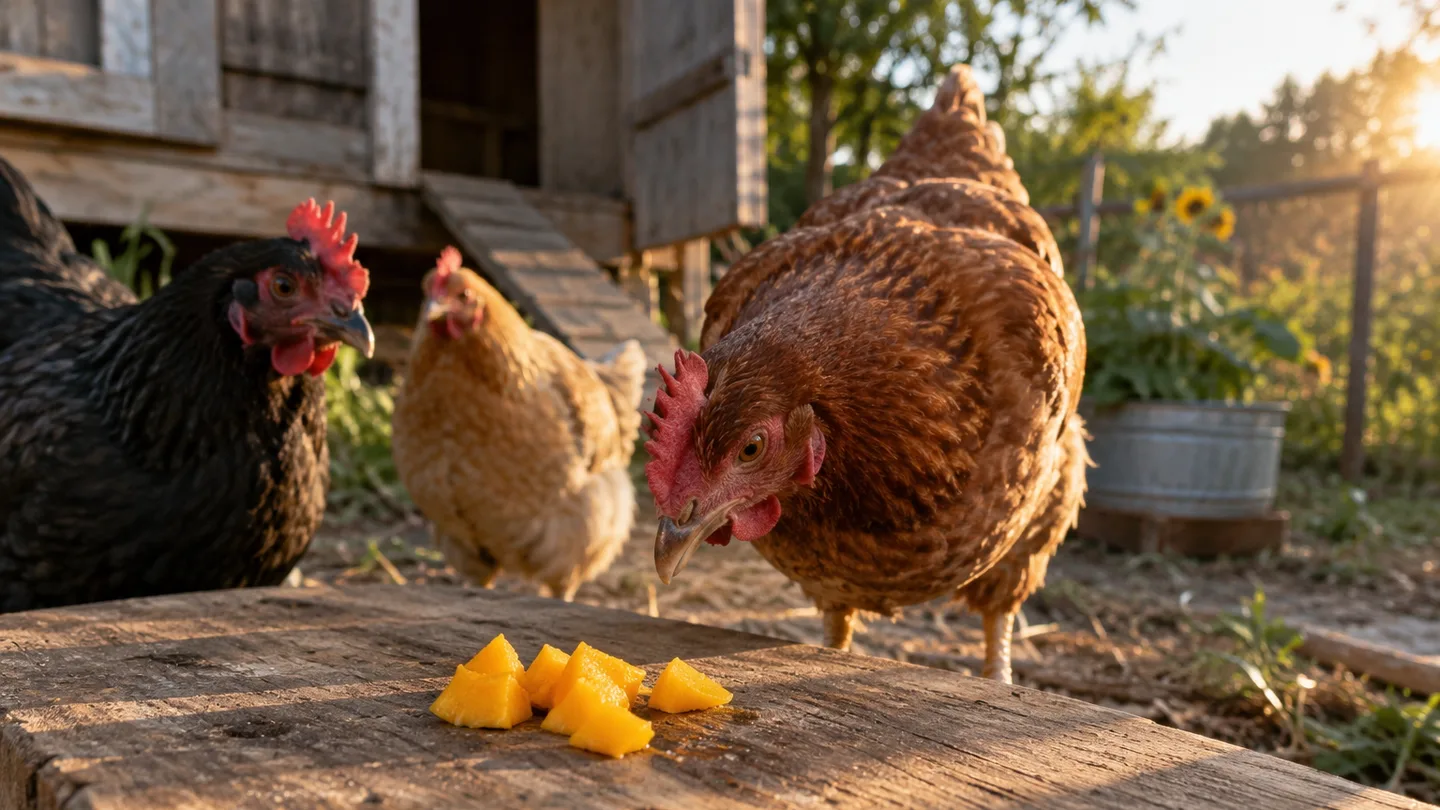
For a flock of three adult hens, that starting point works out to roughly 3–6 teaspoons altogether. For six, it is 6–12 teaspoons; for twelve, 12–24. Those are just the arithmetic totals of the per-hen suggestion. They don’t guarantee each hen gets her share, especially if one bird pushes in first. Spread pieces across a dish or several spots rather than making a single pile.
Keep all extras together to about 10% or less of the overall diet, with complete feed making up the main share. That’s a useful guardrail for treats as a group, not a special mango allowance. If your birds already get scratch, kitchen scraps, or other treats that day, give less mango or skip it.
Pick ripe fruit; reject moldy, fermented, or syrup-packed mango
Choose a mango with soft, ripe flesh and no visible mold or signs of fermentation. If you cut into it and find fuzzy patches, an off smell, bubbling, or a slimy, deteriorating texture, discard it rather than trying to trim away the questionable area for the flock. Chickens aren’t a safe way to use up spoiled food.
Use fresh fruit, not mango packed in syrup or coated with added sugar or salt. Those products add extras that don’t help a chicken’s ration, and the concentrated sweetness makes portioning less straightforward. Plain canned or packaged fruit can also be soft enough to disappear quickly, making it harder to judge how much each bird ate.
Ripe fruit is easier to cut into small pieces than a firm, underripe mango. But don’t wait until a mango is going bad just to make it soft. If it has passed the point where you would comfortably serve it fresh, compost or discard it according to your local rules instead.
A quick check before cutting is enough: look at the surface, smell the fruit, and inspect the flesh as you work around the pit. If the fruit seems spoiled, stop there. A treat is optional, so there’s little upside in taking chances with a questionable one.
Cut around the pit and chop the flesh into roughly ½-inch pieces
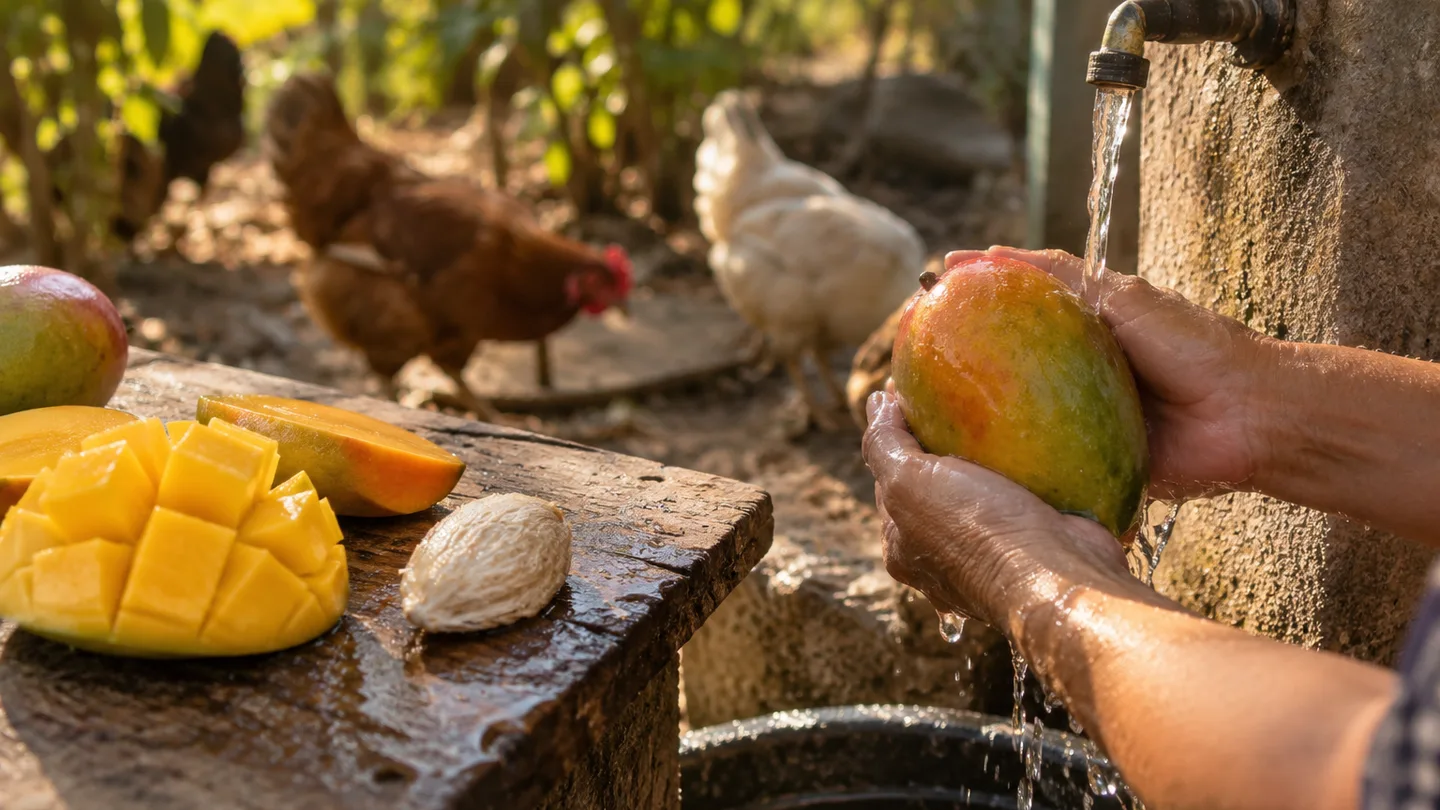
Wash the whole mango under running water before cutting. Set it on a stable board, slice down each side of the broad, flat pit, then trim the remaining flesh from around it. Put the pit aside where curious hens can’t reach it. Chop the usable flesh into pieces around ½ inch across, or smaller for bantams and birds that tend to gulp.
Small, soft pieces are easier to pick up than a large slippery chunk. They also let you offer a modest amount without leaving one bird to tug at a big piece while the rest crowd around. If your flock bolts treats, make the pieces smaller and scatter them over a shallow dish or a clean area where you can see what remains.
The pit is not a treat. Its size and firm shape create a choking or obstruction concern if swallowed, and a hen can’t be relied on to sort out the risky part herself. If you see a bird swallow a whole pit, contact a poultry or avian veterinarian promptly for advice rather than waiting for symptoms. Don’t try to make the bird vomit or reach into its throat.
Also keep your fingers clear while birds compete for food. Put the serving down before the flock gathers, and don’t hold a slippery piece between your fingertips. That small change makes it easier to observe the birds instead of managing a scrum around your hand.
Peel is optional; wash first and refrigerate cut leftovers promptly
You can peel mango before serving, but it’s not essential to the basic preparation. Removing the skin makes it easier to cut consistently small pieces and avoids giving hens a tough strip they may tug at. If you leave the peel on, wash the fruit well first and chop it into manageable pieces.
Washing before cutting matters because the knife passes from the outside of the fruit through the flesh. Rinse under running water and rub the surface with clean hands; don’t use soap or household cleaner on produce. For current guidance on handling produce and cut fruit, check USDA food-safety guidance for fresh produce rather than relying on a remembered time or temperature.
Don’t leave cut mango sitting out for the rest of the day. Put leftovers in a clean, covered container and refrigerate them promptly, or discard them if you’re unsure how long they have been at room temperature. Hot weather and a sunny kitchen make a forgotten dish a worse bet, not a reason to feed it faster.
Keep the chicken-serving bowl separate from anything you’ll use for people unless you wash it between uses. That’s an easy way to keep sticky fruit residue from ending up on a counter, feed scoop, or clean kitchen dish.
Offer mango after the regular ration, then clear leftovers within 1–2 hours
Let your birds have access to their normal feed first, then put out the mango. That order helps keep the treat in its proper place: an extra, not the meal they fill up on. If you feed in a run, scatter a few small pieces over a clean surface or divide them between dishes so a dominant hen can’t claim the whole serving.
As a practical cleanup rule, pick up leftovers within about 1–2 hours, sooner in warm weather. The point is not that a timer makes fruit safe right up to a precise minute. It’s to avoid leaving soft, sweet scraps around for the flock to keep pecking at, or for pests to find after the birds lose interest.
In a small backyard flock, I’d rather put out too little and have the birds finish it than leave half a mango sitting in the run. If they clear the pieces quickly, that tells you they accepted the treat, not that they need another helping. If you want to offer mango again, keep the next portion modest and account for other treats that day.
For more on how to keep fruit extras in perspective, see can chickens eat blueberries and can chickens eat strawberries. The useful habit is the same: keep treats secondary to complete feed, prepare pieces your birds can manage, and remove what they leave behind.
Loose droppings after a treat are different from choking or ongoing illness
A change in droppings after an unfamiliar treat can have more than one explanation, so don’t diagnose a bird from one messy dropping. If you suspect the mango was the trigger, stop offering it and return to the regular ration while you watch the flock. Note whether appetite, activity, and droppings settle back to their usual pattern.
Too much watery fruit may contribute to looser droppings, and a bird that eats a lot of treats may show less interest in balanced feed. That’s why the first serving should be small and why you should avoid topping up a dish just because the first pieces vanished. If abnormal droppings continue, or a hen has persistent appetite loss or marked lethargy, contact a poultry veterinarian. Don’t assume mango is the cause when other problems may be involved.
Breathing difficulty, repeated choking motions, or a witnessed whole-pit swallow calls for prompt veterinary advice. Those situations are different from a bird simply turning away from mango. If a hen seems unwell, take the fruit away, make sure the flock has its normal feed and water, and call a vet for guidance rather than trying a home remedy.
Can baby chicks eat mango?
For young chicks, stick with a complete chick starter rather than adding mango. Their small size makes a treat portion hard to control, and the fruit doesn’t need to be part of their early diet. If a chick has eaten mango and then seems unwell, contact a poultry veterinarian.
Can chickens eat dried mango?
Fresh mango is easier to portion. Avoid dried mango that is sweetened or seasoned. If you’re considering plain dried fruit, check the ingredients and keep the piece tiny; it’s still a treat, not a feed replacement. I’d choose fresh fruit when it’s available because it’s simpler to cut and judge.
Can chickens eat mango leaves?
Mango leaves aren’t needed in a chicken’s ration, so don’t offer them as a treat. If a bird eats a substantial amount or develops symptoms, ask a poultry veterinarian for case-specific advice.
This week, if you have a ripe mango, wash it, cut away the pit, and offer a few small pieces after your hens have eaten their normal feed. Stay nearby, see whether they manage the pieces comfortably, then clear anything left. That one small serving tells you more about your flock’s interest than a large pile ever will.
Frequently Asked Questions
Can baby chicks eat mango?
Keep young chicks on a complete chick starter rather than adding fruit; their small size makes treat portions harder to control. Ask a poultry veterinarian if a chick has already eaten mango and seems unwell.
Can chickens eat dried mango?
Fresh mango is easier to portion and less concentrated. Avoid sweetened or seasoned dried mango; if considering plain dried fruit, offer only a tiny softened piece and keep the usual treat limit in mind.
Can chickens eat mango leaves?
Mango leaves are not a necessary or established chicken feed. Don’t offer them as a treat; if a bird eats a large amount or shows symptoms, contact a poultry veterinarian.