Can Chickens Eat Celery? Safe Stalks, Leaves, and Limits
Yes, chickens can eat plain celery stalks and leaves, in modest amounts. Chop the stalks across the fibres, offer them as a treat rather than a meal, and keep a complete layer ration as the main food. The practical limit is less about finding a magic celery portion and more about making sure treats don’t crowd out the feed your birds rely on.
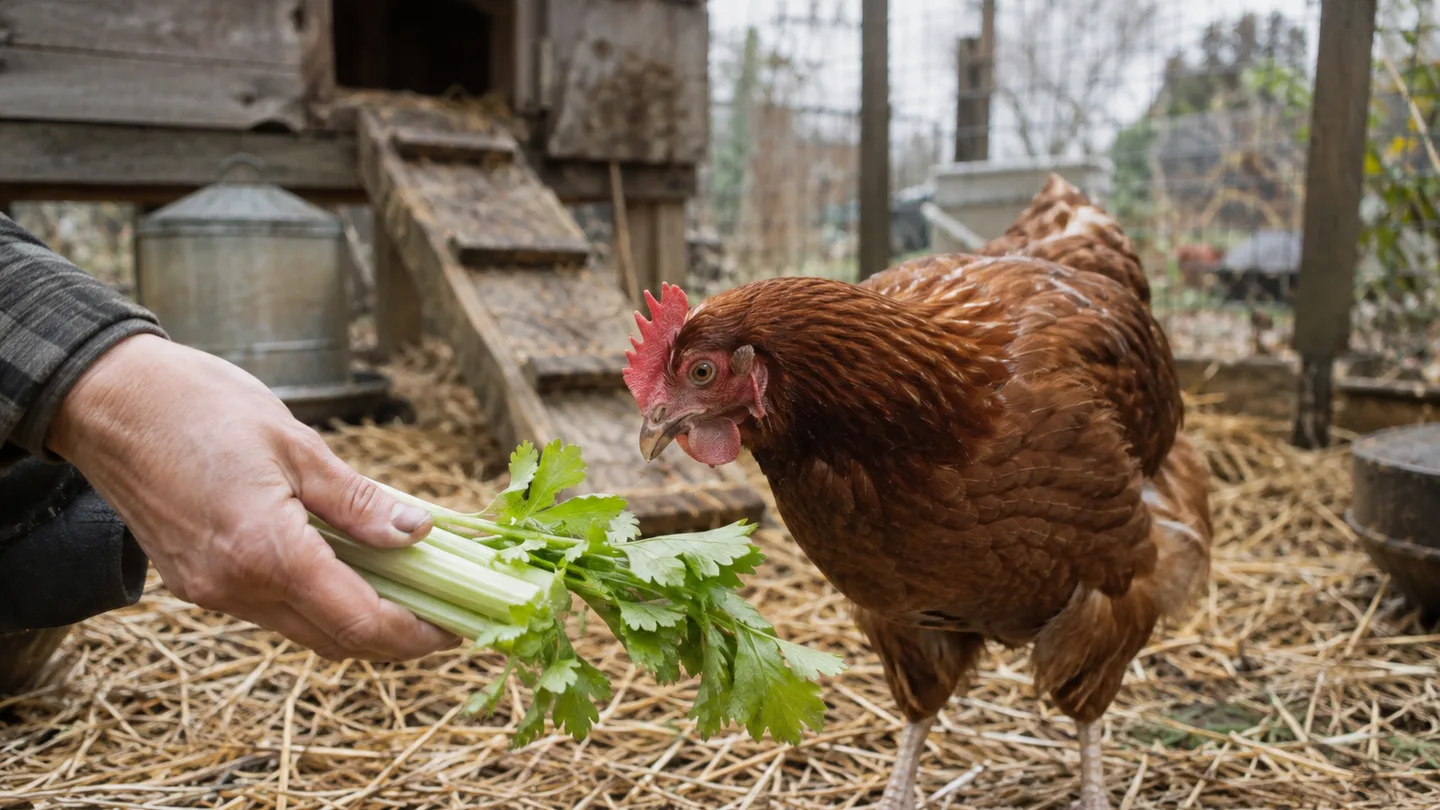
A simple starting point is to keep treats to about a tenth of what you offer overall. That’s a household rule of thumb, not a celery-specific dose or a precise weight calculation. Your hens’ size, age, laying status, and the rest of their diet all matter.
Yes—chickens can eat celery, but it stays in the treat portion
Plain celery is a reasonable occasional snack for healthy adult chickens. You can offer the leaves or the stalk, fresh or cooked without rich additions. Keep the feeder stocked with a complete ration, though. Celery brings texture and moisture, but it isn’t formulated to supply the balance of nutrients a laying hen needs.
Think of the roughly 90/10 approach as a guardrail: most of the diet comes from complete feed, with treats taking up a small share. It helps prevent a familiar backyard mistake. A dish of scraps looks generous, the birds love it, and suddenly they’re filling up on odds and ends instead of eating enough of their balanced feed.
That doesn’t mean you need to calculate a celery allowance on a kitchen scale. Start with a small shared portion, watch whether your birds finish it, and keep the feed available. If the celery is still sitting there, don’t add more. If they eat it quickly, that still isn’t a reason to let treats become the main event.
For context on other scraps, the guides to can chickens eat apples and can chickens eat broccoli offer the same useful question: does the treat stay small enough that the regular ration remains the foundation?
What 100 grams of celery contributes—and what it leaves out
Celery is a crisp, water-rich vegetable with some fibre. That makes it a refreshing thing to peck at, especially when you’re preparing vegetables anyway. It doesn’t make celery a meaningful replacement for layer feed, which is designed to cover a bird’s nutritional needs in a way a single vegetable cannot.
You may see exact nutrition figures quoted per 100 grams. They can vary with the entry and the form of celery being described, so I’m not repeating numbers here without checking the current USDA FoodData Central entry. If you want the detailed breakdown, look up the current raw celery record there and confirm the serving basis before comparing it with another food.
For your flock, the useful takeaway is simpler. A few pieces of celery add variety, but they don’t provide the concentrated protein, minerals, and other nutrients that a complete ration is meant to provide. Keep treats in proportion, especially if a hen is laying. A treat can be perfectly safe and still be a poor substitute for the food that does the nutritional heavy lifting.
That distinction is easy to miss because a treat can look substantial in a bowl. Celery’s bulk comes largely from its moisture and structure. Your birds may peck at a pile for a while without getting the same nutritional value they’d get from their regular ration.
Stalks, leaves, and strings: what to offer and how to cut it
Both the leaves and stalk are suitable to offer when they’re fresh and clean. Leaves are softer and easy to scatter over a small dish. The ribs are firmer, and their long fibres can make a whole stalk awkward for a chicken to peck and manage. Cut the stalk crosswise into short pieces so the fibres don’t run in long strips.
There’s no universal cut size that fits every bird. A large, confident hen and a small bantam don’t handle food identically. Make the pieces small enough for the birds in your flock to pick up without tugging at a long ribbon of celery. If they keep dropping a piece or struggle to break it down, chop it smaller next time.
Wash off visible dirt, remove any bruised or spoiled areas, and discard celery that feels slimy or smells off. You don’t need to peel a sound stalk. The leaves can be offered whole or torn into smaller bits if your birds ignore a large bunch.
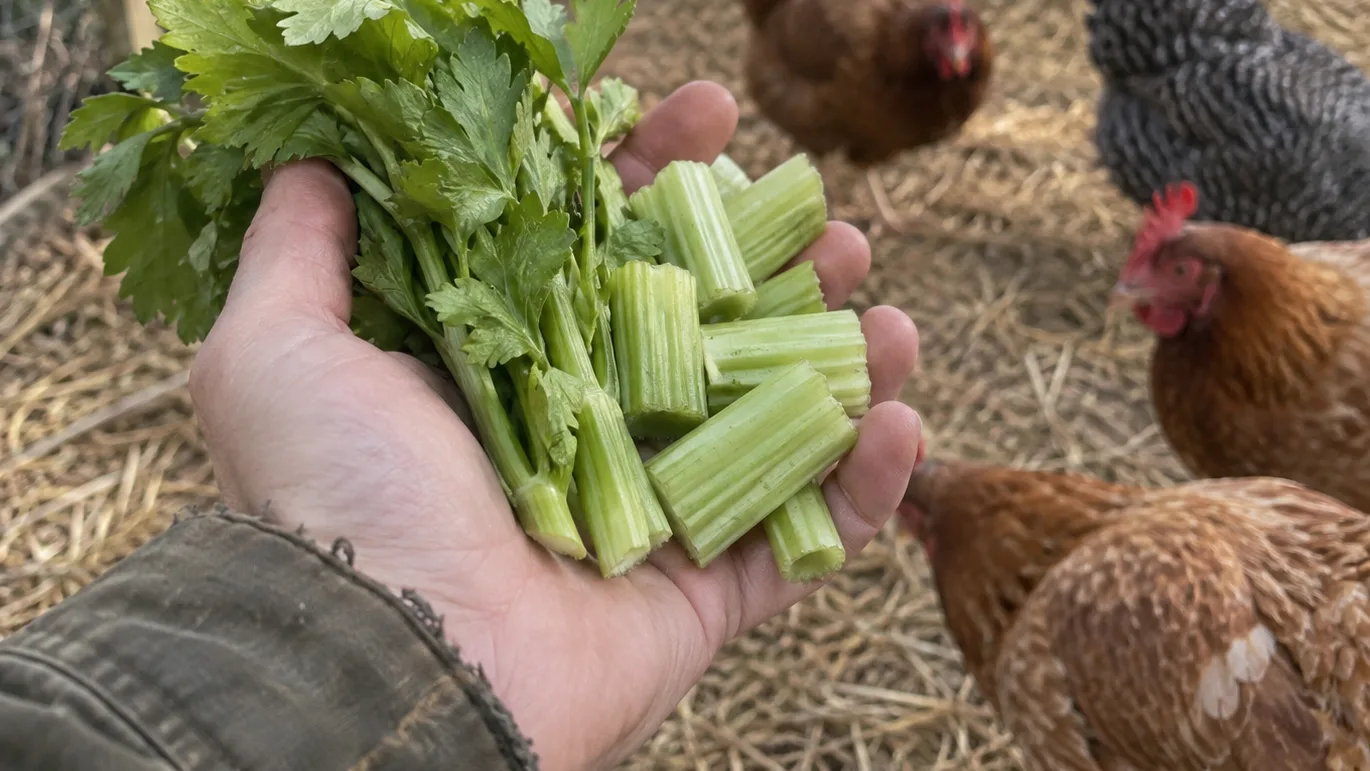
When I’m weighing a new treat for a small flock, I’d rather make it easy to eat than impress the birds with a large piece. Short pieces are easier to scatter, easier to inspect after feeding, and less likely to leave a long fibrous strand draped across the dish. Treat size should suit the bird, not the vegetable’s shape.
A flock-sized portion: use the 10% rule without guessing celery grams
It’s tempting to turn the treat guideline into an exact celery weight per hen. That would suggest more precision than the rule can support. Celery is mostly moisture, while complete feed is much denser nutritionally, so a weight-for-weight swap doesn’t tell you whether the diet stays balanced.
Here’s a worked example, not a report from a particular coop. Suppose you have six adult hens and use 100–120 grams of complete feed per bird per day as a planning assumption. Six birds multiplied by that range gives 600–720 grams of feed for the group. Actual intake can move with body size, breed, weather, laying status, and how much feed is spilled or left in the feeder. Check your feed’s guidance and your flock’s actual use rather than treating that estimate as a universal requirement.
The arithmetic helps you think about the size of the daily ration. It does not convert into a precise celery serving. Instead, keep the complete feed freely available, offer a small shared amount of celery, and notice whether it is gone quickly or left behind. If you’re regularly seeing hens leave feed after filling up on scraps, cut back on treats.
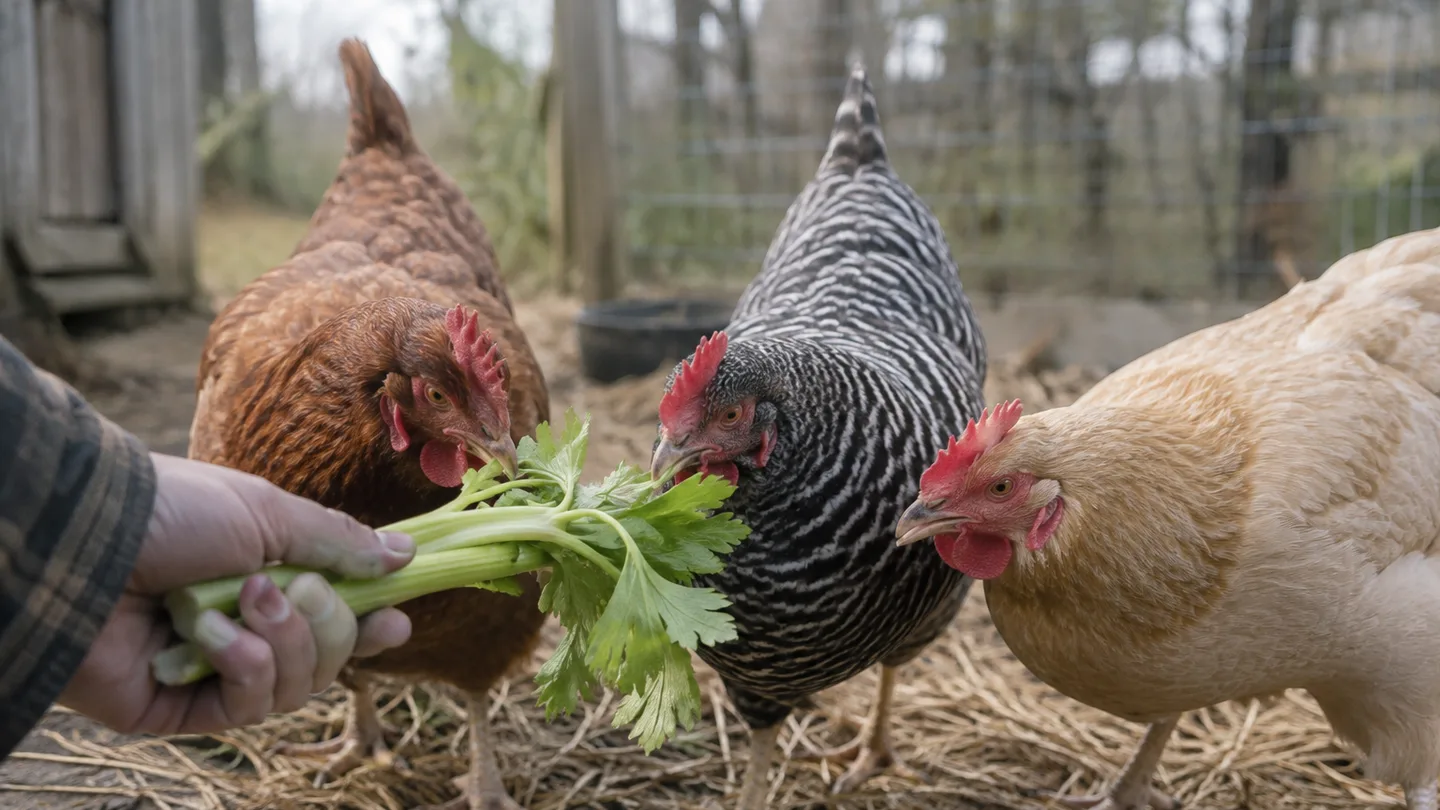
For a first offer to six hens, you could put a little chopped celery in one shallow dish rather than laying out a heap. Watch how the birds approach it. If the boldest hens take everything before the others get a look, scatter the pieces across a wider area or use a second dish. That’s a practical adjustment to flock behaviour, not a reason to increase the total treat amount.
My preference is to keep the first serving deliberately modest. You can always offer a little more on another day; you can’t take back a large pile once the birds have filled up on it. For broader ration questions, look for University extension guidance on balanced layer rations and compare it with the instructions on your own feed bag.
Raw, cooked, or seasoned: the preparation matters more than the cooking
Washed raw celery is straightforward. Plain cooked celery can also be offered once it has cooled and been cut into manageable pieces. Cooking softens the stalk, which may make it easier for some birds to peck apart, but it doesn’t turn celery into a complete feed.
The bigger question is what went into the dish. Celery cooked with a salty sauce, butter, stock, or a rich seasoning mix is not the same treat as a plain stalk. When you’re considering leftovers, look at the whole recipe and leave out anything you wouldn’t choose as a simple chicken snack. If you can’t identify the ingredients, skip it.
Keep the portion small whichever preparation you choose. Serve it in a dish or scatter a few pieces where your birds can reach them, rather than mixing it through the feeder. That makes it easier to see how much they eat and prevents celery from becoming a routine part of every ration.
Fresh scraps belong in the run briefly, not overnight
Cut celery is moist food. Don’t leave leftovers in the run overnight, and clear them sooner if the weather is hot, humid, or sunny. Warmth and moisture give scraps less time to remain in good condition. There’s no need to wait for an exact timer to tell you what your eyes and nose already show: if celery has turned slimy, mouldy, or foul-smelling, throw it away.
Offer only what your flock is likely to eat while you’re around to check. If the birds lose interest, remove the dish rather than letting it sit in bedding or a sunny corner. Keep fresh drinking water available, too. A treat doesn’t replace water, and a wet scrap dish can’t serve as a dependable source of it.
For the formal handling advice, consult USDA food-safety guidance on perishable food. That guidance is written for people and food handling, so use it as context rather than as a chicken-specific feeding schedule. In a backyard run, a conservative habit is simple: serve fresh, keep an eye on the dish, and clear leftovers before the next day.
If a bird reacts badly, stop the treat and check the bigger picture
After introducing celery, pay attention to the flock as a whole and to any bird that seems different. If you notice persistent digestive changes or a hen seems unwell, stop offering the celery and return to the usual complete feed and clean water. Don’t try to treat a health problem with celery or another kitchen ingredient.
A single soft dropping can be hard to interpret in isolation. Look at whether the change continues, whether the bird is eating and drinking, and whether its behaviour is otherwise normal. Marked lethargy, breathing trouble, or repeated inability to eat or drink calls for prompt advice from a poultry veterinarian. Ongoing symptoms also deserve professional guidance, especially if more than one bird is affected.
Celery is optional. If your flock doesn’t care for it, there’s no nutritional gap to fill. And if you’re looking at different treats for chicks, don’t assume the adult-hen advice transfers directly to a young brooder group.
Three quick celery questions
Can baby chicks eat celery?
Young chicks should have an appropriate chick starter as their main food. Celery isn’t needed, and extra treats can take up space that starter should occupy. If you decide to offer treats once chicks are established, keep them very small and make sure the birds have access to suitable grit for chickens when the food they’re eating requires it. Follow age-appropriate poultry guidance for your flock.
Can chickens drink celery juice?
Use fresh, clean water as the everyday drink. Celery juice adds no necessary benefit, and juice blends may include salt or other ingredients. Don’t put it in place of water.
Can chickens eat celery root?
Celery root is firmer than the stalk and leaves. If you offer any, wash it and chop it into small pieces or soften it plain, then keep the serving within the same modest treat approach. It remains a treat, not a substitute for complete feed.
This week, wash one fresh stalk, remove any spoiled spots, and cut a small portion crosswise for your hens. Offer it while you can watch, then clear what they leave. If you’re planning a wider treat rotation, compare the current USDA FoodData Central entry for raw celery and keep the feed label in view as your baseline.
Frequently Asked Questions
Can baby chicks eat celery?
Keep chick starter as the main food, especially for young brooder chicks; celery is not needed and can dilute a balanced starter ration. If discussing later treats, advise introducing them sparingly once chicks are established and providing access to suitable grit.
Can chickens drink celery juice?
Fresh, plain water is the right everyday drink. Celery juice is unnecessary, and commercial juice may contain salt or other additives; don't use it in place of water.
Can chickens eat celery root?
Celery root is a different, firmer part of the plant. If offered, serve a small amount washed and chopped or softened plain, and keep it within the same treat limit.