Can Chickens and Rabbits Live Together? A Safer Shared Setup
Yes, chickens and rabbits can live in the same backyard, provided “together” means neighbours—not roommates. Give each species its own enclosure, food, water, and protected space, with a barrier that prevents direct contact.
The safer setup is two complete living areas inside one yard, not one shared coop or run. A four-hen flock and a pair of rabbits can fit this plan, but their space needs must be counted separately.
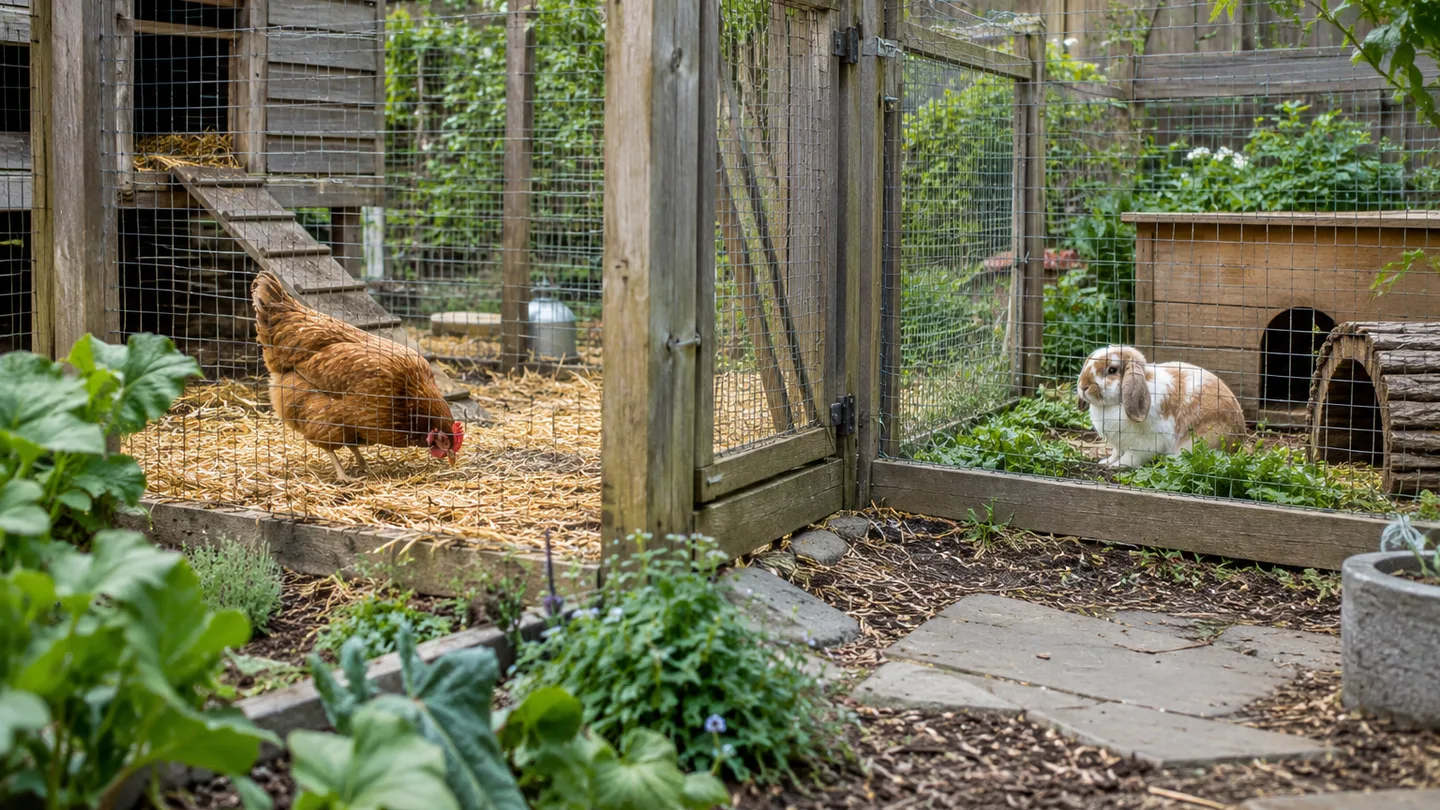
Can chickens and rabbits live together? Same yard, separate enclosures
A shared yard can make daily chores convenient. A shared enclosure creates avoidable points of conflict: a chicken can peck at a rabbit, a rabbit can get into poultry feed, and either animal’s droppings or bedding can dirty the other’s feeding area. Even a calm first meeting doesn’t tell you how the animals will behave when food is scattered, a bird is startled, or one tries to retreat.
So separate the question into two parts. Can both species live on one property? Yes, with suitable housing for each. Should they share a coop, run, or feeding station? I wouldn’t plan on it. Chickens and rabbits have different diets, routines, and ways of reacting to a crowded space. A fence between their areas lets them occupy the same backyard without asking either animal to tolerate close contact.
For a practical example, sketch a four-hen setup along the back fence and a rabbit enclosure against a different fence, with a clear path between their gates. Each area needs its own drinker and feeder. The fence line between them should have no openings where a beak, paw, or nose can reach through. If your yard is too small for two usable areas, rethink the animal count or choose one species rather than folding both into a single pen.
This is the useful distinction: share the yard, not the living space. It also makes cleaning and feeding easier to organise, because each station and patch of bedding has a clear owner.
Size each space on its own: hen square footage and a rabbit pair’s footprint
Measure the chicken area and rabbit area separately. Don’t add their floor space together and call the total adequate for both. A chicken run that is roomy for hens does not automatically provide rabbits with a suitable enclosure, and a rabbit footprint doesn’t replace protected coop and run space.
For a worked chicken calculation, you can use a provisional planning baseline of 4 square feet of indoor coop space and 10 square feet of run space per standard-size hen. At four hens, that works out to 16 square feet inside and 40 square feet in the run. Treat those numbers as a starting point to check against current local guidance, not a universal minimum: large breeds, long spells of bad weather, and flock dynamics can all make extra room valuable. Before you build, compare your sketch with the site’s chicken coop requirements guide and applicable local rules.
For rabbits, first check current housing advice from the Rabbit Welfare Association & Fund and your veterinarian’s guidance for your particular animals. If you have seen a suggested footprint of about 3 m × 2 m × 1 m for two average-sized rabbits, verify that figure and what it describes before buying materials. A footprint is not the whole plan: layout, shelter, usable exercise space, and access to the enclosure matter too. Don’t count any of that area as chicken space.
Here’s what the numbers mean in a small-yard sketch: four hens get their own 16-square-foot indoor area plus a separate 40-square-foot run under that provisional chicken calculation; the rabbits get a distinct enclosure sized to the current advice you’ve checked. If the paths, gates, or storage squeeze either space, make the layout smaller only after revisiting the animal plan—not by pretending the zones overlap.
Weather changes the calculation. When rain, snow, or a muddy run keeps hens inside for longer, extra indoor room can help reduce crowding. If you keep a flock that spends much of the day in a secure outdoor run, that doesn’t make the coop irrelevant: your birds still need somewhere dry and sheltered to rest and lay.
Draw two zones and a secure boundary before you buy materials
Use chalk, a hose, or temporary stakes to mark the two footprints before ordering wire. Put the gates on different sides if you can. That way, carrying a bucket into one enclosure doesn’t mean opening a route into the other. Leave a clear working strip between the pens for carrying feed, removing bedding, and reaching latches.
In a four-hen and two-rabbit layout, I’d place the chicken run along the rear fence and the rabbit enclosure along the side fence, then use the corner between them for a double-gate entry. The first gate closes before the second opens. I’d choose half-inch hardware cloth for the shared boundary because a smaller opening helps stop noses, toes, and beaks from reaching through; I wouldn’t choose a wider mesh there just because it costs less. Mesh alone is not a complete predator plan, though. Check the threats in your area and reinforce the floor or perimeter where digging is a concern.
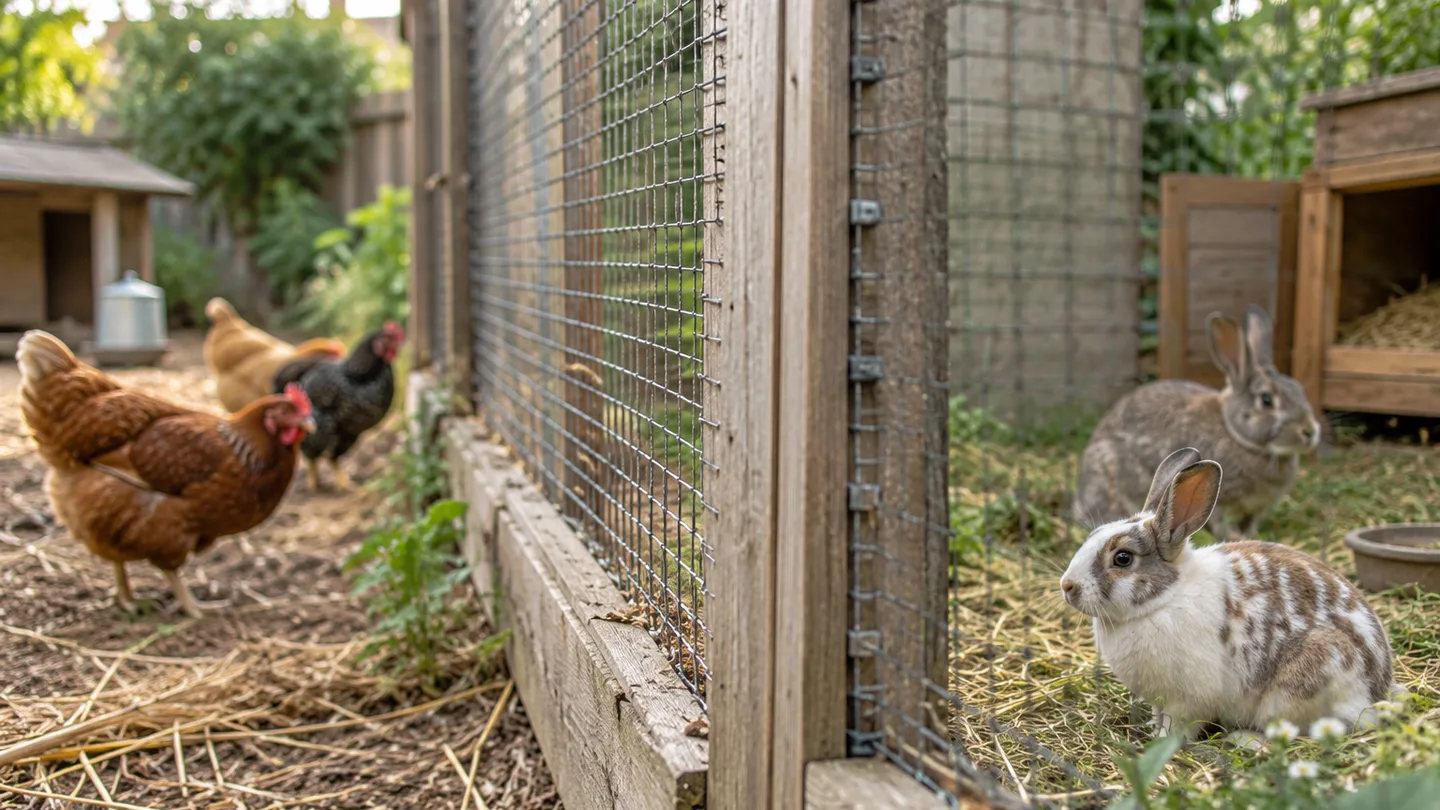
Ordinary chicken wire can help contain chickens, but I wouldn’t rely on it as the main barrier against a determined predator. The weak points are often the gate, corners, fasteners, or an edge that can be pulled or dug under. Secure the mesh to a sturdy frame, protect exposed edges, and check that a latch stays shut after repeated use. For rabbits, cover or shield any reachable wire edges and wooden surfaces they can chew.
Make a slow inspection from ground level. Look for gaps under gates, loose corners, sharp wire ends, and spaces where an animal could push its head through. Then test each gate from both sides. A design that looks secure while you stand outside may have a blind spot at the hinge or a latch that’s awkward to close while carrying a feed container.
My call is to spend effort on the boundary and gate before decorating the pens. A tidy latch and a protected mesh edge do more useful work than a pretty divider that leaves a gap at ground level. Adjust the mesh and ground protection to your local predators and the animals’ digging, scratching, and chewing habits.
Keep hay, pellets, grit, and water in species-only stations
Set up each feeding station inside its own enclosure, away from the shared boundary. Rabbits need access to suitable grass hay and rabbit-formulated food. Chickens need a complete poultry ration and appropriate grit for their diet. Keep the feed in containers the other species can’t reach, and use amounts from the product label rather than estimating a serving by eye.
That separation solves more than an inconvenience. If hens can get into rabbit food, they may scatter it or soil it; if rabbits reach chicken feed, they’re eating a product meant for a different species. A rabbit’s hay rack should stay clean and easy to reach, while chicken feed should be placed where rabbits can’t nose through the barrier. Keep drinkers separate as well: a chicken’s scratching and splashing can leave a neighbouring water station dirty or wet.
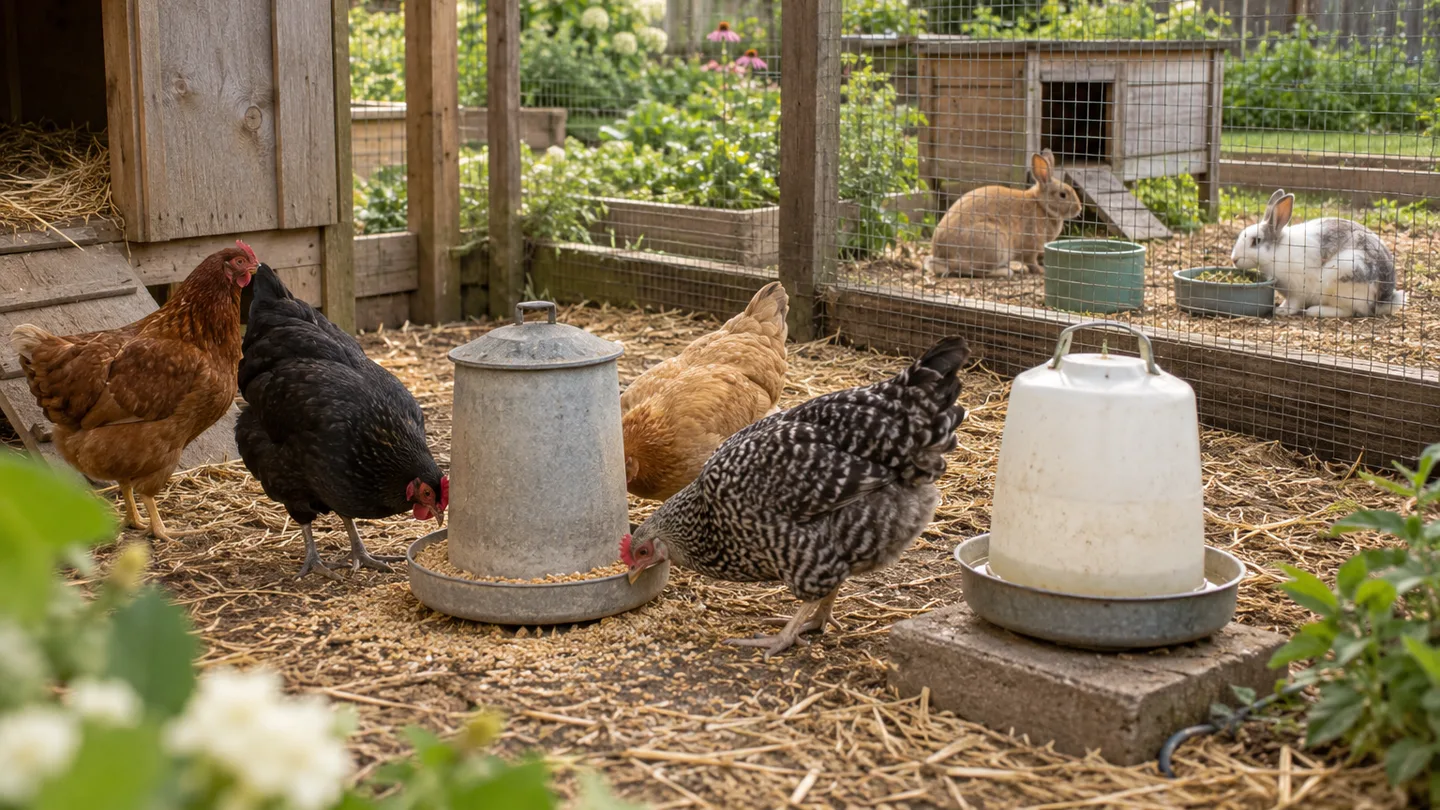
For four hens, keep one poultry feeder and drinker wholly inside the chicken zone; put the rabbit hay, rabbit food, and water wholly inside the rabbit zone. That simple map is easier to maintain than a shared station divided by a makeshift cover. Check the feed labels for storage and serving directions, and ask a veterinarian about individual dietary needs or a sudden change in appetite.
If you’re also choosing coop bedding, compare the options in best bedding for chicken coop and keep the rabbit’s bedding supplies separate. Dry bedding and clean feeding surfaces are easier to manage when you don’t move a scoop or container from one species’ enclosure to the other.
Treat droppings and dirty bedding as a hygiene issue, not a shared resource
Droppings, damp bedding, and feed that has been soiled belong in the cleanup routine, not in a shared corner of the yard. The practical chain is straightforward: waste can contaminate a feeder, drinker, or surface; an animal then eats or contacts that dirty surface. Separate enclosures and tools reduce those opportunities. They don’t establish that every chicken-related germ or parasite can infect a rabbit, so don’t use a general hygiene precaution as a diagnosis.
Keep one scoop or rake for each area, and store the tools so they don’t brush against the other enclosure’s feeder or hay. Remove wet bedding promptly, clean drinkers when they’re dirty, and let housing dry before adding fresh bedding. Good airflow helps keep enclosed spaces from staying damp, but avoid a direct cold draft where the animals rest.
Wash your hands after handling animals, feed containers, or dirty bedding, especially before preparing food. The CDC’s backyard poultry hygiene guidance is a useful place to check current advice about handling poultry and cleaning up. If an animal develops a persistent health problem, ask a veterinarian who treats that species; routine cleaning can lower avoidable mess, but it can’t tell you what caused an illness.
Keep the cleanup order simple: tend the cleaner enclosure first, then the dirtier one, and wash your hands between tasks if you’ve handled droppings or soiled material. That’s a practical way to limit what gets carried from one pen to the other without making claims about which species is more likely to pass a particular infection.
End contact at the first chase, peck, or sustained hiding
If you let the animals see one another through a secure barrier, stay nearby and watch what they do—not just whether they seem quiet. End the interaction if a chicken pecks repeatedly at the boundary, an animal chases or rushes the fence, or either species keeps trying to enter the other’s space. Repeated attempts to get through are a reason to improve the barrier, not to wait and see whether the animals work it out.
Pay attention to the rabbit’s behaviour as well. Freezing, persistent hiding, or a change in eating after exposure to the chickens means the arrangement deserves another look. A calm moment is not a reason to remove the divider. The point of the barrier is to let both groups use the yard without relying on perfect behaviour every day.
Check your birds’ normal routines too. If a chicken’s feeding or resting pattern changes after the pens are rearranged, give the flock more separation and review the layout; a coop that is difficult to enter or a feeder placed in a busy passage can add pressure. For background on how birds respond to one another, the site’s chicken pecking order guide can help you think through flock dynamics without treating rabbit contact as a training exercise.
Contact a veterinarian promptly for an injury, breathing difficulty, or a change in appetite that persists or concerns you. Choose a vet who can advise on the species involved. If you’re unsure whether a rabbit’s behaviour or diet is normal, an experienced rabbit veterinarian can assess that animal directly.
Your next step this week: mark both enclosure footprints on the ground, measure them, and test every gate and boundary for a reachable gap before buying materials. Then review chicken coop requirements against your chicken plan and check current rabbit-housing guidance before you build. Keep the yard shared; keep the animals’ essentials separate.