Chicken Pecking Order: What’s Normal and When to Step In
A hen snaps at another’s comb, the other steps away, and both return to scratching. That short exchange is usually ordinary pecking-order behavior, not a reason to dismantle your flock’s routine. Step in when the same bird is repeatedly targeted, injured, or shut out of food, water, or a safe place to roost.
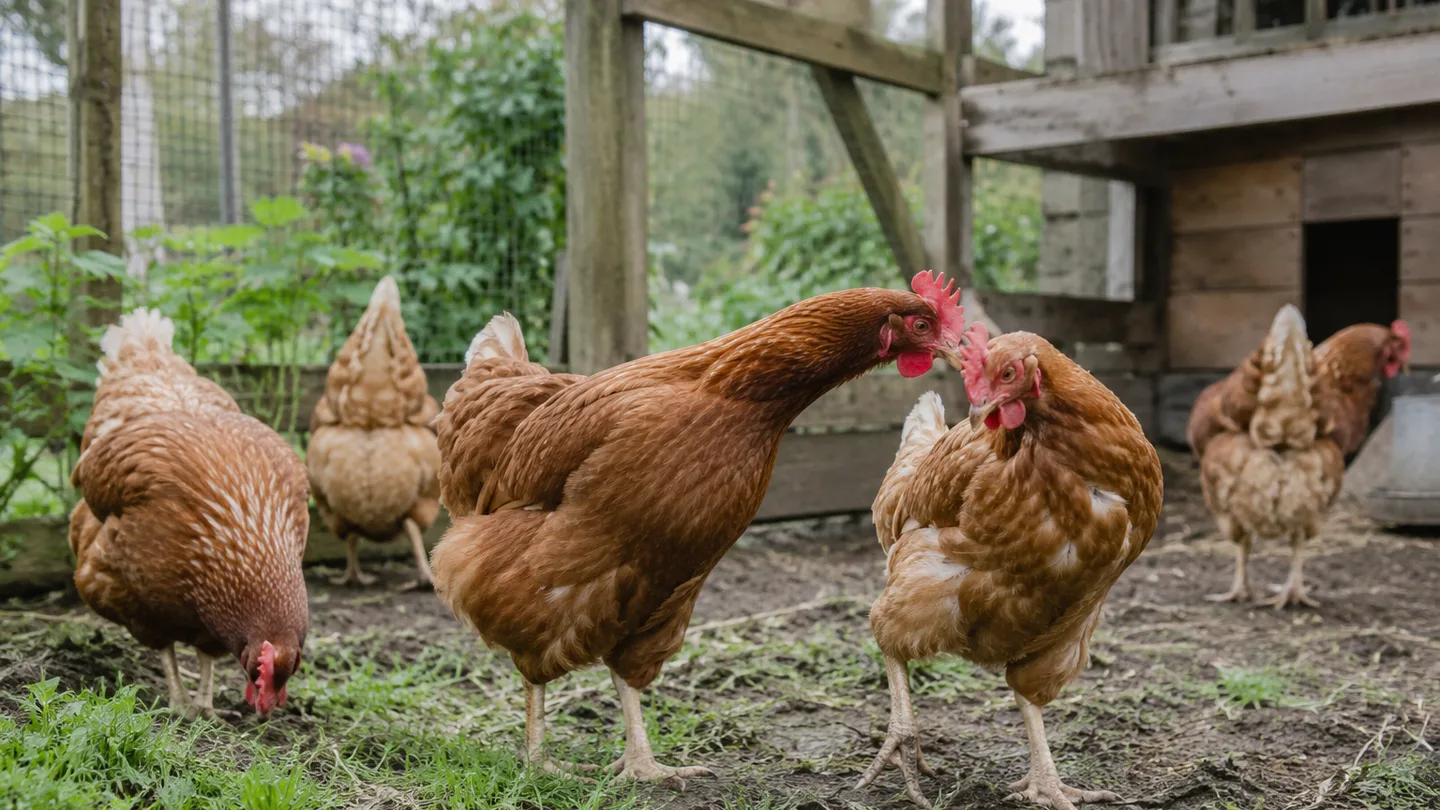
The useful question isn’t whether your hens argue. It’s whether the bird on the losing end can get away and carry on with her day. Watch what happens after the peck: a retreat and a pause are different from a chase that keeps going.
A peck, a chase, a retreat: what normal sorting looks like
A pecking order is the flock’s shifting pattern of who yields space to whom. You may see a brief peck, a short chase, a raised neck, or one hen stepping aside from a feeder. Those moments can look sharp, especially when you’re new to chickens. If the lower-ranking hen can leave, eat and drink elsewhere, and settle to roost, the scene may be routine sorting rather than ongoing bullying.
Pay attention to the sequence, not just the sound. A quick jab followed by separation has a natural stopping point. Persistent pursuit does not: one hen follows the same bird across the run, pecks at her repeatedly, or corners her after she tries to move away. Feather loss, a wound, or a bird that spends the day hiding changes the question from “Who’s boss?” to “Is this bird safe and able to meet her needs?”
Changes can restart the arguments
A new hen, a returning bird, a rearranged coop, or a long stretch indoors can disturb familiar routines. A bird that was accepted before a separation may be treated as unfamiliar when she comes back; a new bird may have to find her place while established hens guard familiar routes and resources. That doesn’t mean every introduction will turn into a fight. It does mean you should watch more closely after a change, rather than assume yesterday’s peace guarantees today’s.
There isn’t a useful countdown that tells you exactly when the sorting is finished. Observe whether disputes are getting shorter and whether each bird can move around the space. If the same hen is chased at every feeding or repeatedly forced off the roost, don’t write it off as a hierarchy settling. The pattern and its effect on the bird matter more than how many days have passed.
My practical rule is to judge the aftermath, not the drama. A loud flap can be over in seconds; a quiet bird that no longer approaches the feeder deserves a closer look.
Use injury and access—not noise—as your intervention threshold
Step in promptly if you see an open wound, bleeding, repeated attacks on one bird, or a hen unable to reach food, water, or a safe roost. A brief squabble that ends when one bird backs off calls for observation, not automatic separation. That distinction keeps you from treating every peck as an emergency while still taking a persistent problem seriously.
A quick decision flow
- Observe from a little distance. Notice which birds are involved, whether the same hen is the target, and whether a chase stops when she gets clear. If it’s safe, avoid crowding the birds during the interaction; your presence can change what they do.
- Check the bird and her access. Look for blood, a wound, or signs she is being kept from feed, water, or a usable roost. Check whether another station or route is actually available to her, rather than assuming it is.
- Separate if safety or basic access is at risk. Use a secure space where the bird can rest and still reach food and water. If there’s an injury, protect the bird from further pecking while you assess whether professional care is needed.
For a significant wound, weakness, or a bird that stops eating or drinking, contact a poultry-experienced veterinarian. A home check can tell you that something is wrong; it can’t establish the depth of a wound or diagnose why a bird is weak. Avoid putting a product on an injury unless its label and a qualified professional’s guidance support that use.
Keep an eye on the bird after you intervene. A hen may appear calmer away from the flock but still need help if she isn’t eating, drinking, or moving normally. If you’re uncertain how serious an injury is, a veterinary practice familiar with poultry is a safer next call than guessing from a brief visual check. General guidance from a poultry vet on wound care and warning signs is useful to have before you need it.
If conflict keeps returning, measure space and check who controls the resources
When disputes cluster around one feeder, one doorway, or bedtime, look at the layout before deciding that a particular hen is simply mean. A single narrow route gives a bird that controls it an easy way to block others. A feeder tucked into a corner can become a dead end. The flock may have enough floor area on paper but still have poor access in practice.
As a planning starting point for a small backyard flock, allow about 4 square feet of indoor coop space and 10 square feet of run space per bird. Treat those figures as a starting point, not a guarantee against conflict or a universal minimum. Bird size and activity, time spent confined, weather, and the shape of the space can all change how usable it feels. For more on how the layout and flock size affect your plan, see how much space do chickens need.
Here’s a concrete layout to think through: imagine a run that is 6 feet wide and 10 feet long, with one feeder just inside the only coop doorway. Even if the flock has room to move around the rest of the run, a hen standing at that doorway can make the feeder awkward to reach. Moving a second feeder toward the opposite end, with an open route to both, gives a bird another way to eat without passing the first hen at close range. The example is a layout exercise, not a promise that adding a feeder will settle every dispute.
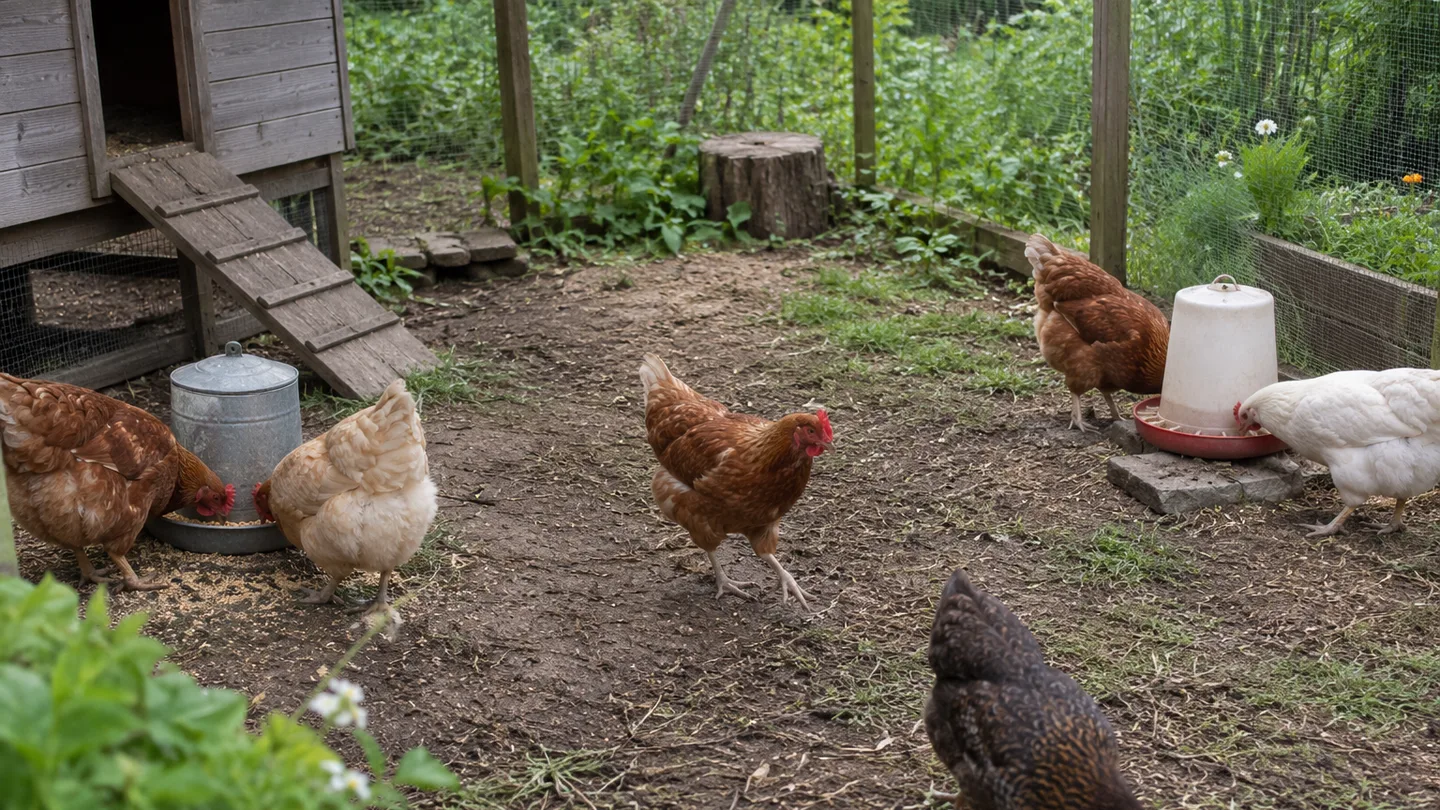
Look for more than one usable approach to food and water. Separate stations can help when one hen guards a particular spot, but they won’t fix a layout where all routes lead through the same bottleneck. A simple board or other secure visual barrier can interrupt a long sightline and give a bird a place to move out of view. Check that it doesn’t create a tight corner where a bird can be trapped.
Several usable roosting spots can also reduce competition at bedtime. That’s a practical layout judgment: if birds have only one crowded landing place, they have fewer ways to avoid one another; more than one safe option gives them room to choose. It won’t prevent every disagreement, and the roosts still need to be stable and reachable by your birds.
In a small flock, a simple sketch can reveal trouble better than another round of watching from the doorway. Mark the feeder, waterer, roost, nest boxes, doors, and any narrow passages. Then draw the route a timid hen would have to take to reach each resource. If every route passes the same perch or corner, change the route, not just the number of items. Low-cost ways to make the run more engaging are covered in chicken enrichment ideas; enrichment can add options, but it isn’t a substitute for safe access to essentials.
Protect the target, change the setup, and reintroduce with a watchful eye
If a hen is injured or cannot reach essentials, move her to a secure recovery area where she can rest without being pecked and can still get food and water. Keep the space appropriate for her condition and protect her from predators. Get veterinary advice for a significant wound, weakness, or refusal to eat or drink. Once immediate safety is addressed, work out whether the aggressor is guarding a resource or whether the targeted bird has become the focus across the whole space.
Change the conditions that make the conflict easy to repeat: add another route, move a station out of a bottleneck, or provide a visual break that doesn’t create a trap. Don’t assume that separating one bird automatically solves the cause. If the resource or layout remains the same, the same contest can resume when the bird returns.
Reintroduce by watching what happens, not by the calendar
There’s no dependable one-day reset, and separation itself can change the group’s arrangement. When a bird is apart, flockmates continue sharing space without her; when she returns, the old pattern may not pick up exactly where it stopped. That’s why a fixed promise such as “one night apart will settle it” is a poor plan. The outcome depends on the birds, the reason for separation, and what has changed in the setup.
When it’s safe to try contact again, start with a setup that allows the birds to see one another without immediate unrestricted access. A secure mesh divider can let you observe their responses while preventing direct pecking; check that the divider is stable and that no bird can squeeze through or get caught. Move to supervised shared time only if the birds can approach and move away without repeated targeting. If an attack, fresh injury, or renewed exclusion occurs, end the contact and reassess rather than forcing the session to continue.
For a small-flock example, picture three hens in a run with one feeder beside the pop door. One hen repeatedly waits at that doorway, and another turns back whenever she approaches. The useful first change is not to label either bird a bully: put a second feeder on the far side, clear a route between them, and observe a full feeding period. If the same hen still can’t eat, the problem remains and calls for a safer separation and closer assessment. That step-by-step example is a decision aid, not a report of a measured trial or a guarantee.
This week, watch one complete feeding period. Note who approaches, who yields, whether anyone is chased away, and whether each bird gets a turn. Then count the usable routes to food, water, and roosts, not just the fixtures themselves. If a route narrows to one guarded doorway, make one practical layout change and check what happens at the next feeding.
For a broader plan to compare your coop and run with your flock size, start with how much space do chickens need. That’s a better next step than trying to force a pecking-order reset on a calendar.