Oregano for Chickens: Benefits, Risks, and How to Use It
A small sprig of oregano can be an optional taste for healthy adult hens, but it isn’t a treatment, and there’s no reliable oregano dose to measure out per bird. Keep the normal complete feed available, offer the herb separately in a small amount, and remove it if your flock turns away from its ration or leaves it damp.
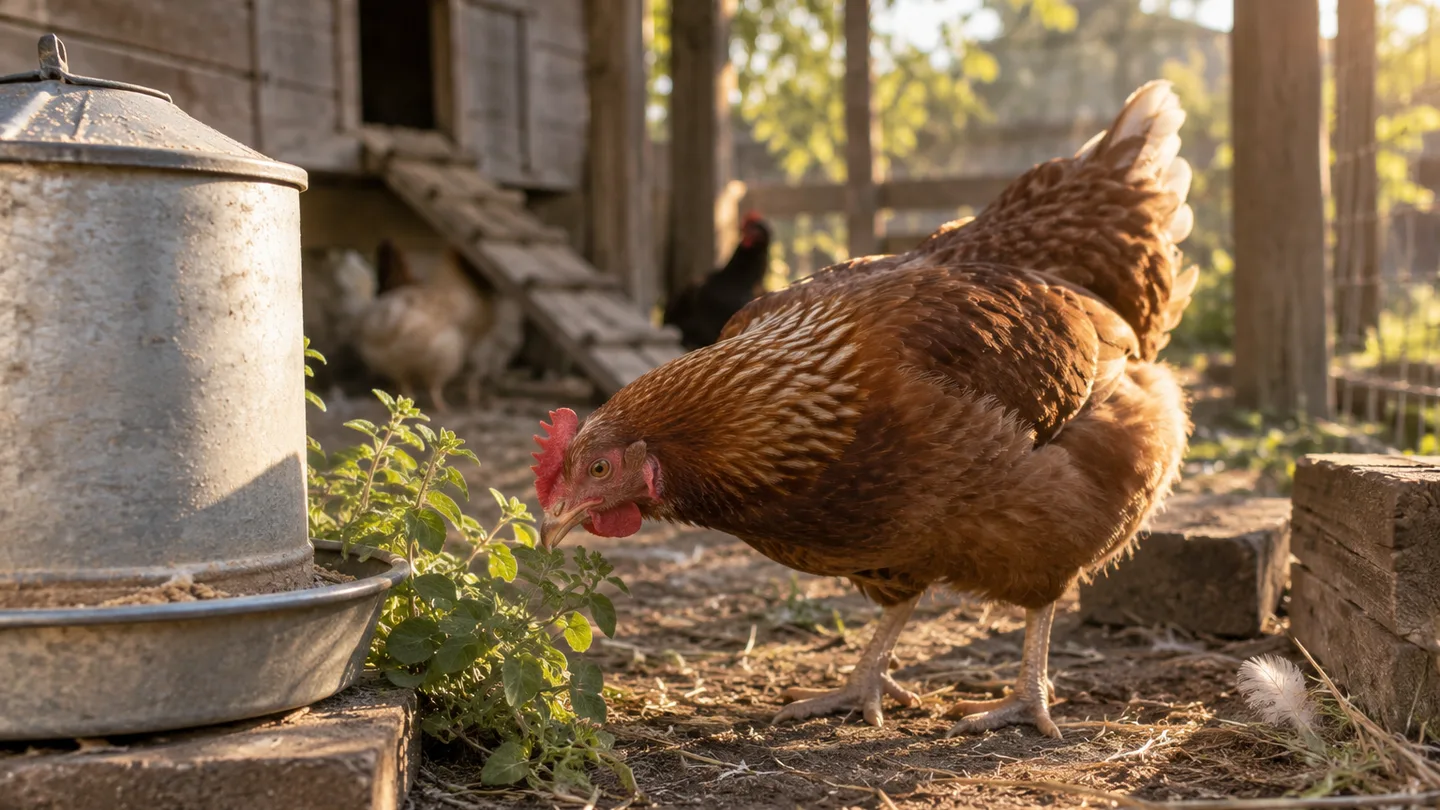
That’s the useful answer to “can chickens eat oregano?”: a little culinary herb is a reasonable treat to try, not a supplement you need to add. The distinction matters. A flock that fills up on extras may eat less of the ration designed to meet its nutritional needs.
I wouldn’t give you a number of grams per hen and call it an established dose. The form of the herb, the size of the birds, and how much they actually eat all vary. More importantly, a pinch in a backyard feeder is not the same thing as a researched, formulated feed product.
Use the same practical test you’d use for any unfamiliar extra: does it stay an extra, or does it start crowding out dinner? If you’re working out the daily ration first, see how much feed per chicken per day. Oregano shouldn’t replace that feed, even if your hens eagerly peck at it.
Here’s a concrete example, not a prescribed dose: imagine six healthy adult hens and one small, clean sprig of fresh oregano. Leave their usual feed in place, offer the sprig separately, and watch whether they investigate it. If they ignore it, take it away. If they nibble, that still doesn’t mean you should add more the next day or mix a larger amount into the whole feeder.
My judgment call is to make new treats easy to refuse. Mixing an herb through the ration makes it harder to tell whether every bird is eating normally and harder to remove what they don’t want. A separate, brief taste gives you a clearer read.
Oregano for chickens: a small treat, not a measured supplement
Plain fresh oregano leaves and culinary dried oregano are different ways to offer the same kind of kitchen herb. Neither needs to become part of a daily routine. A treat is optional; your birds’ usual complete feed remains the dependable base of the diet.
Think of “small” as a cautious first offering, not a universal weight. A handful of leaves shared by a few hens may be eaten unevenly: one bird may grab a bite while another stays at the feeder. That’s another reason not to treat a per-bird figure as precise. You can observe what happens without assuming every hen received the same amount.
Keep the feeding area ordinary. Don’t withhold the ration to make the herb more appealing, and don’t use oregano to encourage a sick or off-feed bird to eat. If a hen’s appetite has changed, that change deserves attention in its own right; masking it with a tempting extra can delay a useful check.
Also consider what else your flock gets that day. If you regularly offer kitchen scraps, greens, or other extras, oregano joins that overall treat picture. There isn’t a special oregano allowance that makes the rest of the treats irrelevant. For another example of checking an extra against a bird’s normal diet, read can chickens eat broccoli.
The baseline is simple: keep the ration available, offer a little culinary oregano separately if you want to, and don’t make it a health intervention. That’s cautious without pretending the herb is a required part of chicken keeping.
Antimicrobial reputation vs. what backyard keepers can rely on
Oregano’s pungent, aromatic compounds are one reason people take an interest in oregano products for animals. But a plausible mechanism is not the same as a dependable result in a backyard flock. A finding involving a concentrated extract, a particular formulation, or a controlled research setting doesn’t tell you what a hen will get from pecking a leaf beside the feeder.
That gap is easy to miss. An ingredient can be discussed for its activity under particular conditions and still have no useful, established kitchen-herb dose for your birds. The route, concentration, ration, and bird all affect what an exposure means. “Oregano was studied” isn’t enough information to tell you to sprinkle it on feed or put it in water.
So keep the claim narrow. A little culinary oregano may make an interesting treat; you shouldn’t count on it to prevent or treat respiratory illness, coccidiosis, mites, or another flock problem. Don’t use it to replace diagnosis, a suitable care plan, or treatment advised by a poultry veterinarian.
The same restraint applies to egg production and “boosting immunity.” I wouldn’t promise more eggs, a stronger immune response, or parasite control from kitchen oregano. A bird’s laying pattern and condition have several possible influences, and a change after a treat doesn’t establish that the herb caused it.
If you’re comparing claims you see online, ask three questions: Was the product culinary leaf or a concentrated extract? Was it part of a formulated ration or simply added by a keeper? And is the claim about a measured outcome, or just about a plausible mechanism? Those questions don’t prove an effect; they help you avoid treating unlike situations as interchangeable.
For nutrition basics, look to your feed label and regional university extension guidance on complete poultry diets. For a bird that remains unwell, contact a poultry veterinarian rather than increasing an herb. Oregano is enrichment at most, not medicine.
Fresh, dried, or essential oil: concentration changes the risk
“Oregano” can mean a leaf from the garden, a jar of dried seasoning, or a concentrated essential oil. Those aren’t interchangeable servings. A kitchen-herb taste gives you no sound basis for calculating an oil amount, so don’t improvise a dilution for the feed or water.
| Form | Reasonable backyard use | Main caution |
|---|---|---|
| Fresh leaves | Offer a small, clean sprig separately as an optional taste. | Remove leftovers if they become damp, dirty, or ignored. |
| Culinary dried oregano | Offer only a little separately, while the usual ration stays available. | Don’t assume a dried-herb pinch equals a fresh-leaf serving. |
| Essential oil | Don’t add it to feed or water by guesswork. | It is concentrated; a leaf-based serving cannot set an oil dose. |
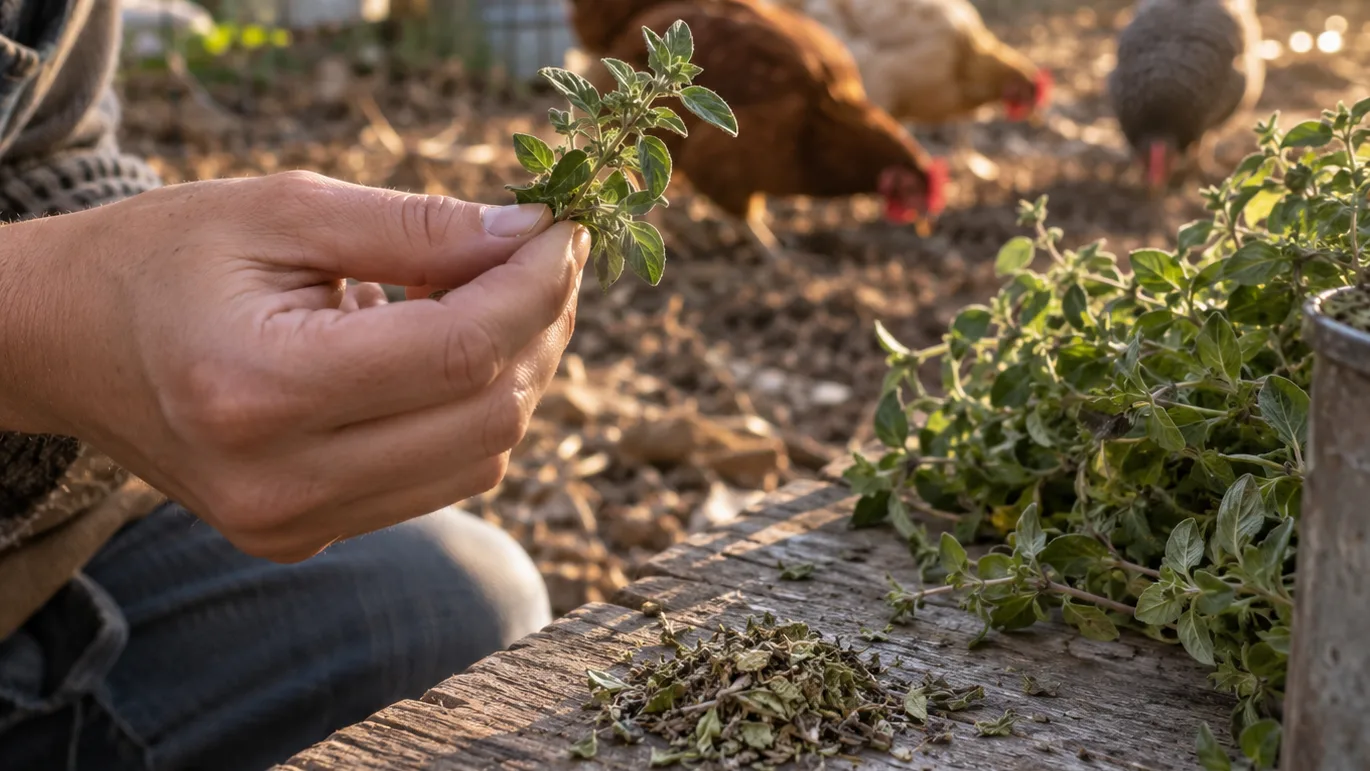
Fresh leaves are easy to inspect and remove. Dried oregano is also easy to scatter, which is exactly why a heavy shake into the feeder is a poor first test. If the birds reject it, you’ve distributed the unwanted extra through their normal food instead of taking it away.
With oil, stop before the kitchen experiment begins. Concentration changes the exposure, and oil added to water or feed may not distribute the way you expect. I can’t give you a DIY number that makes that predictable. Use a product only if it is specifically intended for poultry and its label or a poultry veterinarian gives directions for that use; don’t transfer instructions for one product to another.
Watch the food, not just the birds’ interest in oregano. If the ration is being avoided, remove the herb and offer the regular feed without it. If a fresh sprig is left damp or dirty, take it out the same day rather than leaving it to sit in the run. The aim is a brief, optional taste, not a new source of stale or spoiled scraps.
When you’re adding other fresh treats, use the same standard: keep them separate from the full ration and remove leftovers that are no longer clean. The particular treat matters, but the basic check is whether your flock continues eating its usual feed.
A low-risk way to offer it—and signs to stop
Try this simple sequence if you want to see whether your adult hens like oregano:
- Start with healthy birds and keep their usual complete ration available.
- Offer a small amount of plain culinary oregano separately, rather than stirring it through the feeder or water.
- Watch whether the birds keep eating their ration normally. Don’t interpret interest in the herb as a reason to increase the serving.
- Remove damp, dirty, or ignored leftovers the same day.
- Stop offering it if you notice a change in appetite or droppings. If a problem persists or a bird seems unwell, seek advice from a poultry veterinarian.
Those steps are a cautious routine, not a treatment protocol or a claim that oregano is proven harmless in every amount or for every bird. Avoid offering it to a hen whose health or appetite is already in question, and don’t try to solve a suspected illness by escalating the herb.
One useful distinction: a bird that takes a peck has shown interest, not a need. You don’t have to repeat the treat daily, and there’s no reason to make oregano a fixed part of the ration. My preference is to keep extras occasional and easy to remove. That leaves fewer variables if a bird’s appetite changes and keeps your attention on the food that is meant to do the nutritional work.
For ongoing symptoms, use veterinary guidance for backyard poultry illness rather than a home herb remedy. A vet can help you decide what the signs mean and whether testing or treatment is appropriate. If you’re unsure whether an appetite or droppings change is significant, note when it began, which bird is affected, and what else changed in the feed or routine before you call.
Can chicks eat oregano?
Keep chick starter as their main food. I wouldn’t use oregano leaves or oil as a supplement for chicks, and I can’t offer an established chick-specific dose. Young birds are a poor place to experiment with concentrated products or to let treats displace their starter.
Can oregano change the taste of eggs?
Don’t count on a predictable flavor change from a small kitchen-herb treat. You may encounter keeper anecdotes, but that isn’t enough to promise that your eggs will taste different. Keep oregano optional rather than feeding it to chase a flavor.
Can oregano treat coccidiosis or a respiratory infection?
No. Don’t rely on oregano to diagnose, prevent, or treat those problems. If a bird has persistent symptoms, contact a poultry veterinarian for guidance instead of increasing the herb or essential oil.
This week, if your healthy adult hens already have a complete ration, you can offer one small sprig separately and watch what they do. If they leave it, remove it; if a bird seems ill, skip the treat and call a poultry vet.
Frequently Asked Questions
Can chicks eat oregano?
Chick starter should remain their main food; there is no established chick-specific oregano dose, so avoid using herbs or oil as a supplement.
Can oregano change the taste of eggs?
Don't promise a predictable flavor change; distinguish anecdotal keeper reports from an established, reliable effect.
Can oregano treat coccidiosis or a respiratory infection?
No. Oregano is not a substitute for diagnosis or appropriate treatment from a poultry veterinarian.