Mycoplasma in Chickens: Symptoms, Treatment, and Prevention
One hen sneezing once is background noise in a dusty coop. Three birds with watery eyes, thin nasal discharge, or a sudden drop in appetite within a day is a flock pattern worth acting on. Mycoplasma in chickens can look mild at first, then become much harder to manage when stress, poor air, or another infection piles on.
The first clue is usually a flock pattern, not one symptom
The signs most keepers notice are sneezing, coughing, watery or foamy eyes, nasal discharge, conjunctivitis, swollen sinuses, reduced appetite, and lower laying. With Mycoplasma synoviae, lameness or swollen joints can also enter the picture. A single sneeze is not a diagnosis. Several birds developing related signs over the same day tells you more because they share air, litter, water, and feed.
Last spring, my barred Plymouth Rock, Hazel, began making a soft sneeze at the feeder. By late afternoon, one eye looked wet and faintly foamy. She was still eating. The following morning, two of my other six hens had watery eyes, and one had a thin nasal discharge. I moved Hazel into a covered isolation pen with her own waterer and feeder, replaced the dusty top layer of litter, opened the high vents, and called a poultry vet. The vet’s working diagnosis was Mycoplasma, and a swab was taken before we settled on a flock plan. Hazel’s appetite stayed normal, the eye discharge cleared over the next week, and none of the birds progressed to open-mouth breathing. I still treated that group as exposed and stopped moving birds between pens.
Cold stress, ammonia, dusty bedding, crowding, and a second infection can push a mild respiratory problem into a much rougher-looking one. That is why I use the table below to choose my next check, rather than to label a bird from appearance alone.
| Possible problem | Signs that can fit | Clues that change the next step |
|---|---|---|
| MG | Sneezing, coughing, nasal discharge, watery or foamy eyes, lower laying | Several birds show signs close together, especially after stress |
| MS | Respiratory signs, lameness, swollen joints, stiff movement | Walking changes or reluctance to perch deserve a closer examination |
| Infectious coryza | Discharge, facial swelling, reduced appetite, lower laying | Facial swelling and a fast change across the group need veterinary input |
| Infectious bronchitis | Flock respiratory noise, watery eyes, laying changes | Age, laying history, and the speed of spread matter |
| Laryngotracheitis | Marked upper-airway distress, gasping, or blood-stained mucus | Urgent veterinary or local poultry-program guidance is appropriate |
| Air irritants | Sneezing, watery eyes, and irritation after dusty litter or ammonia buildup | The timing points toward the coop environment, but persistent signs still need assessment |
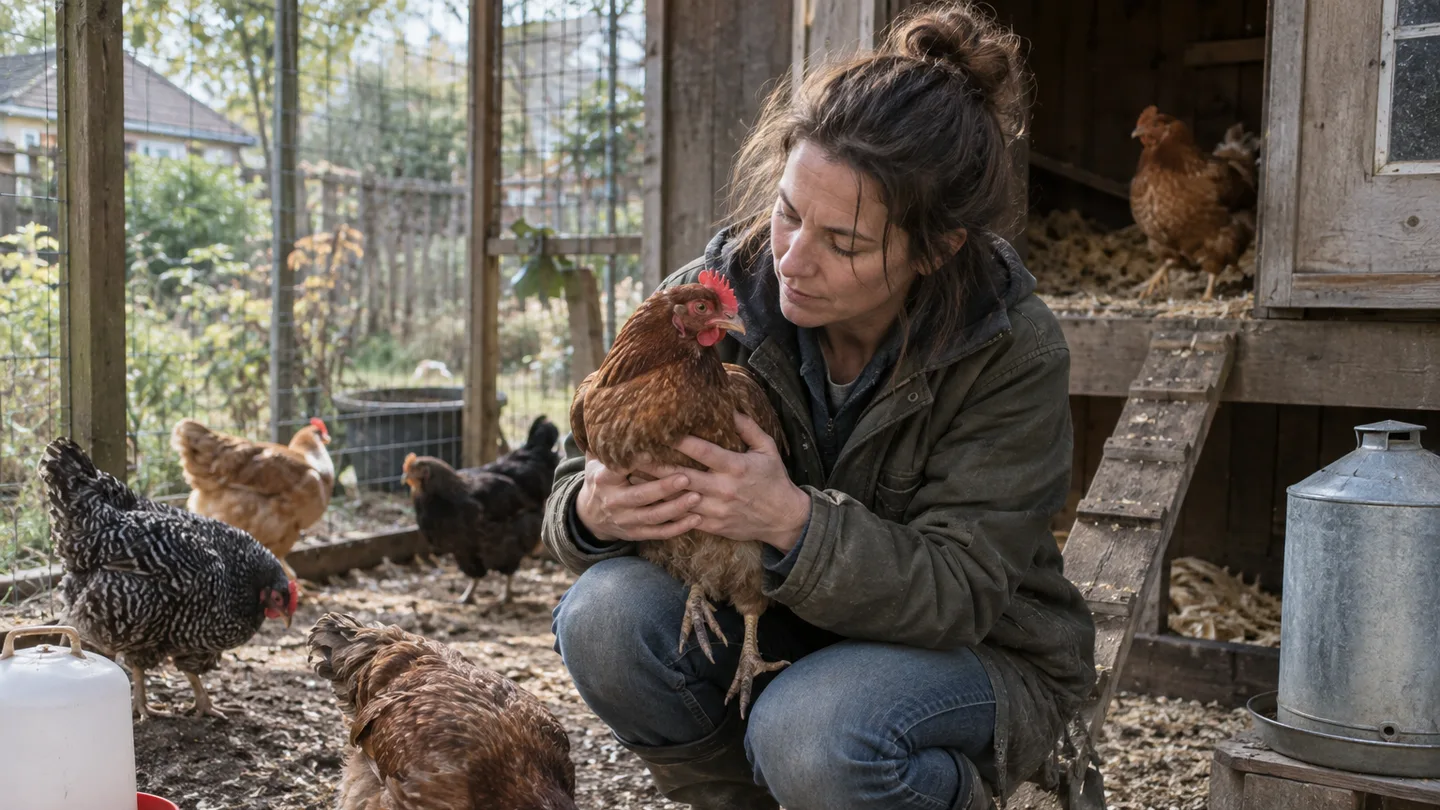
Separate today: a 24-hour triage plan for a coughing or swollen-eyed bird
The first 24 hours are about separation, records, and a veterinary call. You do not need a perfect diagnosis before you reduce contact. You do need to avoid turning one sick bird into a shared-waterer problem.
- Separate the symptomatic bird. Use genuinely separate housing if you can. Give her dedicated feed, water, bedding, and tools. A crate inside the same dusty coop is better than nothing, but a different airspace is safer.
- Write down what you see. Record breathing at rest, appetite, drinking, droppings, body condition, eye and nose discharge, lameness, and the number of birds affected. Note when each sign began.
- Check the rest of the flock from outside the pen. Watch for open-mouth breathing, tail bobbing, reduced movement, or birds standing apart. Avoid handling every bird unless you need to examine one.
- Call a poultry veterinarian. Ask whether the bird should be sampled before medication, whether the whole group needs examination, and how to handle eggs during treatment.
- Pause movement. Do not sell, give away, or introduce birds while you are trying to understand a respiratory outbreak.
Same-day red flags include open-mouth breathing, marked weakness, inability to reach feed or water, blue or purple facial tissue, severe swelling, or rapid worsening. A bird showing those signs needs veterinary guidance rather than a cupboard search for leftover medication.
Random antibiotics create three practical problems. They can blur the signs a veterinarian needs to see, complicate later testing, and create egg or meat withdrawal questions. Save the medication container and label for the vet if you already gave something.
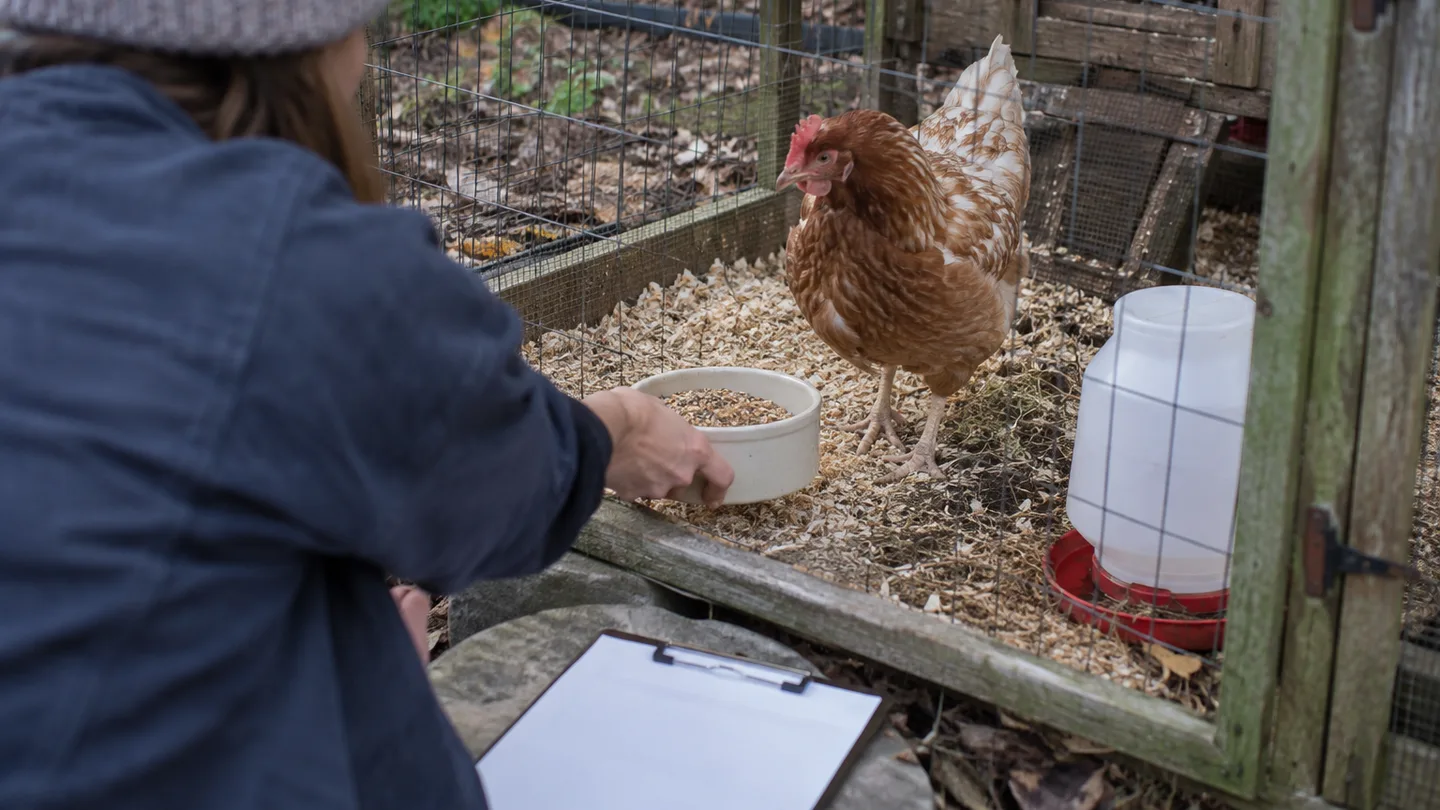
Testing decides more than appearance: MG, MS, and their look-alikes
A veterinarian may use PCR or another molecular test from an appropriate respiratory sample, serology to look for evidence of exposure, or culture where available. The choice depends on the bird, the timing, the laboratory, and what decision you are trying to make. If the bird is stable, sampling before antibiotics usually gives the cleanest starting point for that decision.
MG and MS belong to different Mycoplasma problems. MG makes me think first about recurring upper-respiratory signs such as coughing, discharge, and foamy eyes. MS can also cause respiratory signs, but lameness, swollen joints, or stiff movement raise its place on the list. Birds can show mixed signs, so the distinction belongs with testing and veterinary interpretation.
A positive result can show that a flock has been exposed without proving that every current sign comes from Mycoplasma. Dust, ammonia, infectious coryza, infectious bronchitis, laryngotracheitis, and other bacterial complications can overlap with the same first clues. That is why I would want testing before moving birds, buying replacements, or treating an entire flock when the result will change those decisions.
Testing matters most when you need a movement rule. If you are keeping a closed backyard flock and treating one bird for comfort, your vet may choose a different work-up than if you plan to sell hatching eggs, add new birds, or place birds with another keeper.
Treatment can quiet the signs without clearing the flock
Veterinary-selected antibiotics may reduce respiratory signs or secondary bacterial complications. Clinical improvement and carrier status are separate management questions, so a bird that looks brighter can still affect how you manage the group.
Supportive care is straightforward. Keep the bird warm and dry. Give easy access to water and feed. Improve air exchange above head height while blocking direct drafts. Replace dusty litter, reduce handling, and keep the recovery pen calm. A bird that cannot reach water has a more immediate problem than a bird that simply looks untidy around the eyes.
On a later case, I put a coughing hen in a crate in a closed utility room because I was worried about cold air. Within a short time, the covered crate felt stale and condensation gathered on the nearby surface. I moved it to a sheltered run with a windbreak, high ventilation, dry bedding, and its own equipment. She settled enough to drink and eat. That mistake changed my setup: isolation now means protection from direct wind, not sealed air.
A veterinarian may consider a product from a tetracycline or macrolide class, among other options, depending on the diagnosis, local rules, resistance concerns, and the product label. Do not copy a dose from another flock. Follow the prescription and label exactly.
Egg and meat withdrawal belongs in the same written plan as the medicine. The correct interval depends on the product and its label, so there is no universal number I can responsibly give you. Ask what to do with eggs from the treated bird and how to mark the end of the withdrawal period. Arrange a recheck if the bird worsens or fails to improve within the window your veterinarian gave you.
My rule is simple: an isolation pen, separate tools, and better air are usually more useful first purchases than a shelf full of general supplements. In a small flock, spend first on the parts of the system that stop contact and make observation easier.
The 30-day quarantine that keeps a new carrier out of your run
I use 30 days as a floor for incoming birds because a short observation period can miss a problem that appears after transport stress. Quarantine lowers risk. It cannot guarantee that a bird is free of a chronic carrier infection.
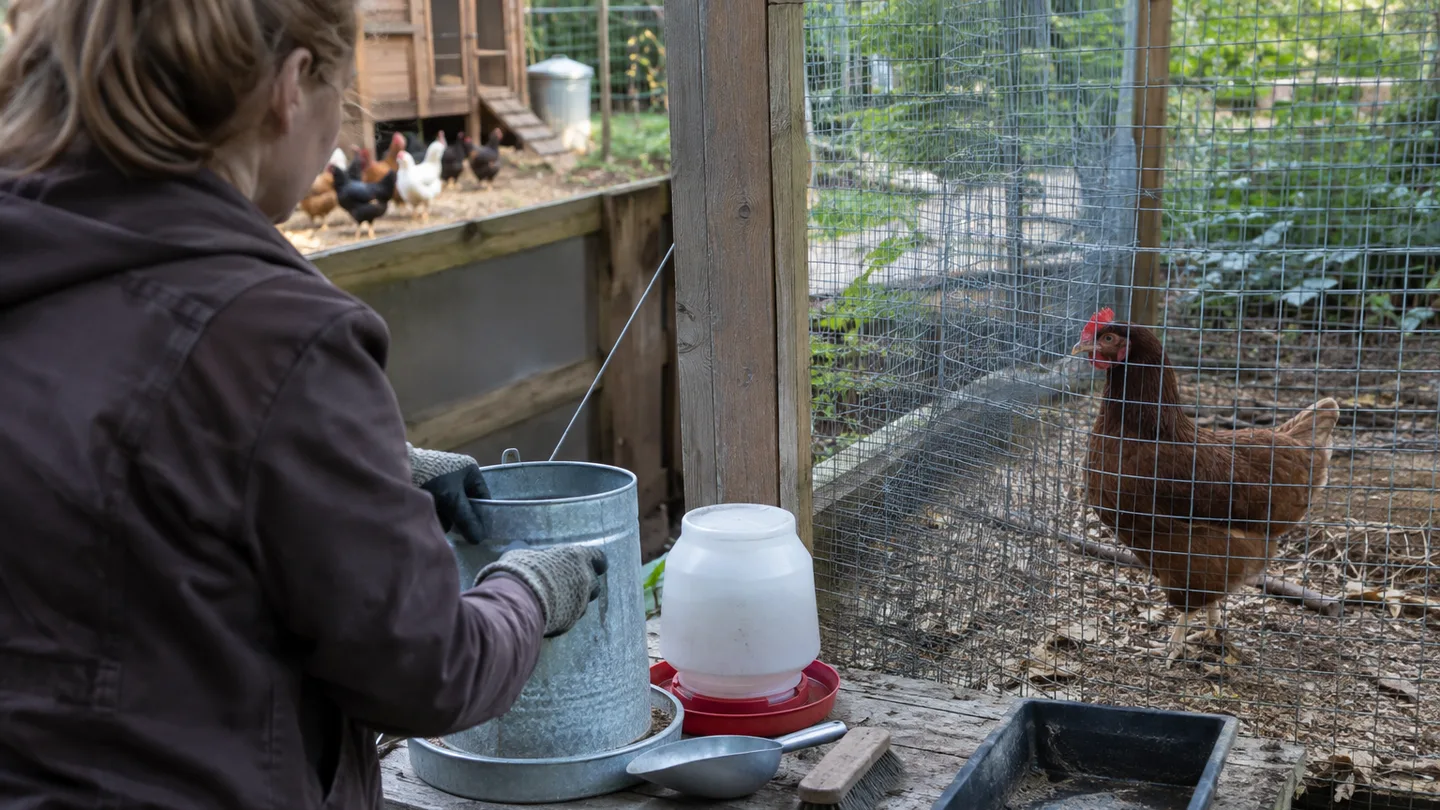
Give new birds separate airspace when possible. Keep one dedicated set of boots, tools, feeders, and waterers for the quarantine area. Wash your hands between groups, and care for your established flock before visiting the newcomers. If the buildings share air, increase distance and ventilation, and understand that the separation is weaker.
Check the new birds every day. Record appetite, droppings, breathing, eye and nose discharge, body condition, lameness, and changes after handling or weather shifts. A healthy-looking bird can still carry a respiratory infection, so testing before introduction matters when your flock status has value or when you plan to sell, breed, or share birds.
End quarantine because the calendar has passed and the bird remains well, not because one bright morning makes the risk disappear. Any sneezing cluster, discharge, swollen face, breathing change, or drop in appetite should extend the separation and trigger a veterinary question. Adding a replacement during or soon after a respiratory outbreak is a poor time to test your biosecurity.
After a positive result: closed-flock choices, cleaner air, and honest movement rules
After confirmation or strong veterinary suspicion, the simplest backyard option is often a closed flock: keep the birds you have, stop adding replacements, and avoid sharing birds, hatching eggs, equipment, or housing with another flock. That choice reduces new introductions, but it does not reverse exposure that has already happened.
If you must source future birds, look for a tested program and ask exactly what was tested, when, and under which regional rules. Vaccination options and testing requirements vary by location and flock purpose, so put those decisions in a plan with your veterinarian or local extension office.
Air management deserves more attention than many supplement shelves receive. Use high vents for steady exchange, keep litter dry, remove wet spots quickly, and avoid crowding the birds you have. Reduce dust when filling feeders or changing bedding. For the practical coop side, review chicken coop ventilation and how to clean a chicken coop so air quality and high-contact surfaces receive the same attention as medication.
Clean feeders, waterers, crates, and handling tools with a disinfectant used according to its label. Remove organic dirt first, because a dirty surface gives disinfectant more work to do. Let equipment dry before returning it to the flock.
Do not sell, give away, or rehome potentially infected birds without disclosure. Check local poultry-program requirements before moving birds or hatching materials. For background reading, compare your notes with Merck Veterinary Manual guidance on avian mycoplasmosis and USDA NPIP and state poultry-program guidance on MG and MS testing. Use those references to frame questions, not to replace a flock-specific diagnosis.
Three questions readers ask after a positive result
Can humans catch Mycoplasma from chickens?
I do not treat the poultry Mycoplasma group discussed here as the same organism group people commonly mean when they talk about human respiratory Mycoplasma infections. Use ordinary hand hygiene, avoid touching your face after handling a sick bird, and speak with a clinician if you develop respiratory symptoms. Do not try to diagnose a human illness from what you saw in the coop.
Can you eat eggs from a hen with Mycoplasma?
Separate the infection question from the medication question. If the hen received a drug, follow the exact egg withdrawal instruction on that product’s label and your veterinarian’s plan. If she is ill but has not received medication, ask your veterinarian or local authority how they want the eggs handled. There is no responsible universal withdrawal interval for every product.
Is Mycoplasma the same as infectious coryza?
No. Coryza and Mycoplasma are separate disease problems, but sneezing, discharge, facial swelling, and reduced laying can overlap. Appearance alone may leave you choosing between several causes, which is where a veterinary examination and appropriate testing earn their keep.
Your action this week: set up an isolation pen, label one dedicated tool and water set, and save a poultry-vet contact in your phone. Then walk through the coop with a flashlight and fix the first air or litter problem you can see.
Frequently Asked Questions
Can humans catch Mycoplasma from chickens?
Explain that the common poultry Mycoplasma species discussed in backyard flocks are not treated as the same pathogens as common human respiratory Mycoplasma infections; recommend normal hand hygiene and medical care for human symptoms rather than self-diagnosis.
Can you eat eggs from a hen with mycoplasma?
Separate infection status from medication safety: eggs must not be eaten or sold during the withdrawal period on the product label, and a veterinarian or local authority should guide decisions when the bird is ill but not medicated. Do not invent a universal withdrawal interval.
Is mycoplasma the same as infectious coryza?
Answer no. The illnesses can share sneezing, discharge, facial swelling, and reduced laying, so appearance alone cannot reliably distinguish them; testing and veterinary assessment may be needed.