Molting Chickens: Why Eggs Drop and What to Do Each Week
At 7:15 a.m., you open the nest box and find one egg where six were usual, while loose feathers cover the coop floor. That can be a normal molt. Molting chickens often put fewer resources into eggs while they grow replacement feathers, and shorter autumn daylight can deepen the pause. Use six to twelve weeks as a planning window, not a deadline, then check the bird rather than judging the whole flock by the egg basket.
If a hen is eating, drinking, moving normally, and growing clean new pin feathers, a production drop by itself calls for observation. Weight loss, damaged skin, or a sudden change in several birds calls for investigation.
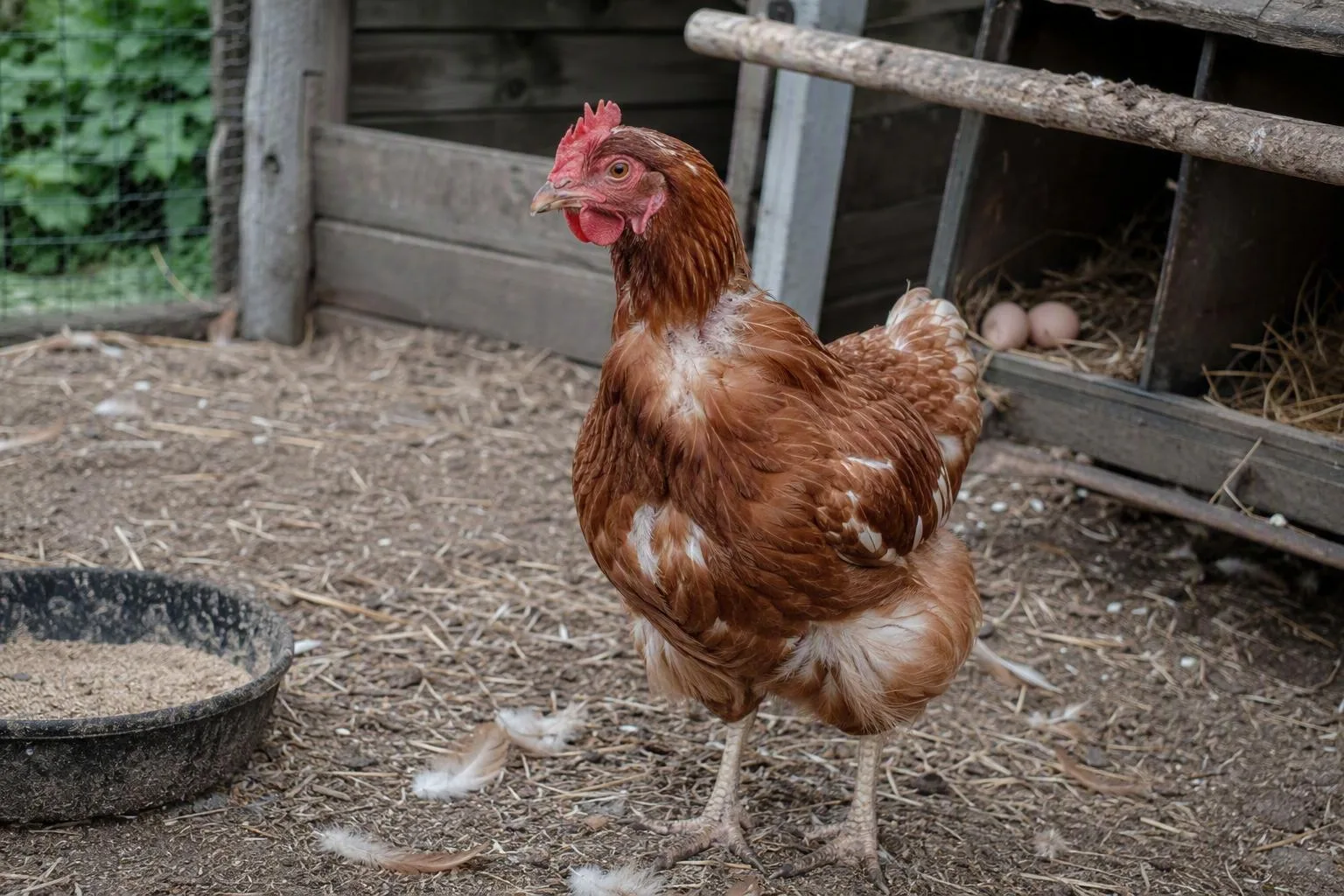
Before you change feed, decide whether it’s a normal molt
A normal molt is a feather replacement period, not a disease diagnosis. Feather growth needs building materials and energy. Laying needs them too. If your hen’s intake does not cover both demands, egg production may slow or stop for a while. The seasonal daylight signal can add to that decline.
The pattern moves with age, breed, season, body condition, and the individual bird. One hen may lose feathers around her neck first. Another may look ragged across the saddle and tail. Not every hen stops laying, and a flock can contain birds at different stages.
Start with a quiet baseline. Look at each bird once a day and note:
- Appetite and water intake.
- Activity, posture, and interest in the flock.
- Skin colour, scabs, bleeding, and the size of bare areas.
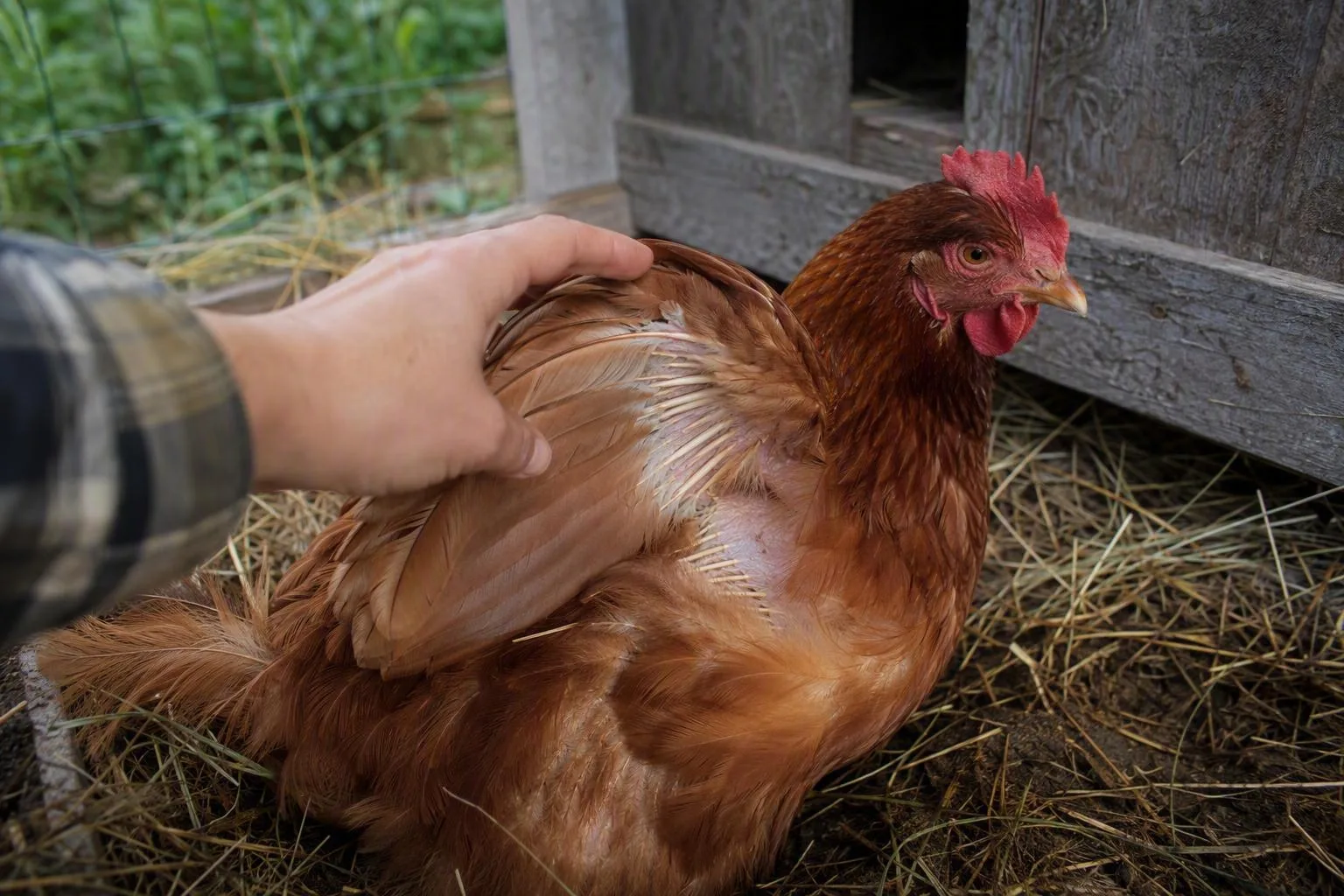
- Short feather shafts, called pin feathers, emerging from the skin.
- Droppings compared with that bird’s usual appearance.
- Body condition, checked gently rather than by repeated catching.
| What you see | More consistent with routine molt | Check sooner for another cause |
|---|---|---|
| Feather pattern | Uneven loss with new short shafts appearing. | One sharply picked patch, broken feathers, or loss that keeps spreading. |
| Skin | Intact skin without persistent irritation. | Scabs, blood, raw skin, or heavy debris at feather bases. |
| Bird’s behaviour | Eating and moving close to normal. | Repeated scratching, lethargy, weight loss, or flock mates driving her away. |
Week 1: make the coop quiet, dry, and easy to monitor
Week one is about removing avoidable stress, not forcing the eggs back. Keep a complete ration and clean water available to a healthy flock. Replace wet bedding, fix leaks, and make sure the roost is stable. A bird with tender new shafts has less tolerance for being grabbed, squeezed, or chased around the coop.
Look at each bird daily, but catch her only when the check requires it. Don’t pull loose feathers. Don’t bathe a hen simply because she looks untidy. Wet plumage takes longer to dry, and rough handling can break or irritate emerging pin feathers. Skip the pile of unbalanced supplements too. A varied treat bowl is not a substitute for a complete feed.
Keep a simple card on a clipboard outside the coop. Record the date, bird identity, appetite, activity, bare areas, and the flock’s daily egg count. A useful entry might read Hen 2: active, eating, new neck pins, no egg; Hen 5: scratching, bare vent, inspect tonight. That small distinction stops a parasite problem in one hen from disappearing inside a normal-looking flock total.
Weeks 2–3: feed the feather, not the treat jar
Use the feed label as your control rather than chasing a universal molt recipe. For an average adult hen of laying size, treat roughly 90–120 grams of complete feed per bird per day as a planning range. Smaller breeds, large breeds, cold weather, free-ranging, wastage, and actual appetite can move the amount. Watch what your birds consume and adjust the buying plan from there.
For six hens, that range works out to 16.2–21.6 kilograms over 30 days. The calculation is simple: bird count × daily grams × 30, then divide by 1,000. To estimate a monthly feed cost, divide those kilograms by the bag weight and multiply by the current local bag price. Check your feed store or supplier before relying on the result, because bag sizes and prices change.
As a comparison band, you may see complete layer labels around 16–18% protein and complete flock or molt feeds around 18–20%. Use the actual label in your hand. A higher protein number can support a feather-building ration, but it does not guarantee that eggs will return while the hen’s seasonal cycle is still quiet.
- Change rations gradually across several feedings instead of emptying one feed into the other overnight.
- Offer a separate calcium source when appropriate for actively laying birds and consistent with the feed label. Don’t force extra calcium on every bird as a molt shortcut.
- Treat 10% or less of intake as a planning cap. Scratch, fruit, and kitchen leftovers should not crowd out the complete ration.
- Keep water available and check it twice during a hard freeze.
- Use vitamin products or medications only for a stated purpose and according to their labels. A megadose is not molt care.
Weeks 4–6: track the egg comeback without forcing it
By the middle of the molt, the nesting box is a poor progress meter on its own. Use your log. Track eggs by hen when you can identify the layer, new pin feathers opening, bare skin shrinking, appetite, activity, and body condition. A flock total can rise while one quiet hen is still losing ground.
The clipboard example matters here. If Hen 2 has moved from no egg to two eggs in a week and has clean pins filling her neck, that is two separate improvements. If Hen 5 is still scratching at a bare vent, the egg count should not erase that clue. Inspect her rather than increasing protein for the whole flock.
Some hens resume laying before they look fully feathered. Others wait until regrowth is nearly complete. Treat that difference as individual timing, not a reason to push supplements. Stable appetite, normal activity, and new feather growth support continued routine care. Falling condition, worsening skin changes, or a sudden drop across several birds means you should investigate feed access, parasites, lighting, and illness.
Feather loss that isn’t a molt: a symptom-to-cause check
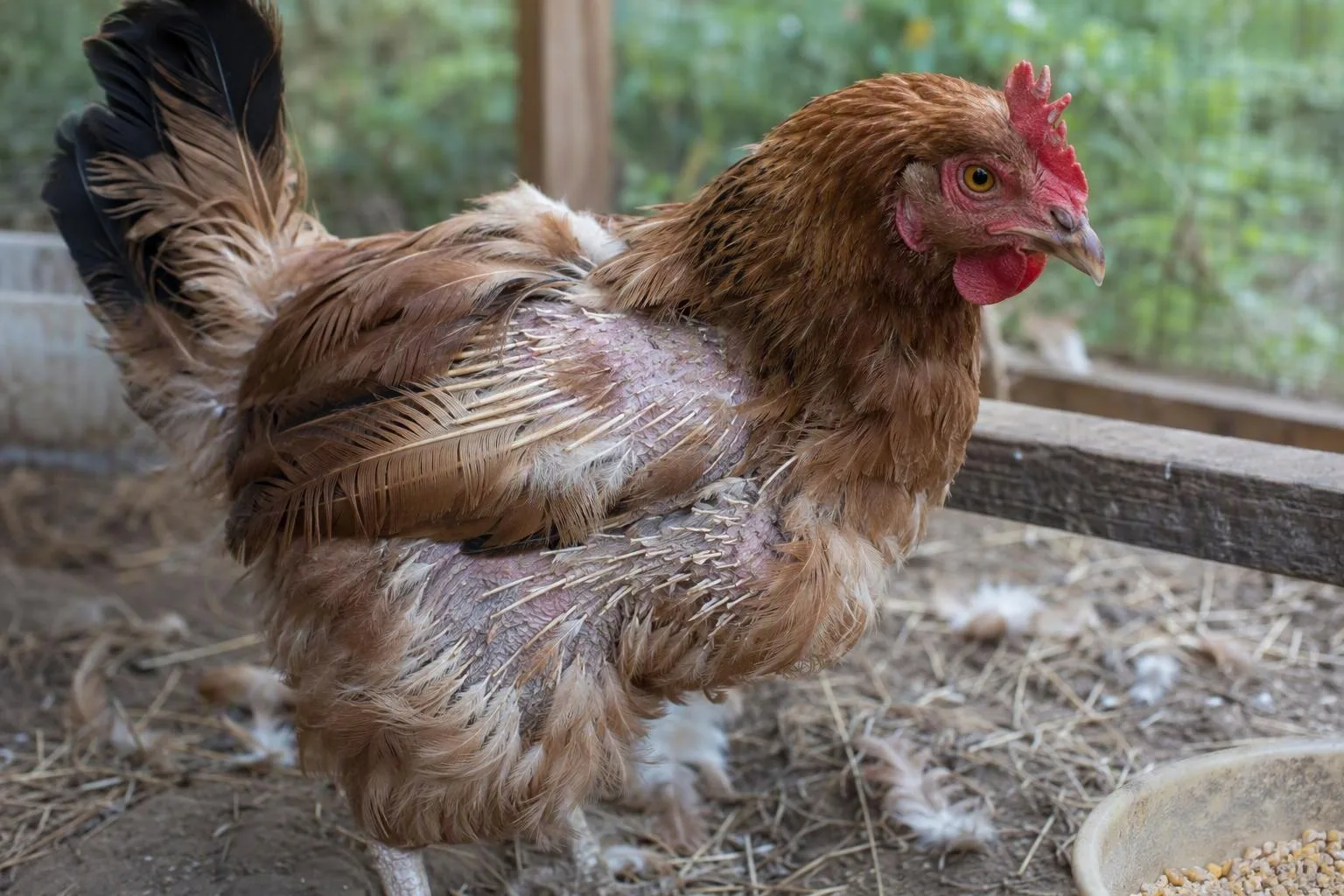
Feather loss is a sign, not a cause. Check the bird and her environment in an order that matches what you can see. Start with the vent and feather bases, then inspect the roost, nest area, feed access, and flock behaviour.
| Sign | Immediate check | Next step |
|---|---|---|
| Persistent itching, scabs, dark specks, or irritated skin | Inspect feather bases and the vent. For mites that hide in coop cracks during daylight, inspect roost joints and crevices after dark. | Inspect every bird and the coop. Use a product labelled for the identified parasite, bird species, and housing. |
| White nits attached to feather shafts or fine debris around the vent | Part the feathers in strong daylight and look for attached clusters rather than loose dust alone. | Follow a label-based lice-control plan and repeat only as the product label directs. |
| A raw, sharply defined patch or broken feathers on one bird | Watch flock interactions. Check whether a bully blocks feed, water, or roost space. | Protect the targeted bird from active pecking while you correct access and crowding problems. |
| Several birds becoming thin or rough-feathered | Check that the ration is fresh, complete, and available to every bird. Look for spilled feed and a dominant bird guarding the feeder. | Correct access first. If body condition does not stabilise, get veterinary or local extension advice. |
| Feather loss with lethargy, abnormal droppings, breathing changes, or refusal to eat or drink | Separate observation from guesswork. Check the bird’s condition and keep her warm and dry without delaying care. | Contact a poultry veterinarian promptly. Don’t wait for a molt to explain systemic signs. |
For a product-specific chicken mites treatment, read the label for target parasite, application site, repeat interval, bird species, egg-use directions, and withdrawal instructions. Don’t copy a dose from a different product or from a meat-bird label. Use poultry veterinary references for mites, lice, feather loss, and egg-use precautions when the label or diagnosis is unclear.
Cold weather and short days call for shelter, not panic heat
A winter molt is a housing test. A hen with fewer feathers needs a dry place to sleep, protection from direct wind at roost height, high ventilation that carries moisture away, unfrozen water, uninterrupted feed access, and enough room to settle without being pushed off the roost.
- Is the coop dry? Fix roof leaks and replace damp bedding before adding equipment.
- Does wind hit the birds? Shield the roost from direct drafts, but keep vents above bird level open enough to release damp air.
- Can every bird eat and drink? Add a second access point if a dominant hen guards the only feeder or waterer.
- Can the flock perch comfortably? Check for unstable or overcrowded roosting, especially after dark.
- Is one bird failing the check? A wet, weak, persistently shivering, huddled, frostbitten, or severely bare bird needs prompt individual assessment.
Don’t treat a heat lamp as the default answer for a molting flock. A lamp adds a hot electrical device near bedding, and a small warm zone can encourage birds to depend on a sharper temperature contrast. Sudden localized warmth can raise a bird’s acclimation threshold; if that device stops during a cold snap, the extra margin disappears instead of having built gradually. The dry, draft-managed coop should be your first repair.
The question do chickens need heat in winter is separate from whether you want supplemental light. A light changes the day-length signal; it does not treat mites, poor body condition, or respiratory illness. If you change lighting, compare the plan with veterinary or extension guidance on chicken molt, daylight, and laying cycles.
Weeks 7–10 and beyond: set a review date, not a panic deadline
Use six to twelve weeks as a practical review window for many hens, while allowing for a slower molt in an individual bird. The useful question is not whether every feather is perfect on day 42. Look for new feathers filling bare areas, stable body condition, normal activity, clean skin, and a gradual egg return.
Set a date on the calendar. If feather loss continues without regrowth, skin stays red or scabbed, body weight falls, appetite fades, droppings stay abnormal, or breathing changes appear, move from wait-and-see to a poultry veterinarian or local extension office. A delayed egg is a different problem from a declining bird.
This week, write down each hen’s baseline, inspect one bird and the coop for parasites, check the vents from roost height, and count the next seven days of eggs. Then use the how much feed per chicken per day calculator to turn the planning range into a monthly feed-cost calculation using your flock size, bag weight, and current local price. Save the log beside your winter checklist so the next molt starts with evidence instead of guesswork.