Keeping Chickens Cool in Hot Weather: 7 Safe Fixes
At 90°F (32°C), a shaded run with two full drinkers is a very different place from a sunny, still coop. For keeping chickens cool in hot weather, start active checks around 80–85°F (27–29°C), then treat 90–95°F (32–35°C) as a high-risk planning range, especially if humidity is high or air is not moving.
Those numbers are working signals, not a diagnosis. Your birds, shade, breed, age, and humidity decide how quickly heat becomes a problem.
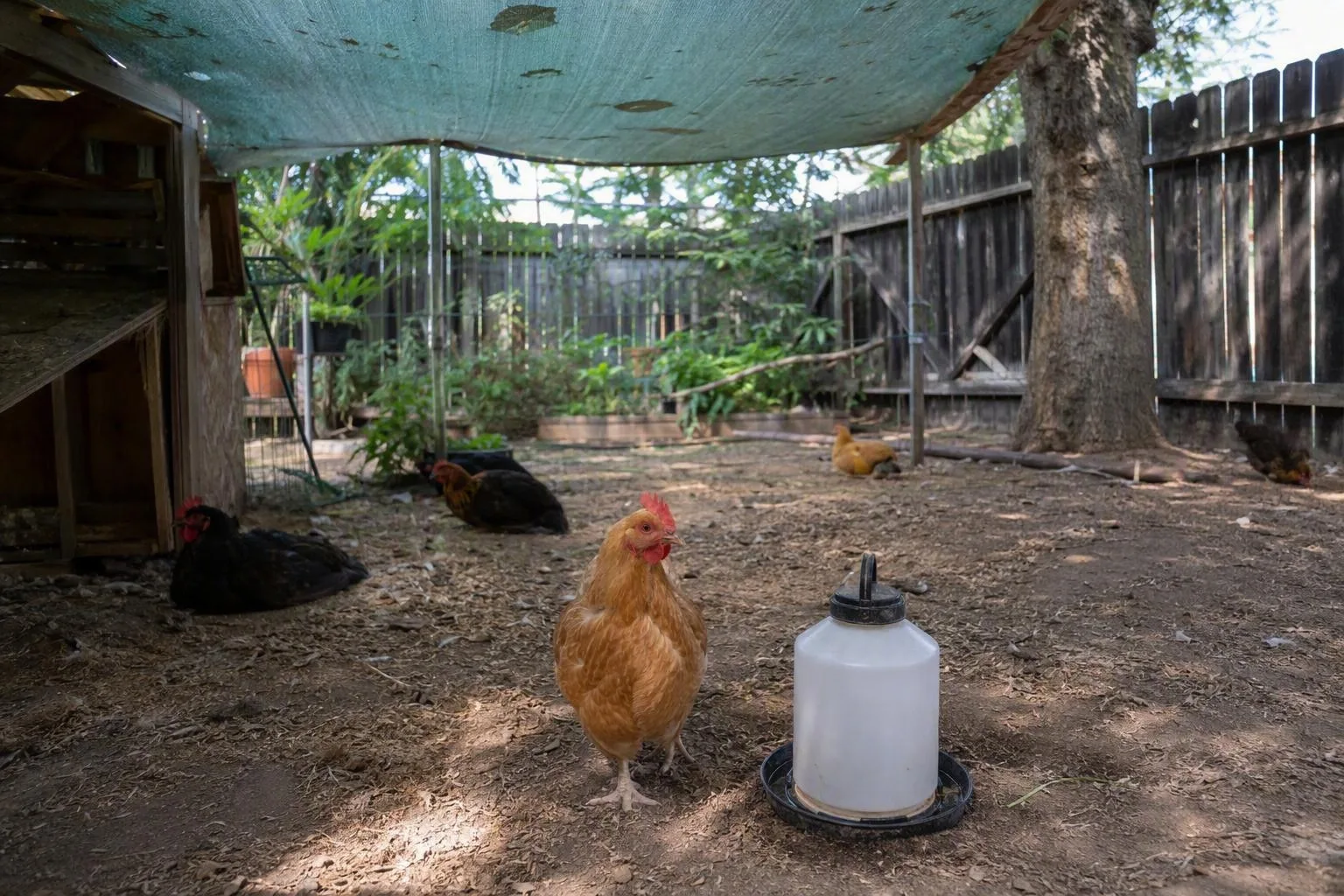
The thermometer comes first: when hot weather becomes a chicken problem
Put a thermometer at bird height in both the coop and the shaded part of the run. A roof thermometer can give you a useful trend, but it may miss the hotter patch where your hens actually stand. I use 80–85°F as a walk-out-and-look trigger. At 90–95°F, I stop treating cooling as optional and check water, shade, airflow, and crowding together.
Humidity changes the meaning of the number. Chickens cool themselves partly by moving air over moist respiratory surfaces, so damp, still weather gives evaporation less room to work. A heat index combines air temperature with humidity, but it still doesn't account for direct sun, a blocked vent, a heavy breed, or a bird with limited breathing reserve. Use it as another warning signal, not as a universal chicken cutoff.
Look for panting, wings held slightly away from the body, reduced interest in feed, or several birds packed around one drinker. Chicks, older hens, heavy breeds, and birds already showing respiratory trouble deserve an earlier check. Chicks under a brooder are a separate case: outdoor heat doesn't remove the need to manage their brooder temperature carefully.
In my own small backyard setup, I learned to read the flock before I read the forecast. I put one drinker under the covered end and another at the far end of the run, then walked out at 3 p.m. during a hot spell. The useful result wasn't a dramatic trick. Each bird had somewhere to stand away from the others, and I could see quickly whether both drinkers were clean and reachable. That walk-through is now my first fix.
Fix 1: Shade the entire usable run, not just the coop roof
Test shade at the hottest part of the day, often midafternoon. Walk the full run. If the sun reaches the ground where your birds stand, the shaded coop roof hasn't solved the outside problem. The aim is a usable cool floor, not a small dark patch that a dominant hen can occupy.
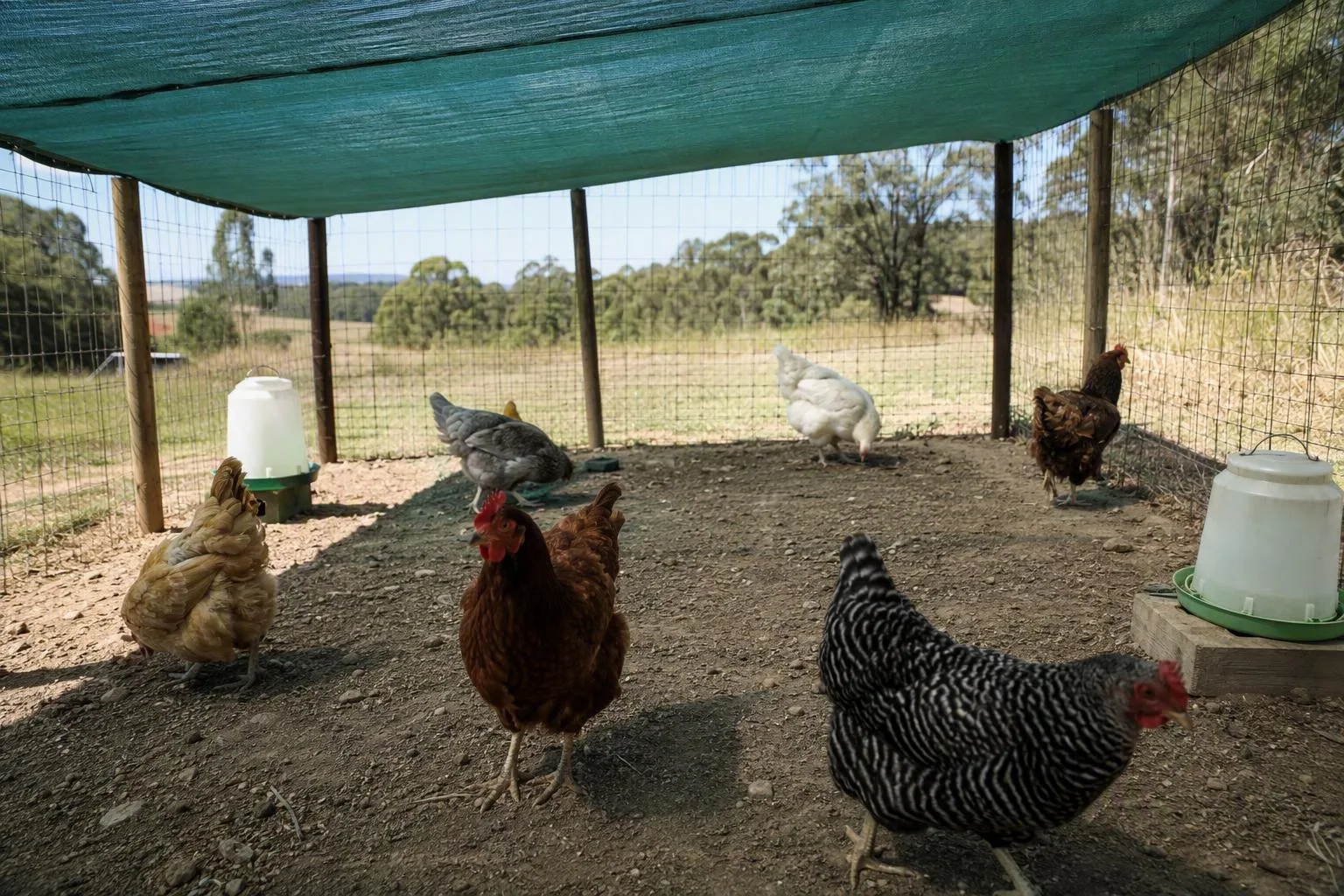
For a sunny backyard run, 50–70% shade cloth is a practical starting range. Use it across the area your birds use, while leaving the sides open enough for air to pass through. A solid tarp can block direct sun well when it is stretched over the roof, but draping it down the sides can hold hot air inside. Leave an air gap at the edges and watch what happens at 3 p.m., rather than judging the setup at breakfast.
Brace the cloth and its fasteners for wind. Keep the frame and mesh secure against climbing and reaching predators. Before you trust a tarp, audit your chicken run predator protection: a shade panel should not create a loose corner, a climbable edge, or a gap at the run wall. My judgment is simple here: if your budget allows one summer upgrade, shade the whole standing area before buying a fan.
Fix 2: Build an air path from low intake to high exhaust
Summer ventilation is not just a bigger hole. It is a route for cooler air to enter low and hot, damp air to leave high. As a practical starting rule, allow about 1 square foot of net ventilation opening for each 10 square feet of coop floor. For a 24-square-foot coop, that works out to about 2.4 square feet of screened opening.
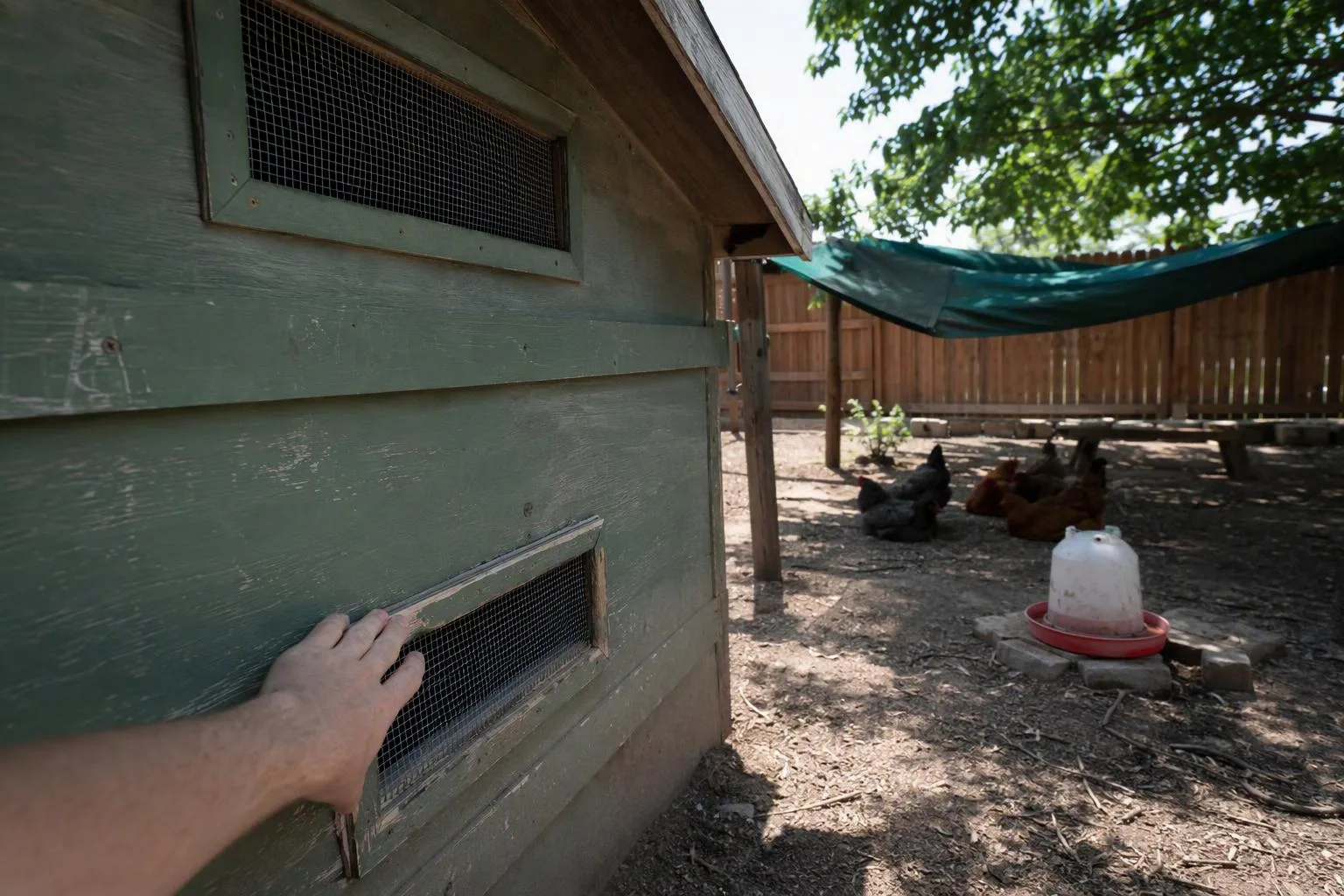
Spread that opening across at least two sides. Put intake space low on one wall and high-wall or ridge openings on another side so rising warm air has somewhere to go. Count the open area after framing and mesh, not the outside dimensions of a decorative vent. Use predator-resistant mesh, and check that the openings cannot become handholds for a raccoon.
Fine dust can clog mesh, so inspect it during a hot spell. A screened opening that looks large on paper moves less air if dust and bedding fibres have filled much of its open area. Brush the mesh clean when it is dry and check again after the coop has been used for a few days.
Closing every opening at night can turn a safe shelter into a heat trap. If the run is secure and local weather allows outdoor access, birds may choose the better-ventilated space. A fan can supplement this air path, but it must be guarded, dry, firmly mounted, and out of pecking reach. It moves air; it does not fix direct sun, crowding, or an empty drinker. Compare your arrangement with University extension guidance on poultry heat stress, ventilation, and water intake, then inspect your actual coop rather than copying a vent count blindly.
Fix 3: Set up two water stations and plan for 0.5 litre per bird
Water is the first cooling supply to protect. For planning, use roughly 200–300 mL per adult layer on an ordinary day. If severe heat doubles that demand or pushes it higher, the working range becomes 400–600 mL. That is why I plan for at least 0.5 litre of available water per adult bird for each hot day. It is reserve capacity, not a volume you should force into a bird.
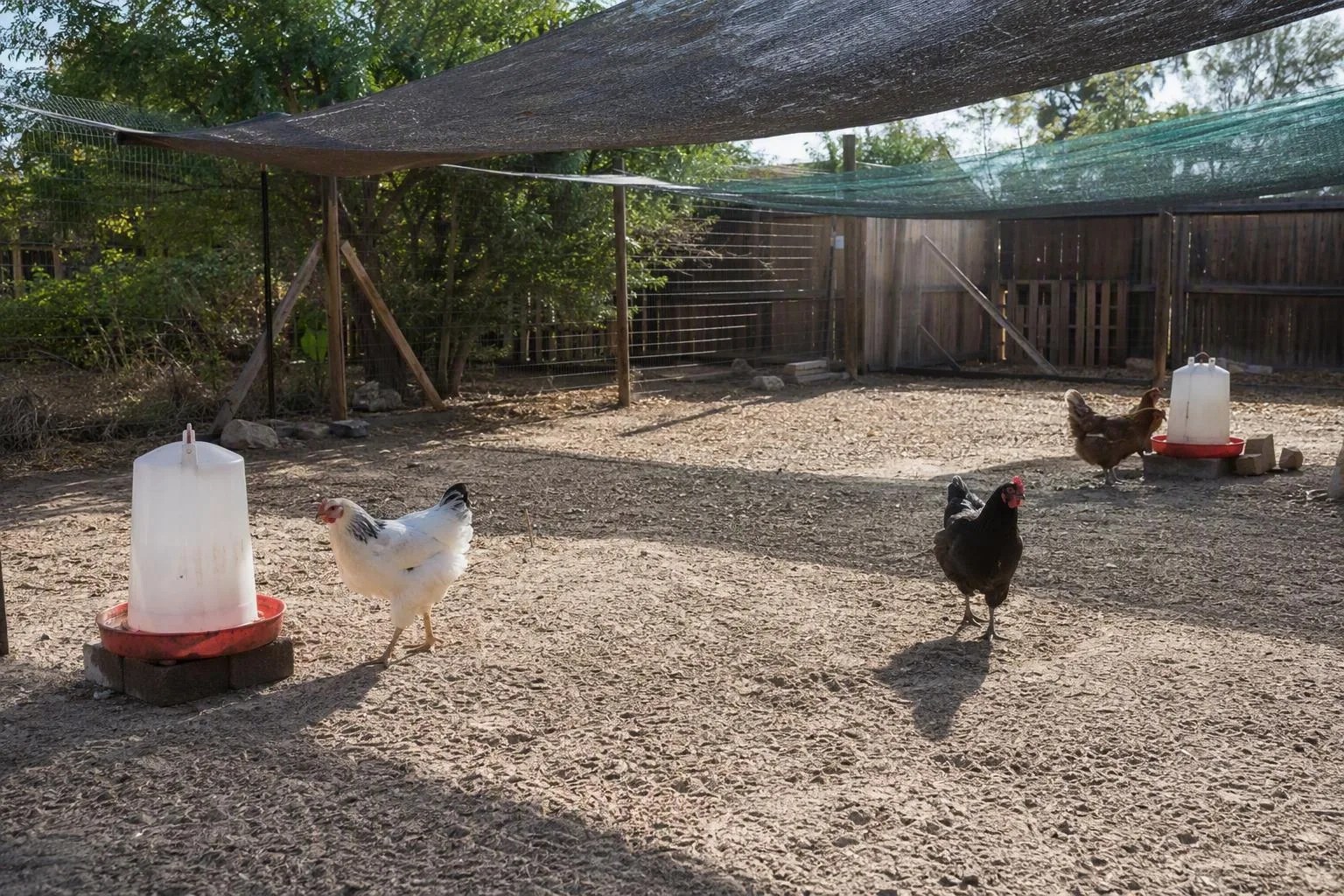
For six hens, 0.5 litre each means at least 3 litres available. Add more if you cannot check the run during the day, if drinkers are prone to spilling, or if evaporation is rapid. Put two water stations in separate shaded places. Space them far enough apart that one assertive hen cannot stand over both, and use stable drinkers that cannot be tipped easily.
During a hot spell, clean and refill both stations at least twice daily. Look for algae, bedding, droppings, slime, and warm stagnant water. Dirty water defeats the point of the extra capacity. Keep one station where you can see it from the house if possible. A quick glance can tell you more than a large drinker hidden behind the coop.
Plain, clean water is the baseline. If you use a poultry electrolyte product, follow that product's label and provide a separate plain-water station. Don't invent a dosage from a general recipe. Product concentration and intended use can differ.
Fix 4: Cool the ground with a shallow, clean resting spot
This is an optional comfort measure, not a replacement for shade, airflow, and drinking water. In a shaded area, set an adult-sized tray with less than 1 inch of water, or lightly dampen a patch of sand or soil. A cool surface gives birds somewhere to settle and may make hot, reflective ground easier on their feet.
Keep the tray shallow. Deep tubs create drowning, mud, and sanitation problems, with extra risk for chicks. Empty dirty standing water the same day. Wet litter adds ammonia and sanitation trouble: damp bedding and droppings break down together, releasing ammonia while creating a dirtier surface. Keep the coop litter dry and use the damp patch outside, away from the sleeping area.
Fix 5: Move the complete ration to dawn and dusk
Heat can suppress appetite, but that is a reason to protect the ration rather than replace it with watery treats. Plan on roughly 100–120 g of complete feed per adult laying hen per day as a normal range, then offer the largest portions in the cooler hours around dawn and dusk. Leave the complete layer ration available according to your usual feeding system so a bird can return to it when the air cools.
For six hens, that planning range is 600–720 g of feed across a day. A 10% treat limit would put the optional treat portion around 60–72 g for that flock, using the same planning range. Watermelon, corn, cucumber, and similar foods should not displace the protein, minerals, and energy in the complete ration. For a flock-specific baseline, use how much feed per chicken per day for laying hens before you change portions.
Offer moistened feed only in amounts your birds can finish within 1–2 hours in hot weather. Remove leftovers after that window. Warm, wet feed can sour and attract flies faster than dry feed. A short-term drop in laying may accompany heat because intake and normal production can fall together. Withholding the ration will not correct that problem.
Fix 6: Give each bird room to leave the crowd—4 square feet inside, 8–10 outside
Space is a cooling tool. Use at least 4 square feet of usable indoor floor area and 8–10 square feet of usable run area per adult bird as a backyard baseline. Large breeds, humid climates, and runs without full shade need more room because birds have fewer comfortable places to spread out.
Here is the calculation:
- 3 hens: 12 square feet inside and about 24–30 square feet outside.
- 6 hens: 24 square feet inside and about 48–60 square feet outside.
- 12 hens: 48 square feet inside and about 96–120 square feet outside.
Count floor birds can actually use. Nest boxes, feeder shelves, and perch surfaces don't become walking area just because they are inside the structure. If your flock is already crowded, open a secure shaded section of run, remove an obstruction that steals floor space, or delay adding birds. Adding ice to an overcrowded run is treating the symptom after removing the place where birds can cool themselves.
Fix 7: Use frozen bottles and chilled produce without making a wet mess
Frozen bottles are useful as a small supporting measure. Freeze intact 1–2 litre food-grade water bottles and rotate them beside a shaded resting spot or next to, not inside, the waterer. Keep bottles away from electrical equipment, check for leaks, and replace any bottle that has been chewed or split.
The ice can cool nearby water and make it more appealing, but it doesn't create extra water or replace shade and ventilation. Chilled cucumber, melon, berries, or leafy greens can supply moisture as a small treat. Keep those extras near the 10% treat limit, and remove wet leftovers within 1–2 hours. Loose gel packs, dry ice, salty foods, and chemical coolants don't belong in a chicken run. A cold snack is still a snack, not a complete diet.
Three hot-weather questions that need a qualifier
Should you add electrolytes to chicken water during a heat wave?
Plain water remains the first priority. A poultry electrolyte product may be useful for short-term support when its label allows that use, but follow the label exactly and keep a separate plain-water station. The second station gives each bird a choice and prevents a flavored mixture from becoming the only supply.
Can you hose or spray chickens to cool them down?
Avoid soaking the body or forcing a bird into water. Lightly wetting feet, lower legs, or shaded ground can be a gentler option when a bird needs help, but shade, airflow, and drinking water should do the main work. Wet feathers in a still, hot shelter can become another comfort problem.
Can chickens stay outside overnight during a heat wave?
They can use a secure outdoor area if it remains predator-safe and has shade, airflow, and water. A sealed or stuffy coop may be hotter than a well-ventilated run. Check the overnight forecast and, better still, the actual temperature inside the shelter. Outdoor access is not a cooling fix if the run is exposed or cannot keep predators out.
Panting is a warning: the 10-minute response and the point for veterinary help
Panting calls for action even before a bird collapses. Move birds showing early signs—panting, wings held away, weakness, or crowding at water—toward shade and check every station. Severe signs include stumbling, inability to stand, collapse, seizures, unresponsiveness, or laboured breathing.
For the first 10 minutes, keep the response plain:
- Move the affected bird to a cool, shaded place with clean air movement.
- Offer cool, clean water, but don't pour it into the beak or force swallowing.
- Gently wet the feet or lower legs with cool tap water if the bird needs extra help.
- Check the rest of the flock. One overheated bird can point to an empty drinker, blocked vent, or hot patch affecting all of them.
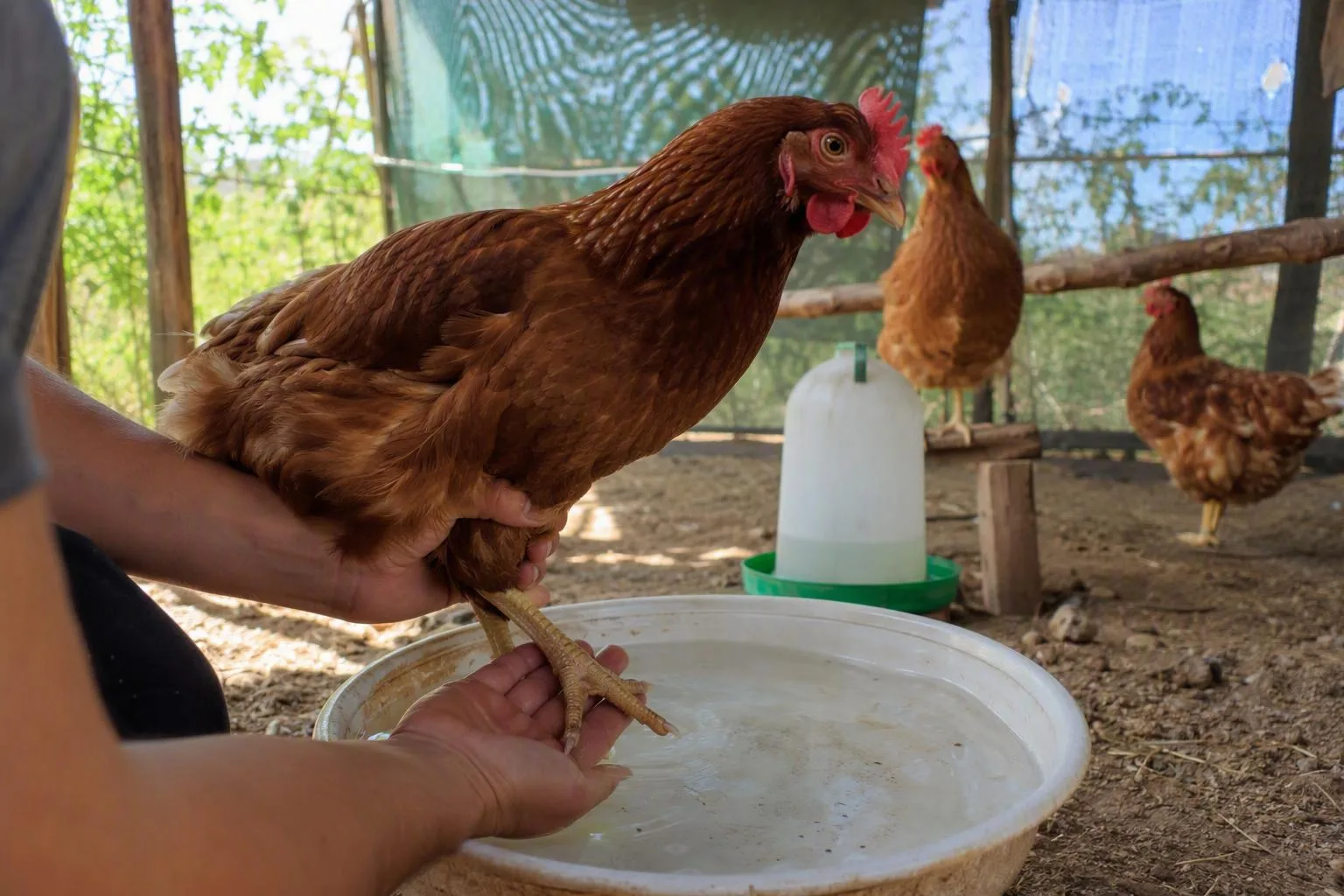
Don't dunk a collapsed bird in ice water. Don't force fluids, and don't give medication without veterinary direction. Same-day veterinary advice is warranted when a bird collapses, cannot drink or stand, has laboured breathing, or does not improve promptly after shade, airflow, and water. Persistent panting after the weather has cooled also deserves attention because heat may not be the whole explanation. Merck Veterinary Manual guidance on heat stress signs and supportive care in chickens is a useful reference to discuss with your vet.
This week, walk your run at 3 p.m. Measure the temperature at bird height, mark where the sun reaches the floor, clean and fill two water stations, inspect vent mesh for dust, and write down the volume each drinker holds. That five-minute inventory turns a vague hot-weather worry into a setup you can check. If winter is next on your seasonal list, the question do chickens need heat in winter deserves the same practical, condition-first approach.
Frequently Asked Questions
Should you add electrolytes to chicken water during a heat wave?
Plain, clean water remains the first priority. A poultry electrolyte product may be used short term only according to its label, with a separate plain-water station so birds are not dependent on a flavored mixture.
Can you hose or spray chickens to cool them down?
Avoid soaking the body or forcing a bird into water. Lightly wetting feet, legs, or shaded ground can be safer, but shade, airflow, and drinking water should do the main work.
Can chickens stay outside overnight during a heat wave?
They can use a secure outdoor area if it remains predator-safe and has airflow, shade, and water, but a sealed or stuffy coop can be hotter than a well-ventilated run. Check the overnight forecast and the actual temperature inside the shelter.