How to Tell How Old a Chicken Is: 6 Reliable Clues
A bright red comb can tell you a hen is sexually mature. It can’t tell you whether she’s ten months old or three years old. If you need a close age, start with a hatch record or band; if those are missing, combine six clues and report a range.
The six useful clues are records, feather stage, molt, comb and wattles, body maturity, and egg history. Reliable here means useful together, not magic on their own.
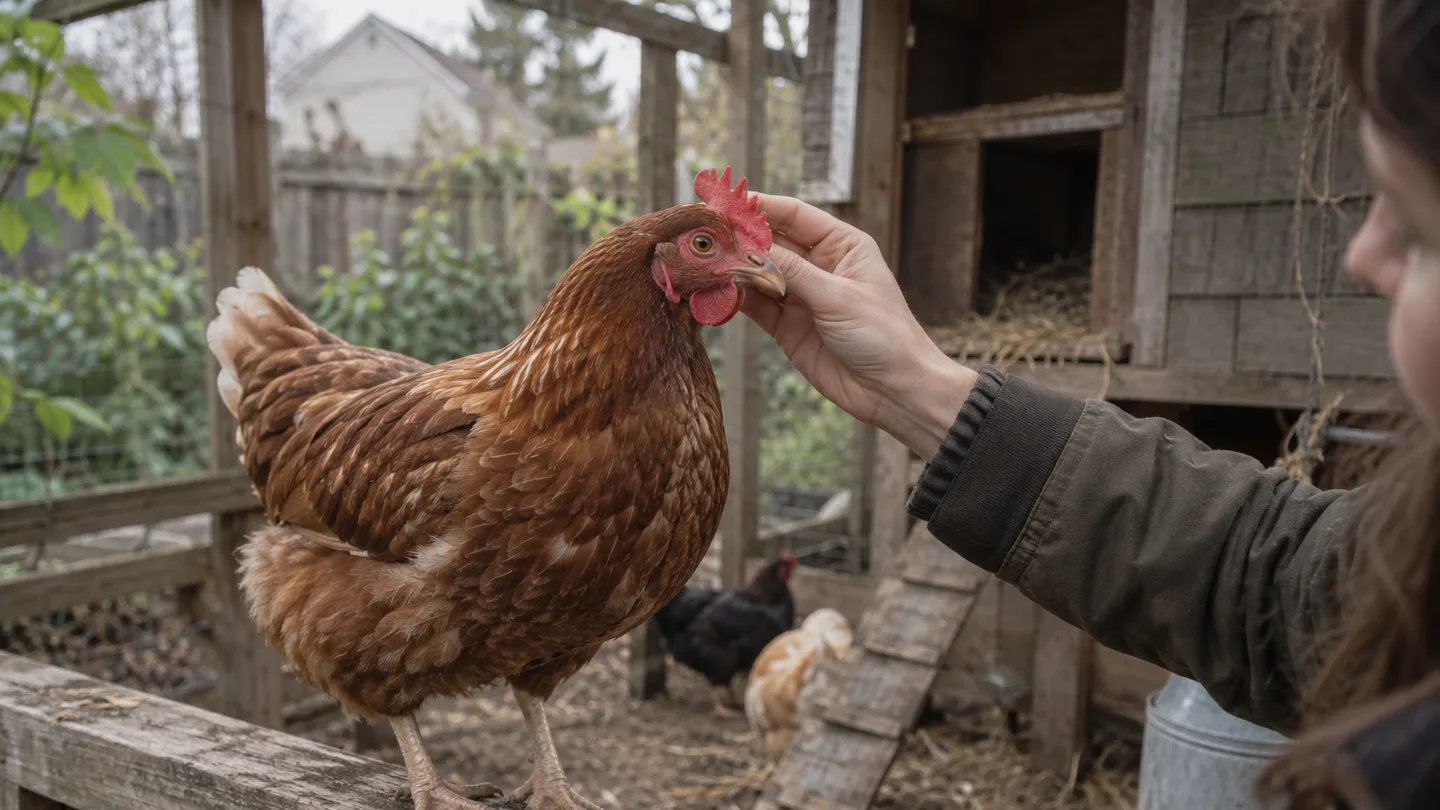
Start with the one clue that can be exact: hatch records, band codes, and purchase dates
Records sit above physical clues. A hatch date, breeder record, or traceable identification band can anchor the bird to a real date. Feather texture, comb color, and pelvic spacing can only tell you what stage the bird appears to be in.
Leg bands can help, but don’t trust a color chart by itself. Some breeders, hatcheries, and poultry clubs use year codes or numbered bands. Those systems aren’t universal. An intact band is useful when it matches a breeder record, hatchery note, or known flock system. A loose plastic band from an unknown source is just an identifier.
A purchase date gives you a minimum age only when you know the bird’s stage at the time of sale. If you bought a day-old chick, that date is useful. If you bought an adult hen from a neighbour, the date tells you when she changed homes, not when she hatched.
Identify sex before you interpret the rest. Eggs and laying signs apply to hens. Spurs are mainly a rooster clue. Comb development can occur in both sexes, but the timing and size are strongly affected by breed and sex.
My practical rule is simple: write down an age range when the birthday is missing. “Hen, likely five to twelve months, low confidence” is useful. “Exactly eleven months and four days” is pretend precision.
Clues 2 and 3: juvenile feathers at 6–20 weeks, then the first adult molt
Feathers are a timeline because a bird replaces its chick covering in stages. You’re looking for the kind of feather, the amount of feather still changing, and whether new pin feathers are appearing now.
Keepers commonly report a working bracket of roughly 6–8 weeks for a chick to become mostly feathered. That doesn’t mean every bird has the same finish line. A fast-growing hybrid, a small bantam, and a slow-maturing heritage breed may not look identical at the same age.
The next commonly reported bracket is roughly 12–20 weeks, when juvenile plumage is giving way to a more settled adult pattern. Look at the neck, saddle, breast, and tail. A bird with a mixed, unfinished look and many new feathers is still in a different stage from a hen with smooth, fully developed adult plumage.
These ranges are keeper-reported working brackets, not a calendar you can apply without context. Breed, daylight, nutrition, illness, stress, crowding, and feather damage can all move the appearance forward or backward. University extension guidance on pullet development, sexual maturity, and molt timing can be a useful second check when your bird’s breed and season are known.
A first adult molt is another useful marker. Keepers commonly place it around 14–18 months, but a molt dates a biological event rather than proving a birthday. Some birds start earlier or later. A hen may also lose feathers because of pecking, parasites, poor nutrition, or repeated rubbing against a rough perch.
Active molt has a particular look. You may see short pin feathers emerging, loose feathers on the coop floor, and bare-looking patches that are being filled rather than simply worn away. Normal wear gives you broken tips, dirty edges, or thinning in contact areas without the same flush of new pins.
If you see active molt, use it to say “this bird is in a replacement phase.” Don’t use it to say “this bird is exactly eighteen months old.” That distinction prevents one of the most common age-guessing errors.
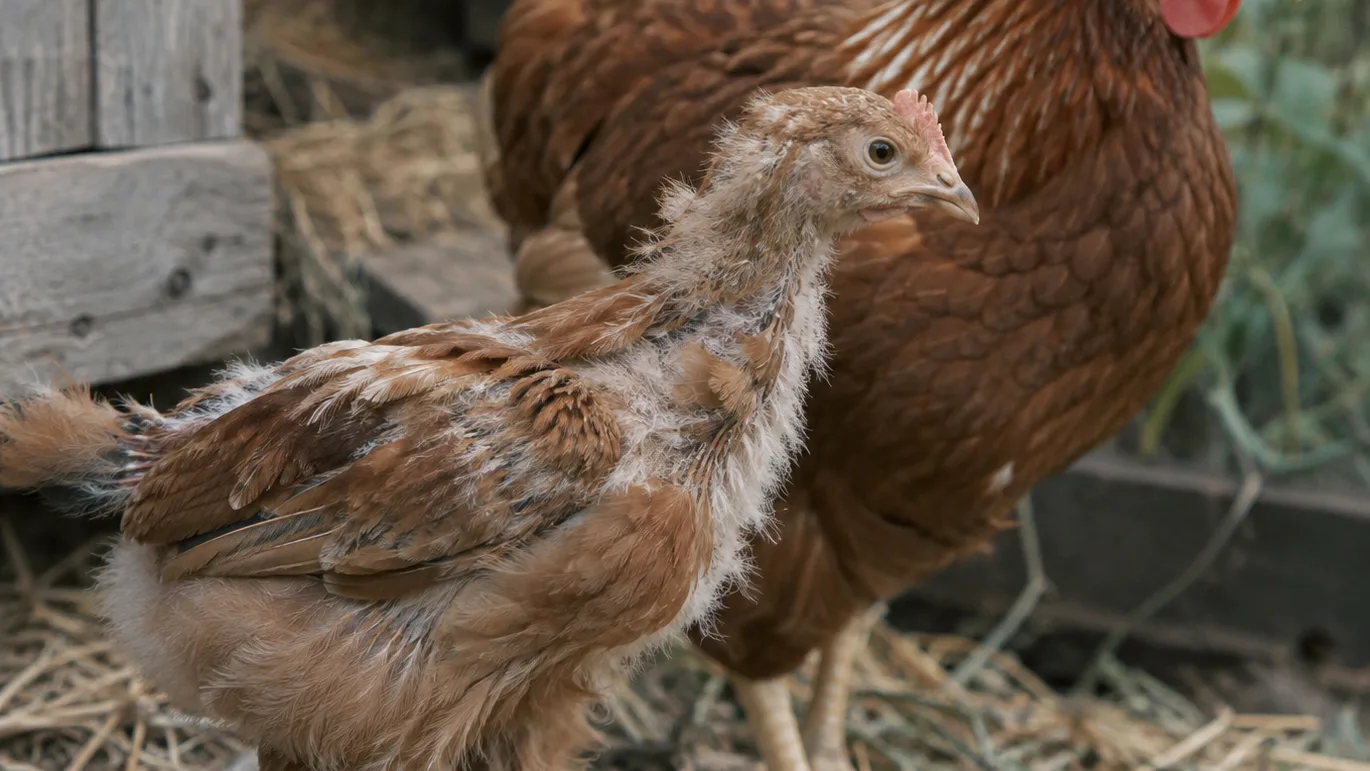
A red comb is a maturity signal, not a birthday: reading combs and wattles
A comb and wattles can separate a chick, an immature pullet, a sexually mature bird, and an established adult. They cannot separate two healthy adult hens by exact age.
An immature pullet usually has a smaller comb with less developed wattles. As she approaches sexual maturity, the comb often grows, thickens, and becomes more richly colored. A large, warm-looking comb supports the idea that she is mature or approaching lay. It does not tell you whether she is one year old or three.
Keepers commonly report a point-of-lay window around 18–24 weeks. Treat that as a working bracket, not a guarantee. Breed, comb type, season, daylight, stress, and illness can all change when a pullet looks ready or actually begins laying.
Comb color is also a live status signal. It can shift with laying activity, light, stress, cold conditions, and health. A pale comb doesn’t automatically mean an old hen. It may mean she isn’t laying, is under stress, is unwell, or is simply showing her normal seasonal pattern.
Breed matters here more than many new keepers expect. A small rose comb and a large single comb won’t give you the same visual scale. Compare the bird with what is normal for her breed before you turn comb size into an age estimate.
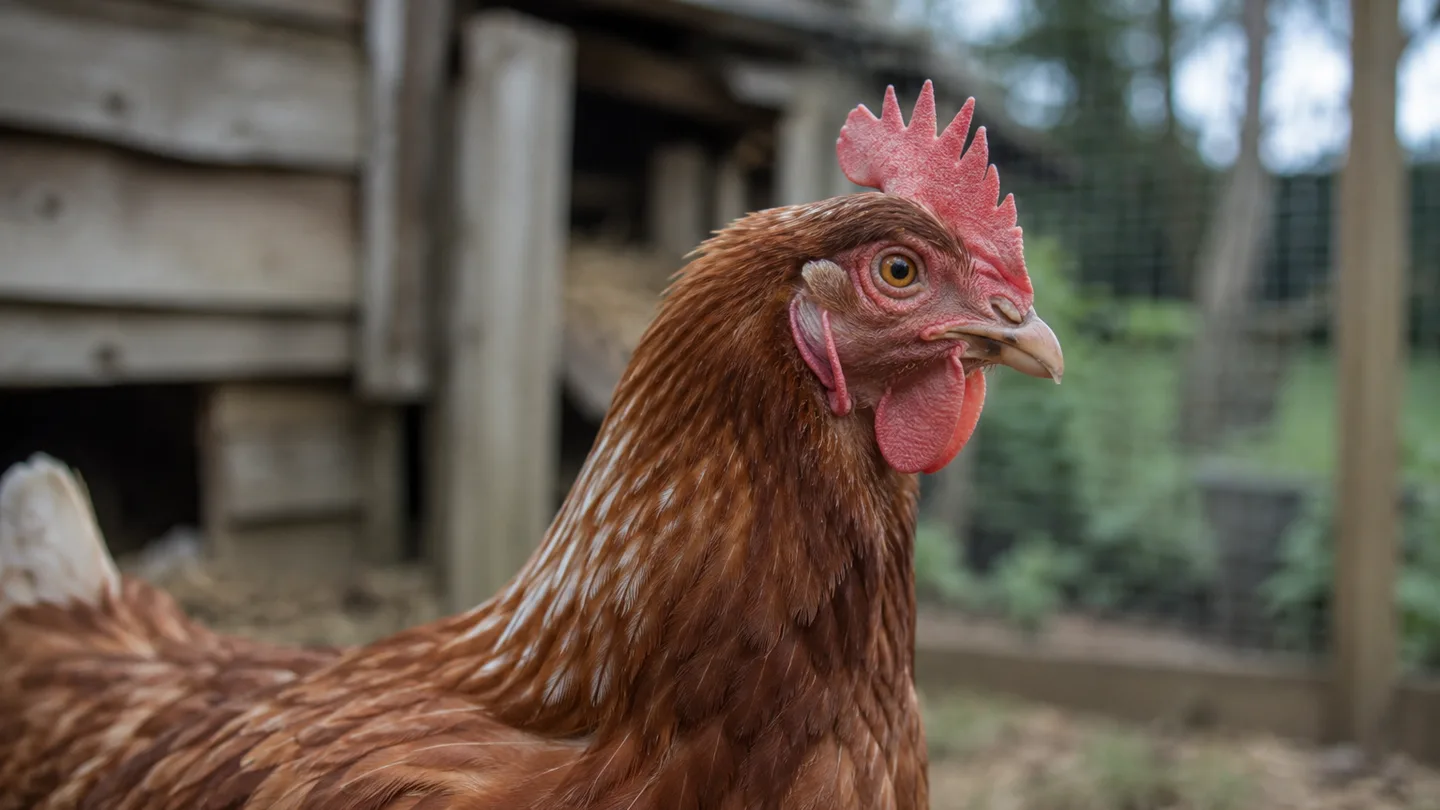
Use the body as a broad age bracket: size, breast muscle, keel, pelvic bones, and vent
Size gives you a broad bracket, not a birthday. A small, narrow bird may be a young pullet, but she may also be a small breed or a bird that has lost condition. A large bird may be mature, but breed can explain much of that size before age enters the picture.
Look at the body as a whole. A growing pullet often has a narrower breast and a less developed frame. A mature hen usually carries more breast muscle and has a fuller body. The keel bone should be easy to feel, but it shouldn’t feel like a sharp ridge under a thin layer of tissue.
Pelvic bones and the vent help with maturity, not exact dating. A hen that is sexually mature or has laid recently may have more space between the pelvic bones and a more developed, flexible vent area. That tells you more about reproductive status than about whether she hatched last spring or several years ago.
Handle gently. Support the breast and feet. Keep the wings controlled without squeezing the chest. Don’t press hard on the abdomen or force the pelvic bones apart. Stop if the bird struggles violently, shows pain, or becomes distressed.
Before handling a bird with a worrying vent, compare your plan with veterinary or extension guidance on safe chicken handling, body condition, and abnormal vent findings. Weight loss, a sharp keel, a swollen abdomen, weakness, bleeding, or abnormal tissue around the vent are health concerns. They deserve a poultry veterinarian rather than an age guess.
If the bird shifts weight, resists having one foot touched, or walks unevenly, treat that as a health question. The useful starting point is chicken limping, not a theory that an older bird is simply stiff.
Eggs add a timeline: first lay, early egg size, and established production
Eggs can place a hen into a broad reproductive stage. They’re better at telling you that a bird is near point-of-lay or has recently started laying than at separating two mature hens by age.
Keepers commonly report first lay around 18–24 weeks, with breed and season doing much of the moving. Early eggs may be smaller, oddly shaped, or inconsistent for a while. Egg size often settles upward over the first several weeks of production, so a sequence of eggs can be more informative than one egg on its own.
Don’t date a hen from shell color. Shell color, egg shape, clutch pattern, and laying frequency are strongly influenced by breed, daylight, nutrition, broodiness, molt, stress, and the bird’s current health. A pause in laying may reflect a molt or broody spell rather than advanced age.
An established laying pattern supports sexual maturity. It still doesn’t provide a birth certificate. A mature hen can lay less during short days, after moving flocks, during illness, or while recovering from a demanding molt.
Do not use rough legs, long spurs, or faded feathers as a standalone clock
These clues are tempting because they’re visible. They’re also easy to misread.
- Rough legs: lifted scales and crusting can reflect dry ground, abrasive bedding, injury, poor condition, or scaly-leg mites. Rough legs are a condition clue first. If the scales are thick, crusty, or worsening, look into chicken mites treatment instead of assuming the bird is old.
- Long spurs: spurs are mainly a rooster clue, and their growth varies by bird. Some hens grow spur-like structures too. A long spur may support an adult estimate, but it won’t give you a dependable age.
- Faded or broken feathers: feather color can fade from sun, dirt, wear, pecking, parasites, or molt. New pin feathers and the overall replacement pattern tell you more than a dusty tail.
- A thin body: a sharp keel is a body-condition concern, not proof of seniority. An older bird can be in good condition, and a younger bird can be underweight.
Use these observations to decide what to check next. Don’t let one rough foot or one faded feather overrule records, feather stage, comb development, and laying evidence.
Combine the evidence into an honest estimate: chick, pullet, young layer, or older adult
The useful output is a working age range. Start with the strongest evidence, then let the physical signs narrow the bracket without pretending they can produce an exact birthday.
- Start with records. A hatch date or trustworthy breeder record outranks everything else.
- Check feather stage and molt. Juvenile feathers, adult plumage, or active replacement give you a biological stage.
- Read the comb and body together. Maturity signs are stronger when the comb, breast, pelvic area, and vent point in the same direction.
- Use eggs as confirmation. Early eggs support a recently mature hen, but a laying pause should not be treated as an age stamp.
- Use legs, spurs, and wear only as context. They can raise a health question or support a broad adult estimate. They should not lead the estimate.
These are my working age bands when records are missing:
| Working band | Clues that may fit | What you should avoid claiming |
|---|---|---|
| Under 8 weeks | Juvenile feathering, small comb, unfinished body frame | An exact hatch date from appearance alone |
| Roughly 8–20 weeks | Feather transition, developing comb, growing frame | That every breed reaches maturity on the same schedule |
| About 20–52 weeks | Adult plumage, mature comb, point-of-lay or young-layer signs | A precise month without records |
| Over 1 year | Established adult body, possible molt history, settled laying pattern | Separating one healthy adult year from another by looks alone |
In my own small backyard flock, I once took in a barred hen from a neighbour who had no hatch record for her. She had smooth adult plumage and a bright comb. Her pelvic area had started to widen, but she wasn’t laying on the first days after the move. Once she settled, she produced small eggs that became more regular. I wrote her down as a young layer, roughly five to twelve months, low confidence.
That note was more useful than choosing a fake birthday. It told me she was probably mature but still settling into a new flock, and it reminded me not to read a short laying pause as proof that she was elderly. I could update the record later if a band, breeder message, or previous owner supplied better evidence.
When the signs disagree, widen the range. A bird with adult plumage and a red comb but no laying history might be a young layer, a nonlaying adult, a bird under stress, or a bird with a health problem. Your next step is not a more confident guess. Record the sex, take a side photo, note the comb and feather condition, and record body condition and laying status this week.
If the legs are crusty, follow the health question rather than the age question with chicken mites treatment. If the bird is losing weight, has an abnormal vent, or shows pain, stop trying to date her and contact a poultry veterinarian. A careful range plus a good baseline is the honest answer.