How to Keep Hawks Away From Chickens: 7 Practical Fixes
Four square feet per bird inside the coop doesn’t answer a hawk question. If your 3–12 hens spend time in an open run or yard, the most dependable protection is overhead cover that removes a clean dive route. A plastic owl can be a temporary extra; it isn’t a roof.
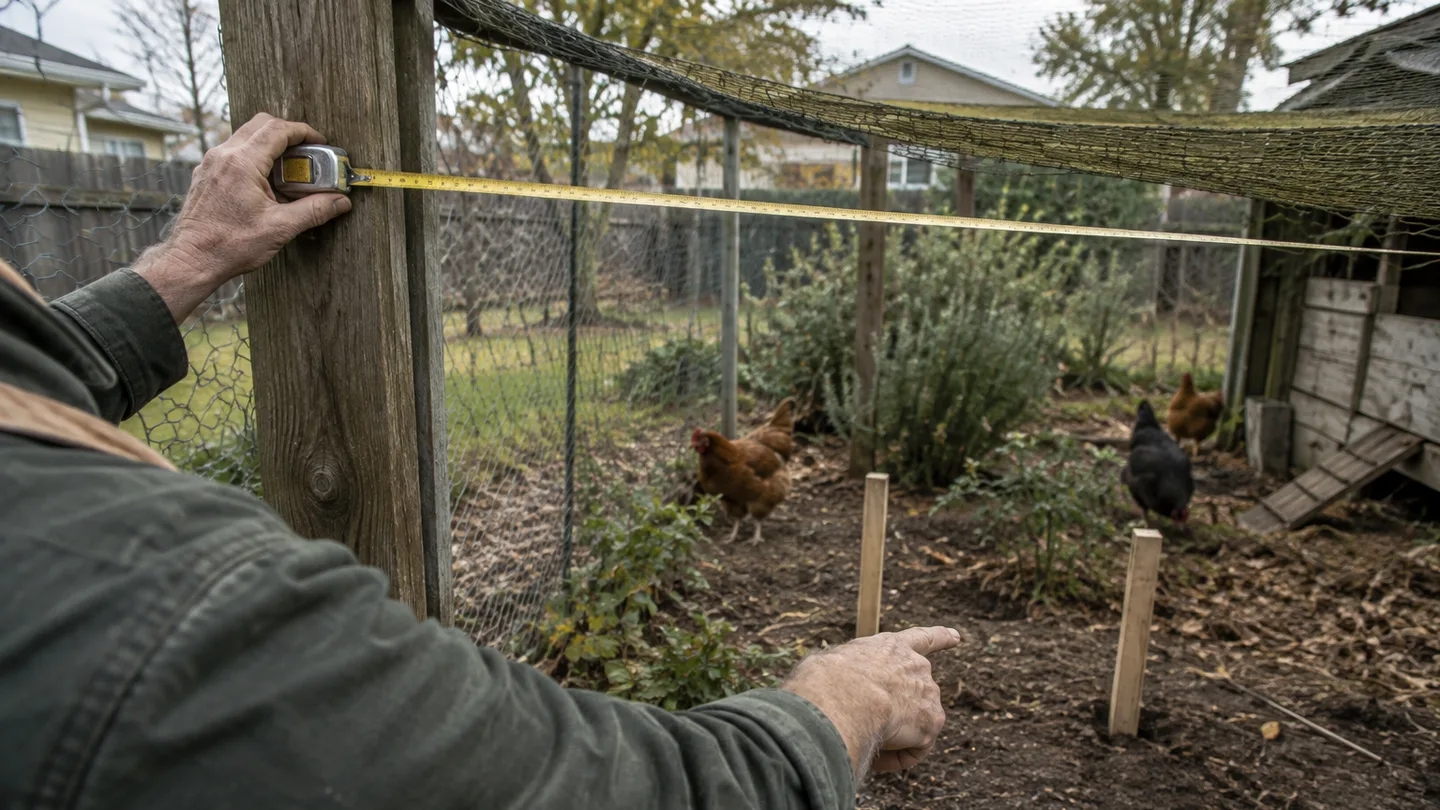
Start with the run, not the decoy aisle. Look for the longest stretch of uncovered ground and measure how far your hens must travel from the coop door, feeder, and water to reach solid cover. Those two measurements tell you more than a shelf full of hawk deterrents.
The first check: can a hawk reach your flock from above?
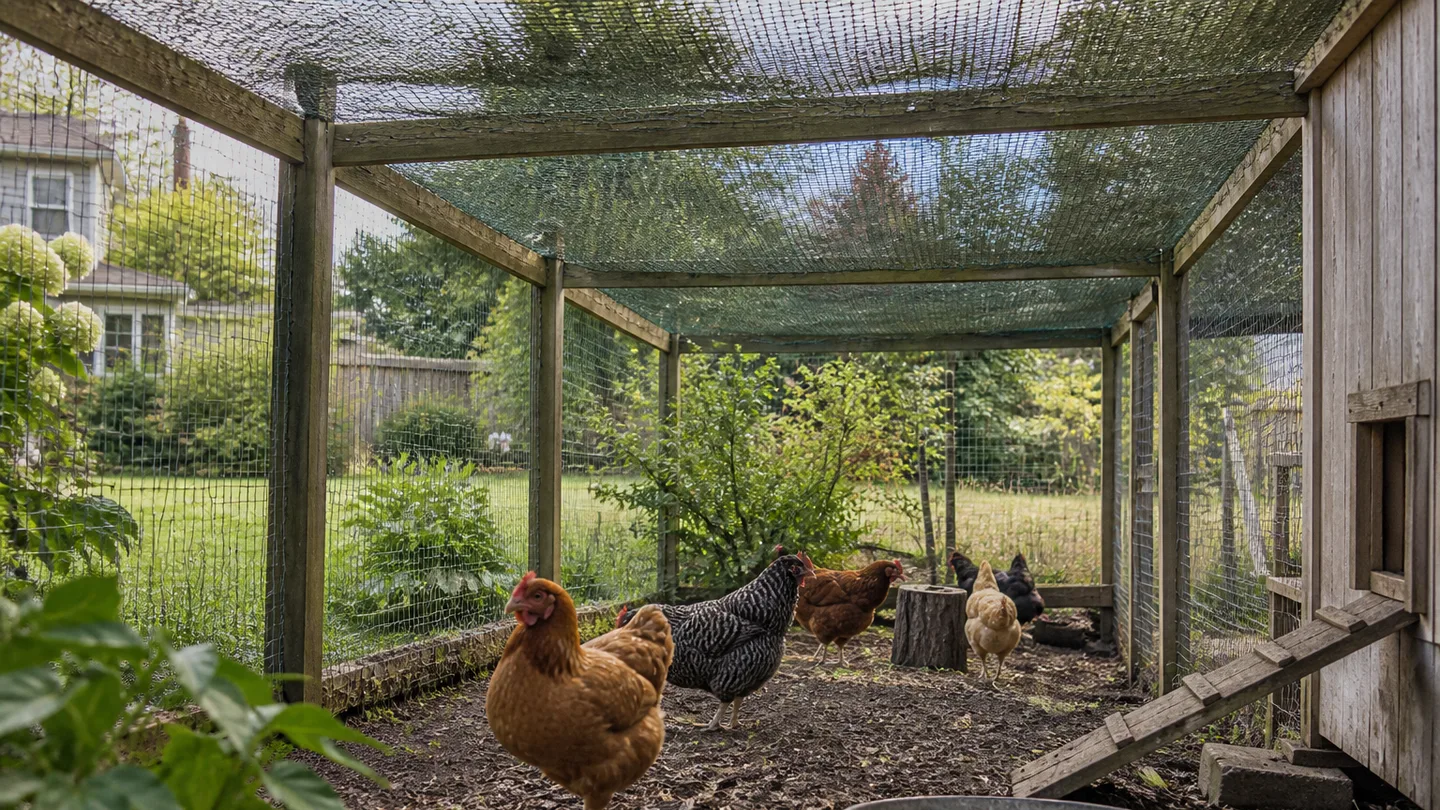
The most dependable answer is overhead cover. Before you change anything, stand where a hawk could perch: a fence, shed roof, tall tree, or utility line. Look down toward the run. If you can trace a clear line from that perch to the flock, your birds have an open approach to worry about.
Measure two things:
- the longest uncovered span inside the run or yard;
- the distance from the coop door, feeder, and water to the nearest solid refuge.
Open lawn, high exposed perches, and feeding areas placed far from cover give hens more ground to cross while visible from above. A roof changes the problem. Instead of a direct dive, the hawk has to search for another access point. That does not make a loose yard hawk-proof, but it changes a covered run from an exposed landing zone into a protected enclosure.
If a hawk is already circling, skip the experiment. Call the flock into the coop or covered run, close access to the yard, and treat that day as a supervised-only day. Prevention is the roof and the layout. Reacting to a circling bird is a separate job.
Fix 1 — Put a complete roof over the run, not just a small patch
A complete roof changes the geometry of the run. Cover the full footprint where the hens stand, and close the edges tightly enough that a bird cannot simply enter from the side. A small panel over the feeder may shade the birds, but it can leave a clear dive lane over the rest of the run.
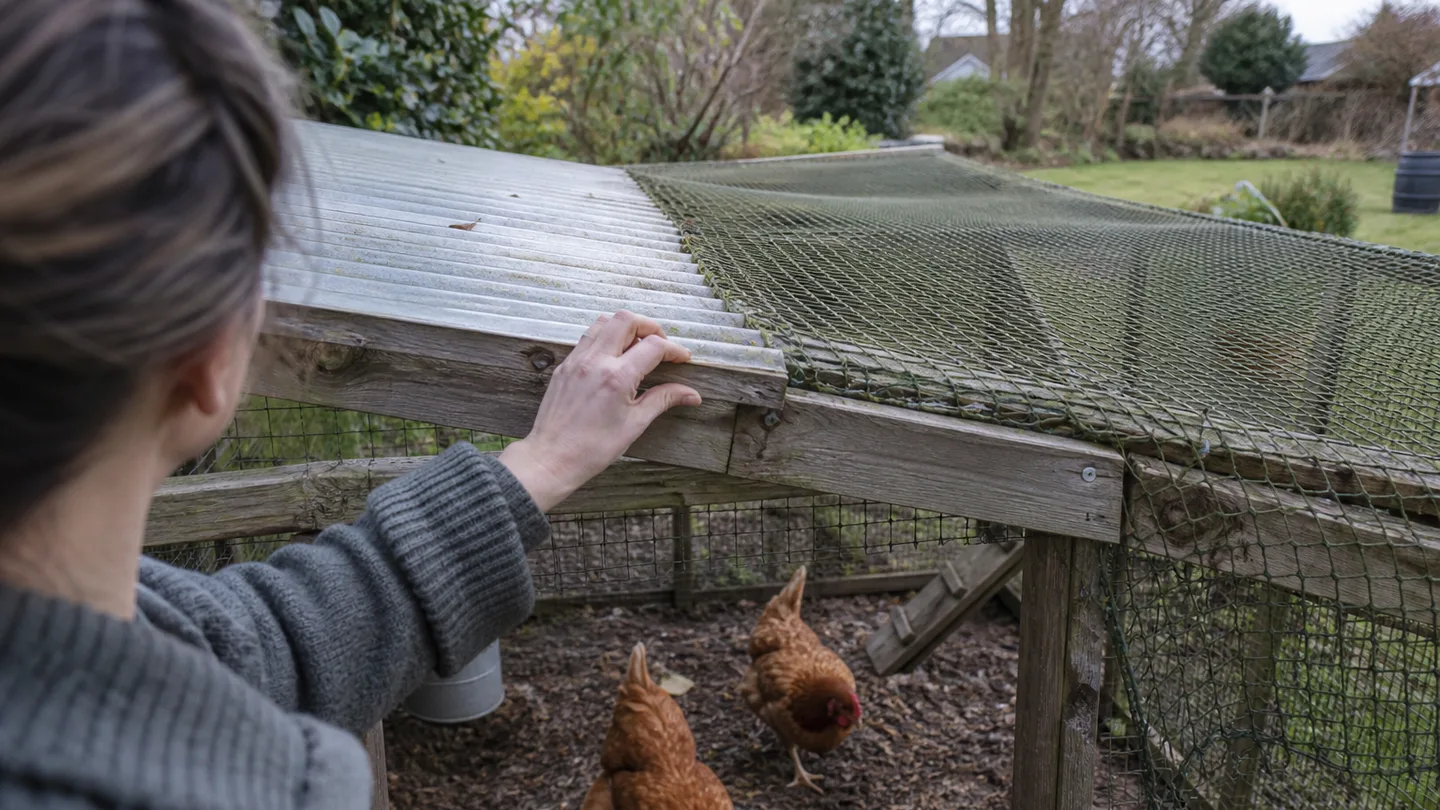
You have two practical choices for a backyard flock: a rigid roof or taut outdoor aviary netting. The right choice depends on what else the enclosure must resist.
| Cover | Best fit | Trade-off |
|---|---|---|
| Rigid roof | Snow, rain, shade, and a stronger physical barrier | More posts, framing, wind planning, and maintenance |
| Taut aviary netting | Lightweight overhead protection over a larger run | Needs good tension, closed edges, and regular inspection |
| Temporary tarp or panel | A quick fix while you build a permanent cover | Can flap, tear, pool water, or leave side routes open |
If the roof must also stop climbing predators or reach-through attacks, I’d look at 1/2-inch hardware cloth as part of the enclosure rather than relying on bird netting alone. Netting can block an aerial approach while still leaving a raccoon or other climber a different way into the run.
Think about wind and snow before stretching anything overhead. A rigid panel needs support. Netting needs tension and a frame that will not sag into the birds’ reach. Check current local prices for both materials, because the cost difference depends heavily on the run’s size, your existing posts, and local weather requirements.
Fix 2 — Turn open ground into two or three short dashes to cover
Think of cover as a route, not a decoration. A hen that sees a hawk needs a fast line-of-sight break. A decorative shrub in one corner does little if the feeder, water, and coop door sit across an exposed floor.
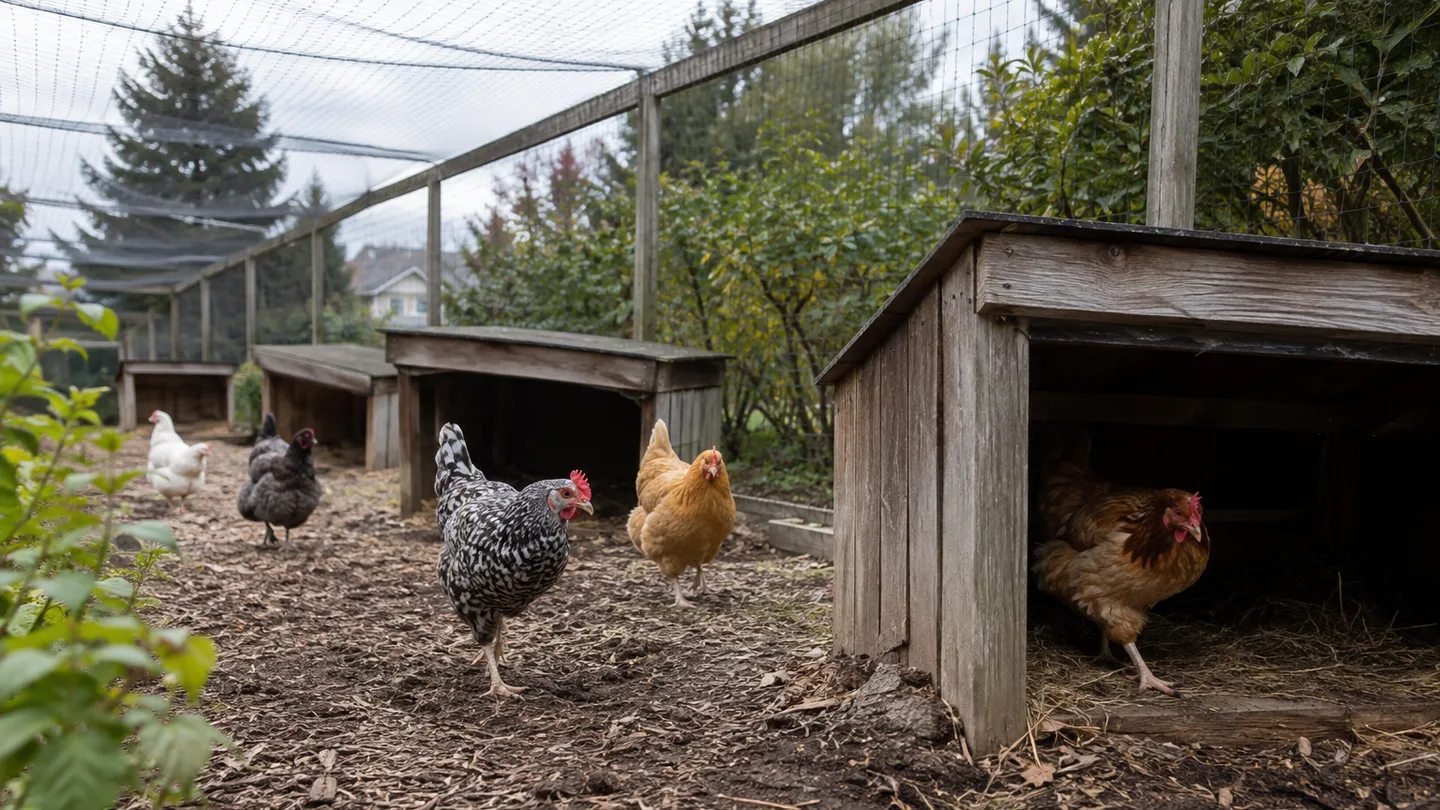
Use a 10×10-foot run as a planning example. I’d place two or three low shelters at separate points: one near the coop exit, one toward the opposite end, and one broad platform or lean-to along the normal travel path. The shelters do not need to be elaborate. A stable lean-to, pallet roof with protected edges, or broad low platform can create a useful dash to cover.
When I lay out a 10×10-foot run on paper, I make the corner-shelter mistake first: one tidy roof in the back corner, with the feeder at the opposite end. The sketch immediately shows the problem. Every hen still has to cross the open floor. I redraw it with shelters at separate ends and a low central refuge. That is not a field trial; it is the layout test I use before cutting lumber.
More than one entrance also matters in a small flock. A dominant hen can block a narrow doorway or make a timid bird hesitate. Give the birds more than one way to get underneath, and keep the openings wide enough for your largest hen without creating a sharp-edged tunnel.
Keep each shelter dry, stable, and easy to clean. Remove nails, splintered boards, wire ends, and loose roofing. If rain turns the refuge into a damp corner, the birds may avoid it. Cover should make escape easier, not create a new place for foot injuries or respiratory irritation.
Fix 3 — Make free-ranging a supervised appointment
Uncovered time should be a decision, not a habit. I’d begin with 15–30 minutes in the most sheltered part of the yard, with you outside and the flock close to cover. Extend the session only when every hen can reach a refuge quickly and the group returns when called.
- Choose a sheltered time and area rather than opening the whole yard.
- Stay close enough to move the birds under cover immediately.
- End the session as soon as a hawk appears or the hens scatter toward exposed ground.
Do not build your schedule around a rule such as hawks only hunting at noon. A clock cannot account for local sightings, nearby perches, weather, migration periods, or how exposed your particular yard is. If you’ve seen a hawk using the same tree or fence, that observation should carry more weight than a generic online timetable.
A short supervised appointment is not a failure of free-ranging. It is a way to keep the benefit of outdoor time without pretending that an open lawn has the same protection as a roofed run.
Fix 4 — Use decoys and movement as short-term pressure
An owl statue is scenery once the hawk learns that it never moves. Reflective tape, flags, balloons, noise, and motion-activated sprinklers can add uncertainty for a while, but none of them closes the attack route. Use them as temporary pressure while you improve the enclosure, not as the main barrier.
I’d move a visual cue every 2–3 days during a short trial, then remove it if the bird ignores it or the hens become unsettled. Change its position rather than creating a permanent ornament beside the run. A reflective strip that moves in the wind may catch attention, but it cannot stop a determined approach through an uncovered gap.
Watch the flock’s reaction. If balloons flap into the run, noise keeps the hens hiding, or a sprinkler makes the ground muddy, the deterrent is costing more than it is contributing. The useful question is not whether a product is marketed as a hawk deterrent. It is whether it buys you time while a real barrier goes up.
Fix 5 — Remove the easy side-attractions around the coop
Treat feed cleanup as a secondary control, not a hawk shield. Spilled chicken feed is not the same thing as bait for a hawk, but it can support rodents and wild birds. Extra activity around the coop can make the whole area more attractive to predators, while the direct aerial route to your hens remains unchanged.
For a small flock, the routine can stay simple: remove visible feed spills the same day, avoid leaving feed outdoors overnight, keep water near solid cover, and inspect for rodent hiding places under pallets, stacked boards, or unused equipment. Clean the area around feeders without turning the coop into a sterile project. You are reducing secondary traffic, not making a promise that no hawk will visit.
Nearby wild-bird feeders deserve a separate judgment call. Moving one farther from the chicken run may reduce bird activity beside the coop, but it will not cover an open run or stop a hawk that is focused on your hens. If the feeder is staying, keep it away from the run and clean spilled seed regularly.
Fix 6 — Add supervision, but do not treat a rooster or dog as armor
Human presence is the useful part of an uncovered free-range session. You can see the hawk, move the flock, and end the session before the birds are trapped in open ground. A rooster may sound an alarm and steer hens toward cover, but he cannot guarantee protection from an attack above.
A dog earns a place only if it is reliably calm around chickens, introduced under control, and unable to chase the flock. A dog that stalks, lunges, fixates, or treats running hens as a game may create more danger than the hawk you were trying to deter. Keep the dog leashed or separated during early introductions. Do not assume a large dog is automatically a safe guardian.
Watch the hens, not just the helper. Hiding, frantic running, repeated fence pressure, or birds refusing to leave the coop are signs that the dog or rooster is adding stress. The best animal helper is one that makes the flock calmer and easier to move, not one that turns the run into another territory dispute.
Fix 7 — Have an attack response before you need it
A hawk strike changes the job from prevention to inspection. Move the remaining flock under cover first. Close the run and pause free-ranging. Do not chase a panicked bird around the yard or grab at it while it is flapping against a fence.
- Secure every uninjured hen inside the coop or covered run.
- Approach the injured bird slowly and move it to a quiet, clean isolation space.
- Inspect every chicken, including birds that appear normal.
- Repair the open route before allowing another uncovered session.
Look around the head, neck, back, wings, thighs, and vent. Feathers can hide small punctures, and a bird that walks away may still be hurt. My same-day veterinary threshold includes a deep wound, an eye injury, breathing trouble, collapse, inability to stand, or bleeding that does not stop with gentle pressure. Quiet isolation can reduce disturbance while you arrange professional guidance, but it is not a substitute for a vet when the injury is serious.
I would not trap, poison, shoot, or harass a hawk. Before taking any action beyond protecting your flock, check U.S. Fish and Wildlife Service guidance on protected raptors and the Migratory Bird Treaty Act, plus your state or provincial wildlife agency’s current rules. Persistent problems belong with the relevant wildlife agency, especially if the bird keeps returning to a particular property or enclosure.
A backyard plan you can finish this week
Your first job this week is a 30-minute audit. Stand outside the run and mark the longest uncovered span. Then mark the coop door, feeder, water, and nearest solid cover. Draw the route a hen would take if a hawk appeared. If that route crosses the full run, your first project is clear: cover the exposed section or add a low refuge that shortens the dash.
Choose one of two honest plans:
- Permanent plan: build a full rigid roof or install taut aviary netting over the complete run, with closed edges.
- Temporary plan: add two or three stable shelters and make outdoor time a supervised appointment until the roof is finished.
For the next seven days, check the run for gaps, watch whether every hen can reach cover, and record hawk sightings and nearby perches. Move any decoy every 2–3 days during the trial. If the hens avoid a refuge, change its entrance or location instead of assuming they will learn to use it under pressure.
For the construction details, the chicken run predator protection guide is the natural next read. If you’re choosing materials, compare hardware cloth vs chicken wire before closing the sides. And if the coop itself has weak doors, corners, or vents, use the chicken coop predator protection guide as the second half of the job.
If you can complete only one improvement this week, cover the most exposed section first. A roof that removes the direct dive route will do more for your flock than another motionless owl on the fence.