Chicken Poop Chart: 7 Colors and What They Mean for Your Flock
One odd dropping is a clue, not a diagnosis. Start by looking for the whole package: the fecal part, the white urate cap, any clear liquid, the texture, and how your bird is acting.
This chicken poop chart gives you a practical first sort for brown, green, yellow, white, black, red, and orange droppings. The useful question is not just what color you see. It is whether that color repeats, what changed in the last 24–48 hours, and whether the bird still eats, drinks, and moves normally.
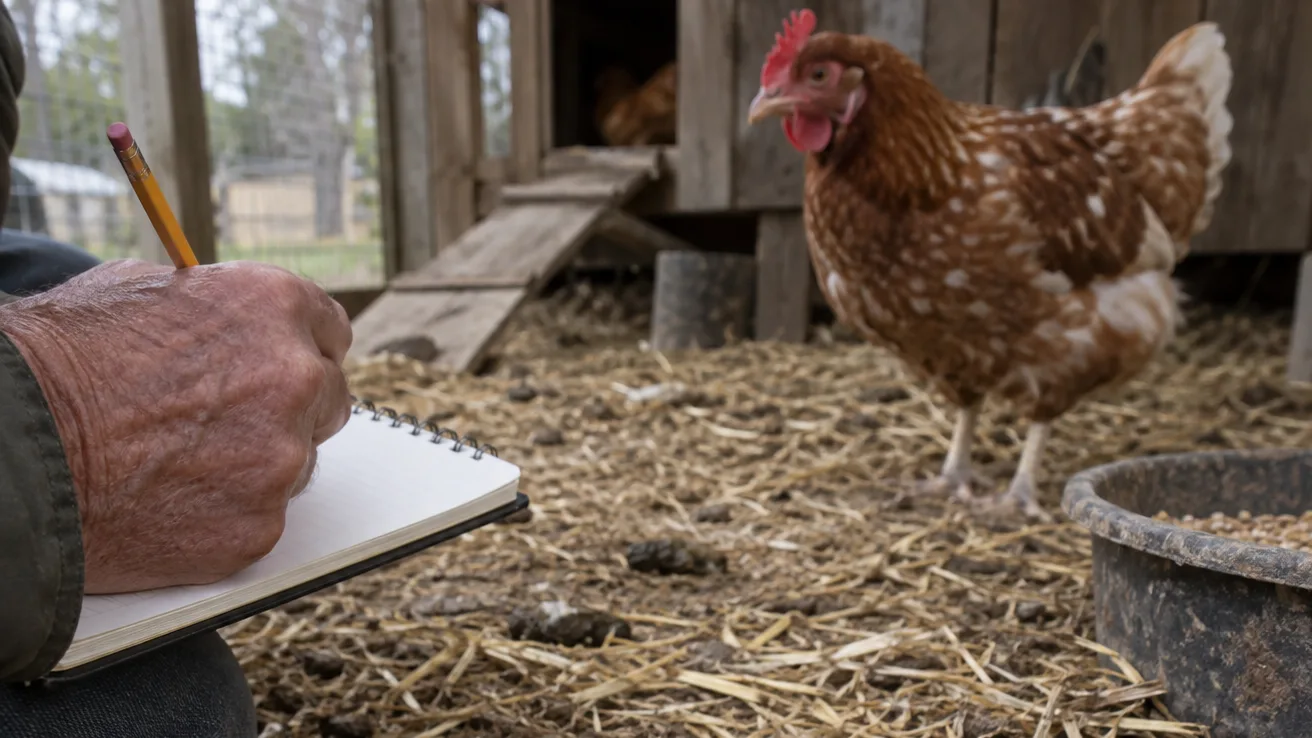
Start with the baseline: a normal dropping has three parts, not one color
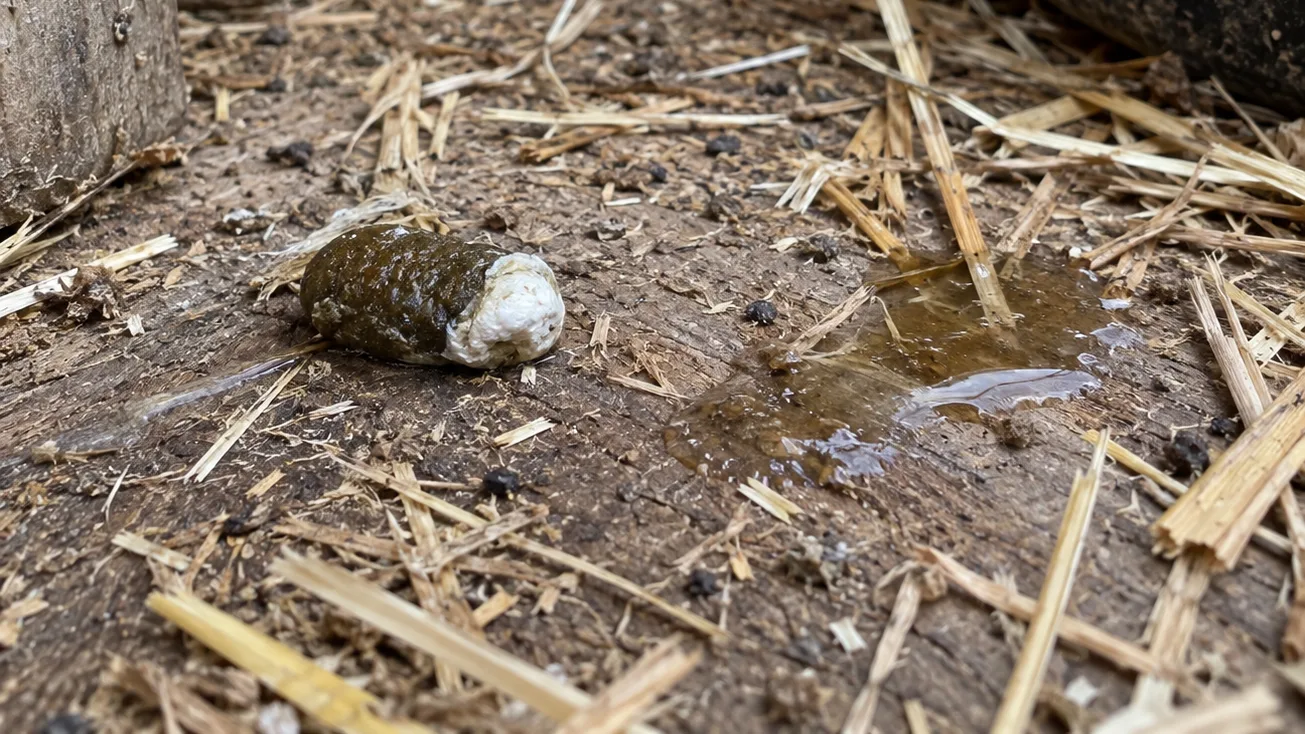
A fresh chicken dropping commonly has a fecal portion in the brown to green-brown range. On top of it, or around it, you may see a white urate cap. Urates are the pale waste component chickens pass with their droppings. A fresh dropping may also leave a clear wet ring or liquid portion on the litter.
That white cap is why a normal dropping can look partly white without being a white dropping. The fecal center matters. A dropping that is mostly chalky white, with little or no fecal material, is a different observation from a brown dropping wearing a white cap.
You may also find a soft cecal dropping. It can be darker, stickier, and more strongly scented than ordinary manure. An occasional one can fit normal digestive variation, so do not judge your flock from the smell of one fresh pile.
One dried dropping is weak evidence. Sun, litter, rain, and time alter the color and texture. My baseline is simple: photograph two or three fresh droppings in daylight, note which bird made them if you can, and watch that same bird for 12–24 hours before deciding that a color change is a health problem.
Chicken poop chart: 7 colors, the common explanation, and the next move
Use this chart to choose your next check, not to name a disease. Texture and repetition carry as much weight as the shade.
| Color | Common non-emergency explanation to check first | More concerning feature | Next move |
|---|---|---|---|
| Brown | Ordinary fecal material, including a darker cecal dropping | Repeated watery, mucousy, or sticky output with a bird that looks unwell | Compare the next two or three fresh droppings and check appetite |
| Green | Grass, leafy greens, strongly colored treats, or reduced feed intake | Green output keeps repeating or becomes watery, frothy, mucousy, or unusually foul | Review the last 24–48 hours of feed and garden access |
| Yellow | A recent ration or treat change, reduced intake, or a digestive variation | Persistent yellow output with weight loss, weakness, poor appetite, or dehydration | Check the complete ration, water, and the bird’s condition |
| White | A normal white urate cap on a fecal dropping | Repeated mostly white or chalky droppings, especially with illness signs | Photograph fresh material and seek veterinary advice if it repeats |
| Black | Dark brown cecal manure or material that has dried on the litter | Repeated jet-black, sticky, tarry material | Look at a fresh sample and contact a vet if the pattern continues |
| Red | Red food pigment or a small amount of shed intestinal lining | Repeated bright-red blood, jelly-like material, or red mucus | Check the bird promptly rather than assuming it was a treat |
| Orange | Pigmented feed, treats, or a small amount of shed lining mixed into manure | Persistent orange output alongside watery droppings or poor condition | Review feed first, then escalate if it does not settle |
The key distinction is between a one-off color and a pattern. A brown cecal dropping can be soft and dark. A red-tinted dropping after a colored treat is not the same observation as repeated bright-red streaks. A wet dropping is not automatically diarrhea, because the liquid urine component may spread across the litter. Take the photo before you clean it up.
Green, yellow, and orange: when feed is the likeliest cause
Green is the color most likely to send a keeper straight to a disease search. Check the simple exposure first. Grass, kale, weeds, leafy scraps, and strongly pigmented treats can shift the visible color. A bird that has eaten less of her complete ration can also produce a different-looking dropping because the mix moving through the gut has changed.
Picture a hen that has ordinary brown droppings on Monday, access to long grass and leafy greens on Tuesday, then green-brown droppings while she remains bright, hungry, and active. I would keep her normal ration and water steady, stop adding extra treats for a short observation period, and see whether the color moves back toward her baseline. I would not call that a diagnosis from color alone.
Yellow is harder to clear with a feed explanation. A new ration, reduced intake, or a softer cecal dropping may change the appearance, but persistent yellow output deserves more attention if the bird is losing weight, sitting apart, or drinking poorly.
Orange can be a blend of feed pigment and normal intestinal material. It can also be a small amount of shed lining mixed into manure. The practical rule is the same: review the previous 24–48 hours, keep the complete ration and clean water available, and watch the bird rather than adding several remedies at once.
If the dropping becomes repeatedly watery, frothy, mucousy, or unusually foul, the feed explanation becomes less comfortable, especially when the bird also looks sick. If the suspected food is the cause, I would expect the color to move toward baseline after it is removed. If it stays abnormal or the bird declines, that observation argues against treating diet as the whole answer.
White, red, and black: the colors that need a closer check
White needs careful wording. A white cap on a brown dropping is a normal-looking combination. Repeated output that is mostly white and chalky is not the same thing. If you see that pattern, photograph fresh material and arrange veterinary advice, particularly if the bird is weak, drinking poorly, losing weight, or sitting hunched.
Red has harmless look-alikes. A colored treat can tint manure, and a small amount of shed intestinal lining can appear reddish. What raises the priority is repetition, bright-red material, jelly-like output, or mucus. Red material does not prove coccidiosis in chickens, but it is enough reason to inspect the bird and the rest of the flock instead of dismissing it.
Black also has a look-alike. Dark brown cecal manure can look nearly black under a dim coop light, especially after it dries. Tarry, sticky, jet-black material is a different description from dark brown manure. If that tarry appearance repeats, treat it as a prompt veterinary question rather than waiting for a week of observations.
Look at the bird along with the dropping. Weakness, poor appetite, weight loss, dehydration, breathing trouble, a pale comb, or a hunched posture makes any unexplained color more important. A normal-acting hen with one odd dropping gives you room to observe. A quiet hen with repeated abnormal material needs a shorter path to professional help.
One odd dropping or a flock problem? Use a 24-hour check
First identify the bird. Then write down the time, color, texture, appetite, water intake, energy, and any recent feed change. Also note whether the dropping was fresh or partly dried. Those details are more useful than a label such as strange poop.
- Check the suspected bird’s crop, posture, activity, and interest in feed without forcing food or water.
- Review the previous 24–48 hours for treats, grass, garden access, new feed, supplements, or medication.
- Watch the next few droppings in daylight. Compare them with the flock’s usual output.
- If it is safe and practical, house the bird separately for up to 12–24 hours with normal feed and water, shade, secure footing, and visual contact with the flock.
In my own checking routine, I stand outside the run with my phone, identify the bird before disturbing the litter, photograph the fresh dropping, and write the time beside it. I avoid changing feed, adding a supplement, and deep-cleaning the whole coop at the same moment. That may feel busy, but it removes the clues you need to work out what changed.
Do not use a 24-hour watch as a delay tactic for a weak or actively bleeding bird. If several birds change at once, think about a shared feed, water, parasite, or environmental issue before assuming every bird has the same isolated digestive upset.
Color-changing feed, treats, plants, and medicines: what to review first
Build a short exposure timeline. Write down the last two days of complete feed, treats, garden access, dark leafy plants, supplements, and medication changes. Check product labels before blaming a medicine for a color shift. A label may also tell you whether eggs or meat require a holding period, so do not guess.
Treats should stay secondary to a complete ration. If you remove every normal food and replace it with scraps, you create a second problem that makes the dropping harder to interpret. My preference is one change at a time: remove the suspected colored treat, keep ordinary feed and water steady, and observe.
A color that fades while the bird stays active is a different pattern from a color that persists with poor appetite, weight loss, dehydration, or repeated mucus. Neither pattern gives you permission to start medication from poop color alone. Use the label, a poultry vet, or local extension advice for treatment decisions.
Call the vet when color comes with these signs
Seek prompt veterinary advice for repeated bright-red blood, repeated sticky tarry-black droppings, repeated mostly white or chalky output, or severe watery droppings. Move faster when any abnormal color appears with weakness, loss of appetite, weight loss, dehydration, breathing trouble, a pale comb, or a hunched posture.
- Take a daylight photo of fresh material before it dries.
- Write down the bird’s age, the first time you noticed the change, and the other signs you see.
- List recent feed, treats, plants, supplements, and medication changes.
- Record whether one bird or several are affected.
- Note whether the bird is eating, drinking, passing normal droppings between episodes, and staying with the flock.
That record gives a poultry vet a clearer starting point than a description such as blackish or runny. If the pattern also includes weight loss or a rough-looking bird, compare the wider signs in chicken worms symptoms before your call, but do not use a symptom list as a substitute for an examination. For a second clinical reference, compare your notes with Merck Veterinary Manual’s poultry guidance and university extension guidance on poultry droppings.
Your task this week is small: photograph two or three normal fresh droppings from your flock and start a one-page poop log. Once you know your birds’ baseline, an unusual color becomes a useful change to investigate instead of a reason to panic.