Can Ducks and Chickens Live Together? Space, Water & Risks
A duck can drink beside your hens, but its splash zone shouldn’t become their sleeping area. Yes, ducks and chickens can live together in a backyard if you plan for both species’ space and water needs, keep the night shelter dry, and have a way to separate birds that don’t get along.
Yes—ducks and chickens can share a backyard, if you can keep their living areas dry
Sharing a yard doesn’t mean sharing every inch of floor, every feeder, or every hour. Chickens usually want an elevated roost; ducks settle on the floor. Give each a place that suits its habits, and make sure the arrangement still works when rain, mud, or a pushy bird changes the day.
Before you order birds, check three things: you can fit both species without crowding, duck water can drain away from the bedding, and you can separate a bird if the mix proves unsafe. If one of those is missing, separate housing may be the kinder and simpler plan. The main job isn’t getting the birds to share a roof. It’s preventing one species’ needs from making the other’s space uncomfortable.
Size the shared space for the duck, not just the chicken: 4–6 sq ft indoors per bird
As a starting layout, allow about 4 square feet indoors per adult chicken and 4–6 per adult duck. For an outdoor run, plan around 10 square feet per chicken and 15–20 per duck. Treat these as planning figures, not legal standards or a promise that every flock will thrive at the minimum. Large-bodied birds, a wet climate, or long periods spent confined are good reasons to add room.
Here’s the arithmetic in a small example. When I sketched a hypothetical yard for four hens and two ducks, I first counted the six birds as equal space users. That sketch fell apart once I added a duck water station and a path for drainage: the space I’d counted as general run area also had to accommodate splashing and traffic. Using the planning figures above, the indoor area comes to 24–28 square feet: 16 for the hens, plus 8–12 for the ducks. The run comes to about 70–80 square feet: 40 for the hens, plus 30–40 for the ducks. That’s a layout exercise, not a measured result from a live flock, and it doesn’t include extra room for awkward corners or a muddy water station.
When space is tight, watch the consequences rather than just the floor plan. Bedding that stays damp, dirty feet, and birds being pushed away from food are signs to investigate crowding, drainage, and access. A number on paper can’t compensate for a bottleneck at the door or around a feeder.
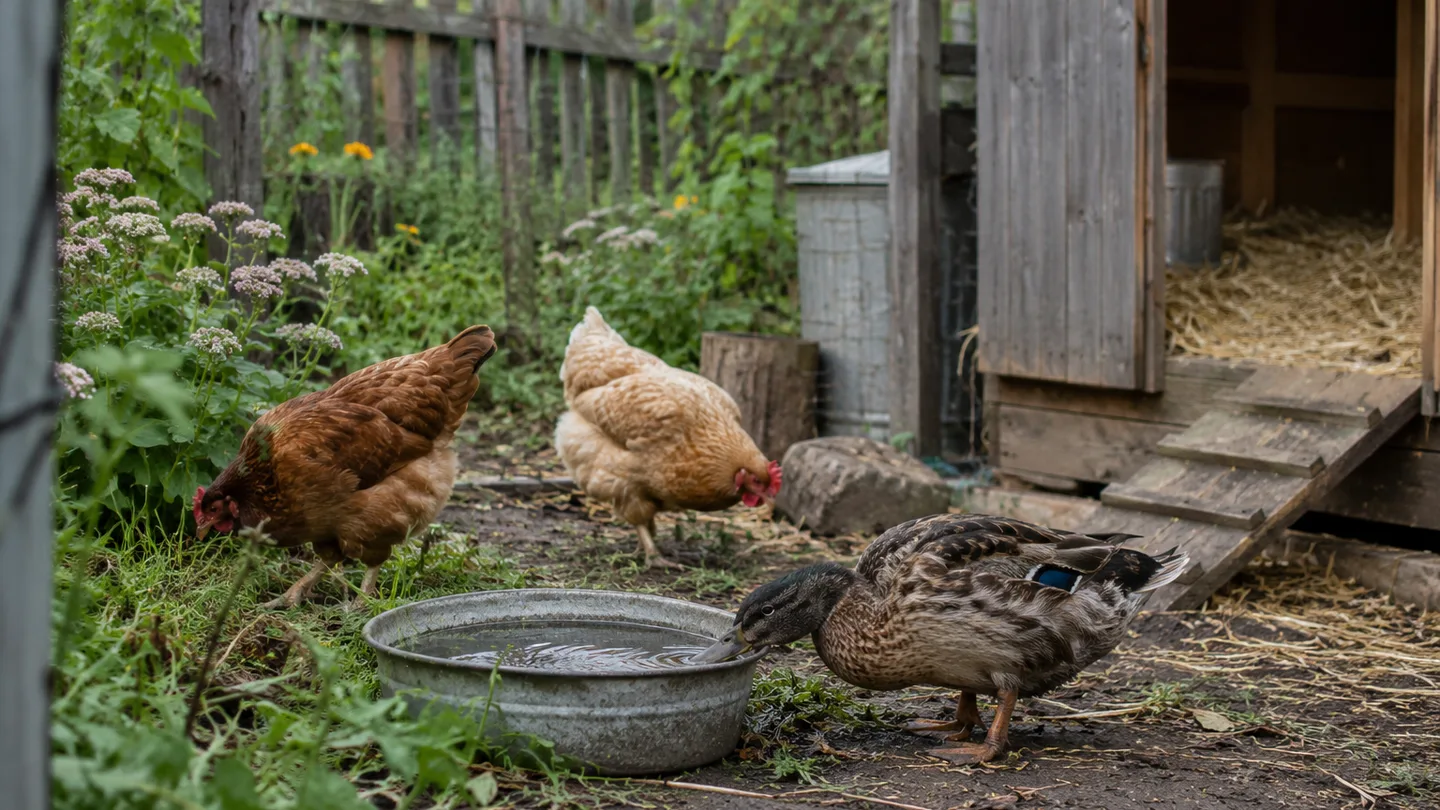
For a chicken-focused sizing baseline, compare your measurements with the guide to how much space do chickens need, then size the shared setup for the ducks too.
Put duck water where splashes can drain—not beside the sleeping bedding
Ducks need drinking water deep and wide enough to dip their heads into. Chickens can use a suitable poultry drinker, so the water station doesn’t have to be the same for both. A pond isn’t required for this basic setup; clean drinking water and a container that lets ducks dip their heads are the practical priorities.
Put the duck container outdoors on a surface that drains, with the coop entrance and sleeping bedding uphill or well away from the splash area. The reason is simple: spilled water spreads across the ground, and a slight slope or a low spot can carry it toward the doorway. Keep duck feed close enough that a bird can eat and drink comfortably, but don’t place it where spilled water runs into the shelter. Muddy standing water around the container isn’t a substitute for clean drinking water.
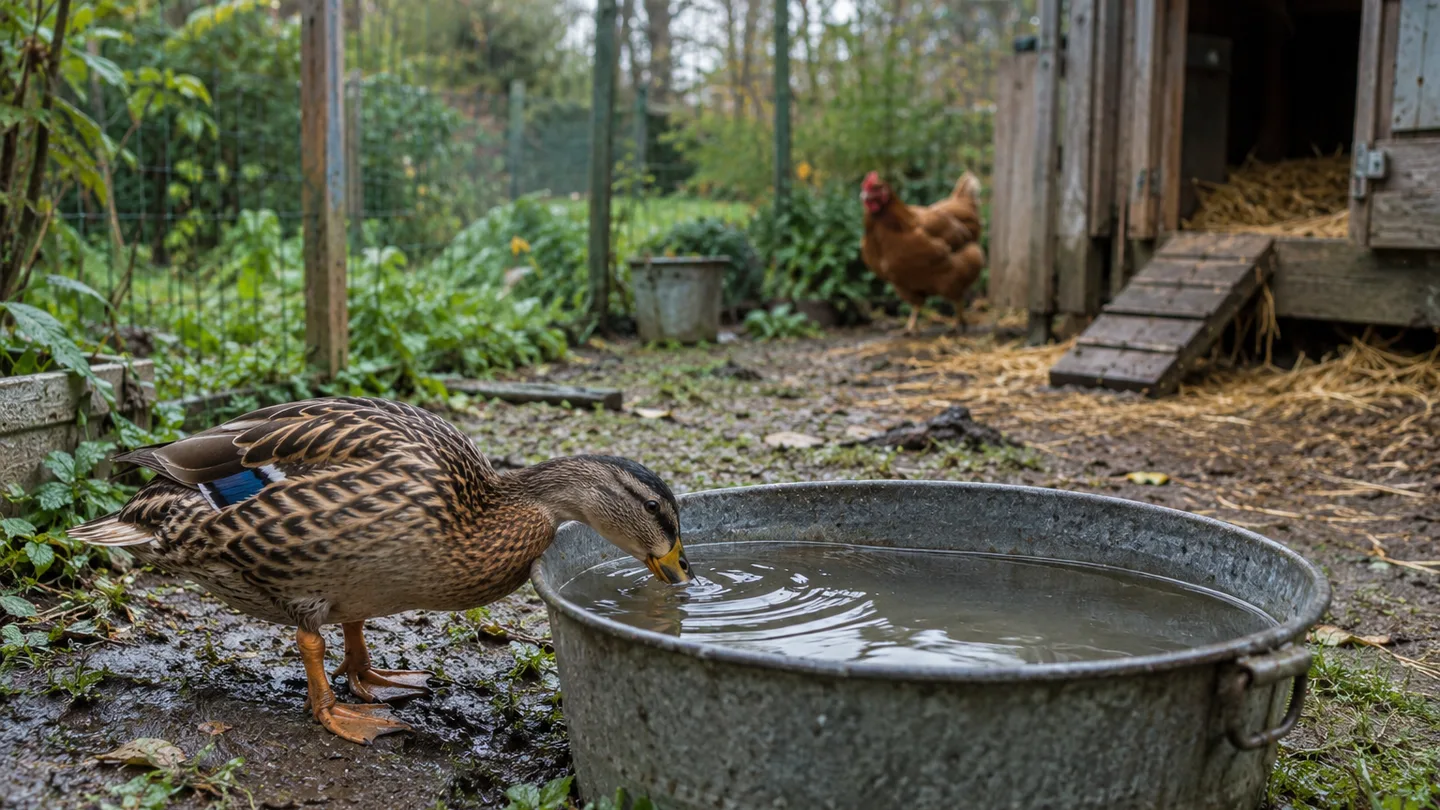
Look at the route water takes after a refill or a rain shower. If it collects where birds walk in and out, move the station or improve the drainage before adding more bedding to the same wet patch. A simple layout works best: dry sleeping space, a short route to food, and a water point on ground that sheds the mess away from the coop.
One feeder can work for adults; growing ducklings may need a different ration
Adult birds may be able to use one complete feed if its label says it suits the species and life stages in your flock. Don’t assume a chicken-only ration is automatically suitable for ducklings. Their nutritional needs differ, including attention to niacin, so check the feed label and ask a poultry-savvy veterinarian or extension resource if the right ration isn’t clear. Don’t guess at a supplement dose.
Feed access is part of the space plan. If one bird can stand across the feeder and block the rest, add another feeding point or arrange the stations so birds can approach from more than one side. Watch the actual feeding pattern: a full feeder doesn’t help a smaller or less assertive bird that can’t get to it.
For current local guidance, check a university extension resource on duckling nutrition or ask a veterinarian who works with poultry. Feed formulations and labels can change, so use the bag in front of you rather than relying on a remembered brand or recipe.
A drake changes the risk: don’t house him with hens if he harasses or mounts them
A drake that repeatedly mounts or chases hens is a separation problem, not a behavior to wait out in a shared run. A mating attempt between a male duck and a chicken can injure the hen because their bodies and mating behavior don’t match. A flock ratio can’t guarantee that a particular drake will leave hens alone.
Watch what happens, not just whether the birds appear calm while you’re nearby. Repeated mounting, persistent chasing, or a visible injury means separate the birds promptly. Use a secure partition or a separate run that gives the hen room to move away. If there’s an injury, or you’re uncertain how serious it is, contact a veterinarian rather than trying to manage it as ordinary squabbling.
That risk is different from the general question of mixed-species housing. Compatible birds may share a backyard; a specific pairing that causes repeated harassment should not share unrestricted access.
Treat disease prevention as a contact-and-cleaning problem, not a reason to panic
Droppings, shared water, footwear, tools, and new arrivals can all connect birds that otherwise use different parts of the yard. That makes routine cleaning and separation useful precautions, not a reason to assume that a duck flock is infected. A bird can look well while a health problem is developing, so appearance alone isn’t a reliable quarantine plan.
Keep new birds separately for at least 30 days before introducing them to your established flock, and use separate equipment where practical. Keep the newcomer’s water and feed containers apart, and wash your hands and footwear after tending that area. If a bird becomes suddenly ill, you see unusual deaths, or you suspect a reportable disease, contact a veterinarian and check your state department of agriculture or USDA biosecurity guidance for current local advice.
Quarantine takes space, so plan it before bringing birds home. A spare pen or secure partition is much easier to arrange in advance than after a newcomer is already mingling with the flock.
Dry bedding is the daily test: check beneath waterers and at the coop entrance
The quickest useful check is to press or lift the bedding where water might reach it: under drinkers, near the doorway, and along the route from the run. Look for damp patches, caked material, a sharp odor, muddy bottlenecks, and dirty feet or feathers. Those signs tell you where to look for a leak, splash, poor drainage, or too much traffic.
Fix the source before piling on more bedding. Move the water outdoors if it’s soaking the shelter, redirect runoff, and widen a muddy pinch point if birds keep churning the same small area. Then add dry bedding as needed. Material and replacement frequency depend on ventilation, weather, flock size, and how quickly your setup gets wet; a fixed calendar won’t suit every backyard.
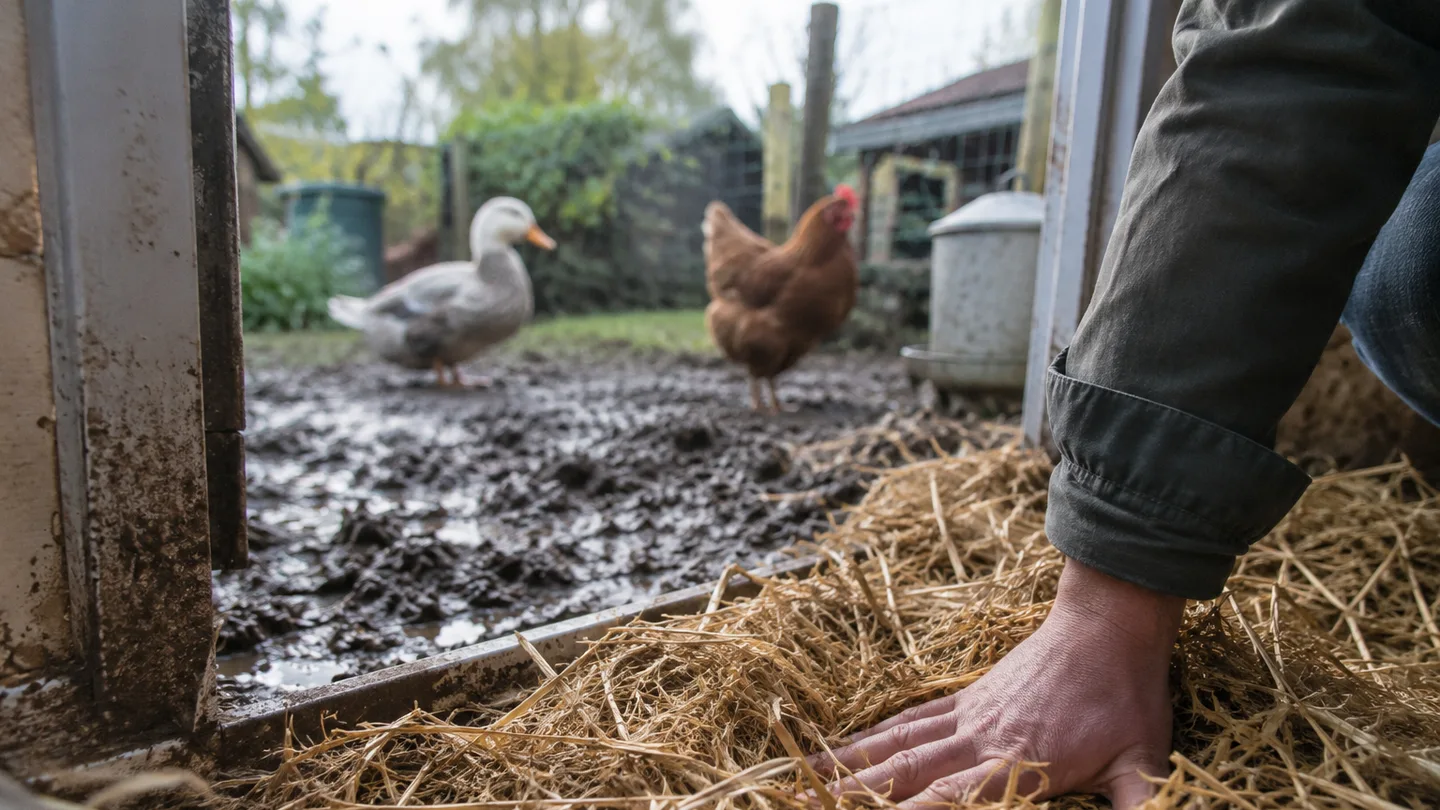
In my layout sketch, the useful change wasn’t an elaborate build: it was treating the water point as its own wet zone instead of assuming the whole run could stay equally dry. Check the entrance after rain, not just on a sunny afternoon. If the path from the water station keeps turning into mud, move the station or change the route before that mud is carried into the bedding.
If you’re choosing material or adjusting the sleeping area, the guide to best bedding for chicken coop can help you compare options for your setup.
Introduce them in stages, then keep a separate retreat available
After quarantine, start with a barrier that lets the birds see one another without sharing direct access. Then try short, supervised periods together in a space with room to move away from the feeder, water, and doorway. Stay close enough to interrupt persistent chasing or blocking. Extend the process if the birds keep guarding resources or one animal can’t get out of another’s way.
There isn’t a fixed number of introduction days that works for every flock. A calm first session is useful information, not proof that the arrangement will stay calm when you leave. Keep a separate retreat available, and make sure the night shelter is secure against local predators. Chickens need access to their roosts; ducks need a floor-level place to settle without being crowded underfoot.
Before the first shared night, check that you can close birds into their own areas if needed. A partition you can operate quickly is more useful than a plan that depends on rebuilding the coop during a tense moment.
Use this go/no-go check before you add the second species
Say yes to a mixed setup only if you can make these parts work together:
- Measure the coop and run, then calculate space for each species rather than treating every bird as the same size.
- Set up a head-dipping water container outdoors, on ground that drains away from the sleeping bedding.
- Choose feed by the label and life stage, with a separate plan for ducklings if needed.
- Have a secure separation option, especially if you’re keeping a drake with hens.
- Set aside a separate place for new arrivals and for any bird that needs to be removed from the group.
If your yard can’t stay reasonably dry or you can’t isolate a bird, separate housing is the better choice for now. This week, measure the coop and run and sketch where water will drain before you order birds. For the chicken side of that plan, start with chicken coop requirements; then check the feed label or ask a poultry-savvy professional about the ducks’ needs.