Can Chickens Eat Cantaloupe? Safe Portions for a Backyard Flock
Yes—healthy adult chickens can have fresh cantaloupe as an occasional treat. I’d start with just 1–2 small pieces per bird, keep their regular feed available, and treat the melon as a bonus rather than part of the ration.
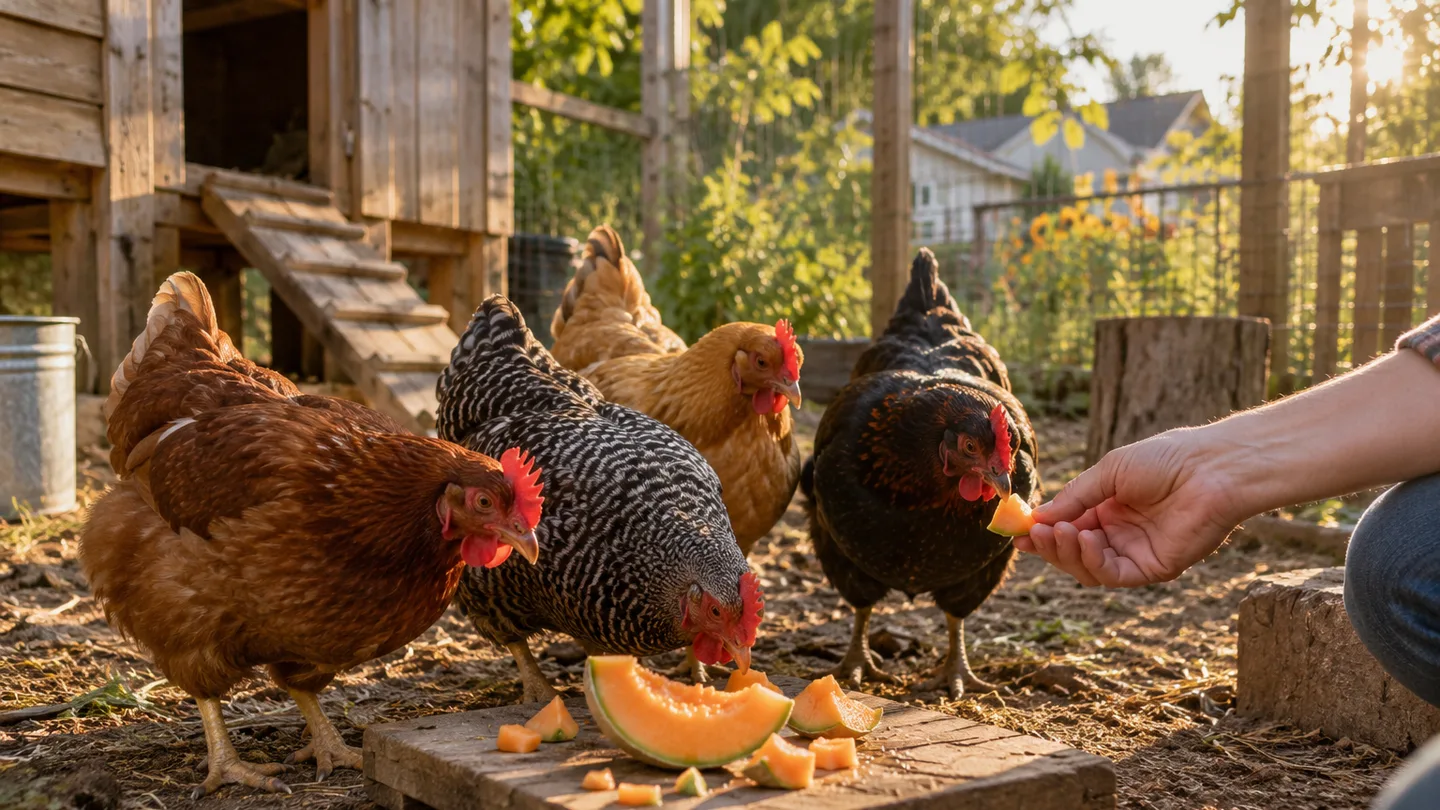
Yes—chickens can eat cantaloupe, but it stays a treat
Cantaloupe is juicy and sweet, which makes it an appealing snack on a warm day. It also doesn’t replace a feed formulated to be your birds’ main diet. My practical answer is yes for a healthy adult hen, in a small serving, with her usual complete feed still doing the nutritional heavy lifting.
That distinction matters more than whether the melon is served in a neat cube or a ragged slice. A treat can be perfectly pleasant and still take up space in a bird’s appetite. If your flock fills up on scraps first, you’ve made it harder for them to eat the feed you chose to cover their daily needs.
I’d also separate “safe to offer” from “necessary to offer.” Your hens don’t need cantaloupe. If you have a ripe melon you’d otherwise eat, sharing a little is reasonable. If you’re buying special treats, put that money toward feed or a repair to the run before buying fruit for the flock.
Start with 1–2 small pieces; let the 10% treat rule set the ceiling
For a first taste, offer one or two pieces about 1–2 cm across to each adult bird. That’s my practical starting portion, not a tested cantaloupe dose. Watch how your particular flock handles it, and count every other extra they get that day: kitchen scraps, scratch, fruit, and similar snacks all draw from the same treat allowance.
A useful keeper’s rule of thumb is to keep treats at about 10% or less of daily intake. I’d use that as a ceiling to guide decisions, not as a precise measurement you need to calculate for every hen. It isn’t a melon-specific limit, and it won’t tell you an exact number of grams for birds of different sizes.
Here’s the mechanism: the more room treats take up in the day’s eating, the less room remains for the feed designed as their staple. A small hen and a large hen won’t necessarily eat the same amount, and a bird that’s already had several extras has less treat room left. So if you’ve given your flock a generous handful of scratch, make the melon portion smaller—or skip it that day.
One useful check is the next meal. If your birds leave their regular feed untouched after treats, I’d cut the treat portion next time. That’s a practical signal, not proof of a health problem or a precise measurement of what each bird ate.
Flesh, seeds, and rind: what’s safe to offer?
Ripe flesh is the simplest part to serve. Cut a small amount from the melon and offer it plain. I wouldn’t add salt, seasoning, or a sweet topping; the fruit already has plenty of flavor for a curious hen.
The seeds can stay attached. For a small serving, I don’t see a practical reason to spend time picking them out one by one. If you’d rather remove them, that’s fine too. Just keep the portion modest so the birds don’t turn the snack into a meal.
You can offer rind as well if you wash the whole melon first and cut the rind into pieces your birds can manage. Rind is tougher than the soft flesh, so I’d start with a little and see whether your hens peck at it. There’s no need to leave a large, slippery half in the run to find out.
Skip melon that’s moldy, slimy, or smells fermented. Don’t cut away a visibly spoiled patch and offer the rest to the flock; discard the questionable piece. When in doubt, the compost bin is a better destination than the feed dish.
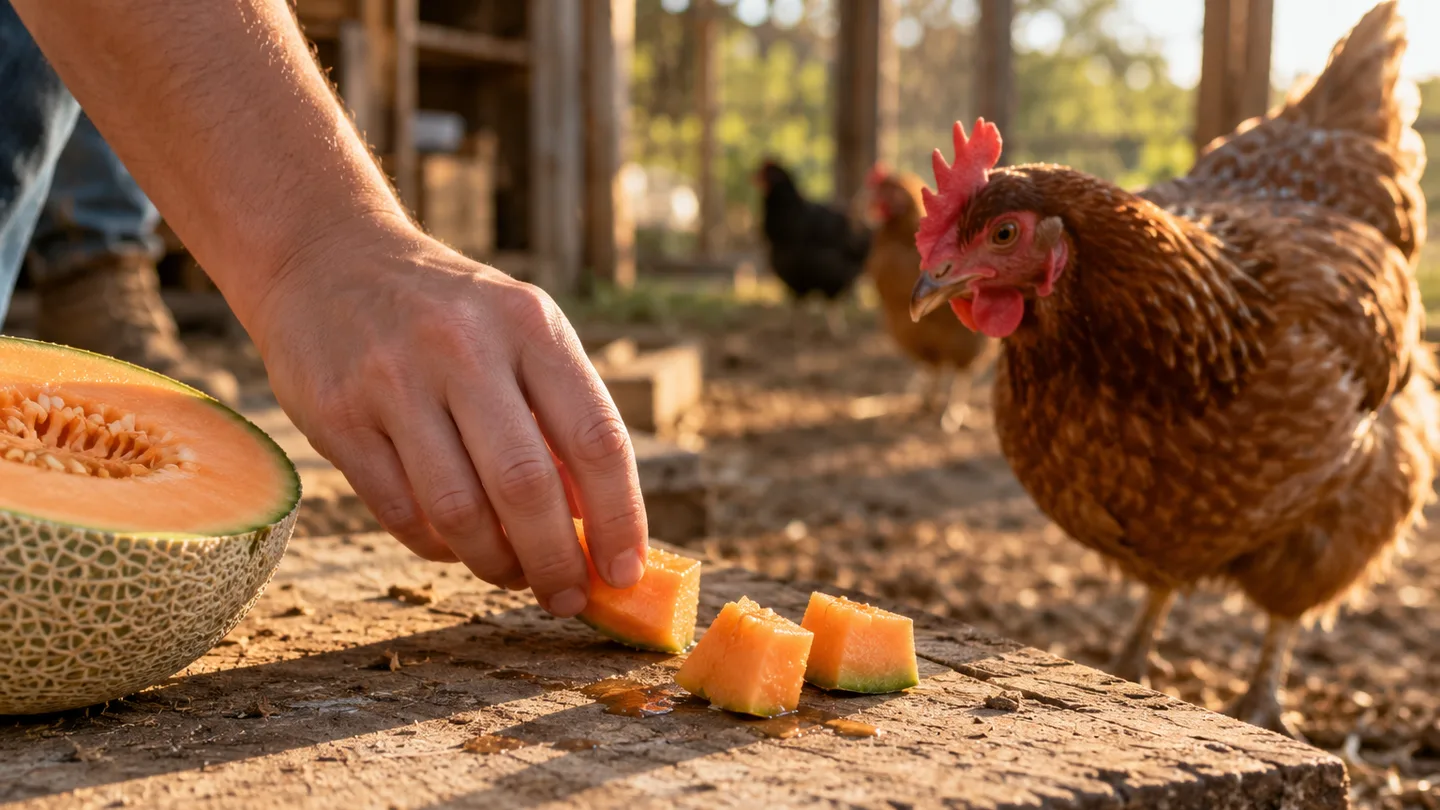
Wash, split, and cut it before it reaches the run
If your birds may eat rind, rinse and scrub the outside of the whole melon under running water before you cut it. Then use a clean knife and cutting surface. The reason for doing this before slicing is simple: the knife travels from the outer surface into the flesh, so cleaning first helps keep what’s on the rind from being carried inward.
Cut a small amount into pieces about 1–2 cm across for the first serving. You can set aside the portion you plan to share and refrigerate the rest for your own use. That makes it easier to keep track of how much the flock got, and it avoids leaving an entire half in the run while the hens take turns.
Keep the serving dish easy to retrieve. A shallow, washable dish is less trouble than scattering sticky pieces through bedding, where you may not spot every leftover. If you feed directly on a clean surface, give it a quick check afterward and clear away pieces the birds ignored.
Keep it occasional; be more cautious with chicks and hot weather
I wouldn’t set a required cantaloupe schedule, such as a certain number of servings each week. Make it occasional, keep normal feed available, and adjust the amount of all treats together. A fruit treat doesn’t become a better choice simply because it’s offered on a fixed day.
Young chicks need an age-appropriate starter feed as their dietary base. If you’re considering treats for chicks, check the feed maker’s directions and ask a poultry vet or local extension office about suitable grit and timing for your setup. Their needs and feeding arrangements differ from those of adult hens, so I wouldn’t use the adult portion suggestion for them.
On a hot day, juicy melon can be a snack, but it doesn’t take the place of clean drinking water. Keep water available in a clean container and check that it hasn’t run dry or become fouled. If the weather is hot enough that you’re paying closer attention to the waterer, keep the melon portion small and clean up promptly.
Scale the bowl to 3, 6, or 12 hens—and make sure each bird gets a turn
The first-offer arithmetic is straightforward: for 3 hens, set out 3–6 small pieces; for 6 hens, set out 6–12; for 12 hens, set out 12–24. Those totals simply multiply the 1–2-piece starting suggestion by the number of birds. They are not a maximum, and they don’t override the overall limit you set for all treats that day.
Consider a six-hen backyard flock. If you’ve already scattered scratch in the morning, choose the low end of the melon range or hold it for another day. If melon is the only treat, you could try a piece or two per bird, spread among a few spots rather than dropped in one heap. This is a worked example, not a report of a measured feeding trial.
Spreading pieces out is a small management choice that can give quieter birds a chance to reach the snack before confident hens take the lot. Watch the flock for a minute. If one bird guards the dish or several hens never get close, move a few pieces farther apart next time. The point is to offer a taste across the group, not to make the serving more elaborate than it needs to be.
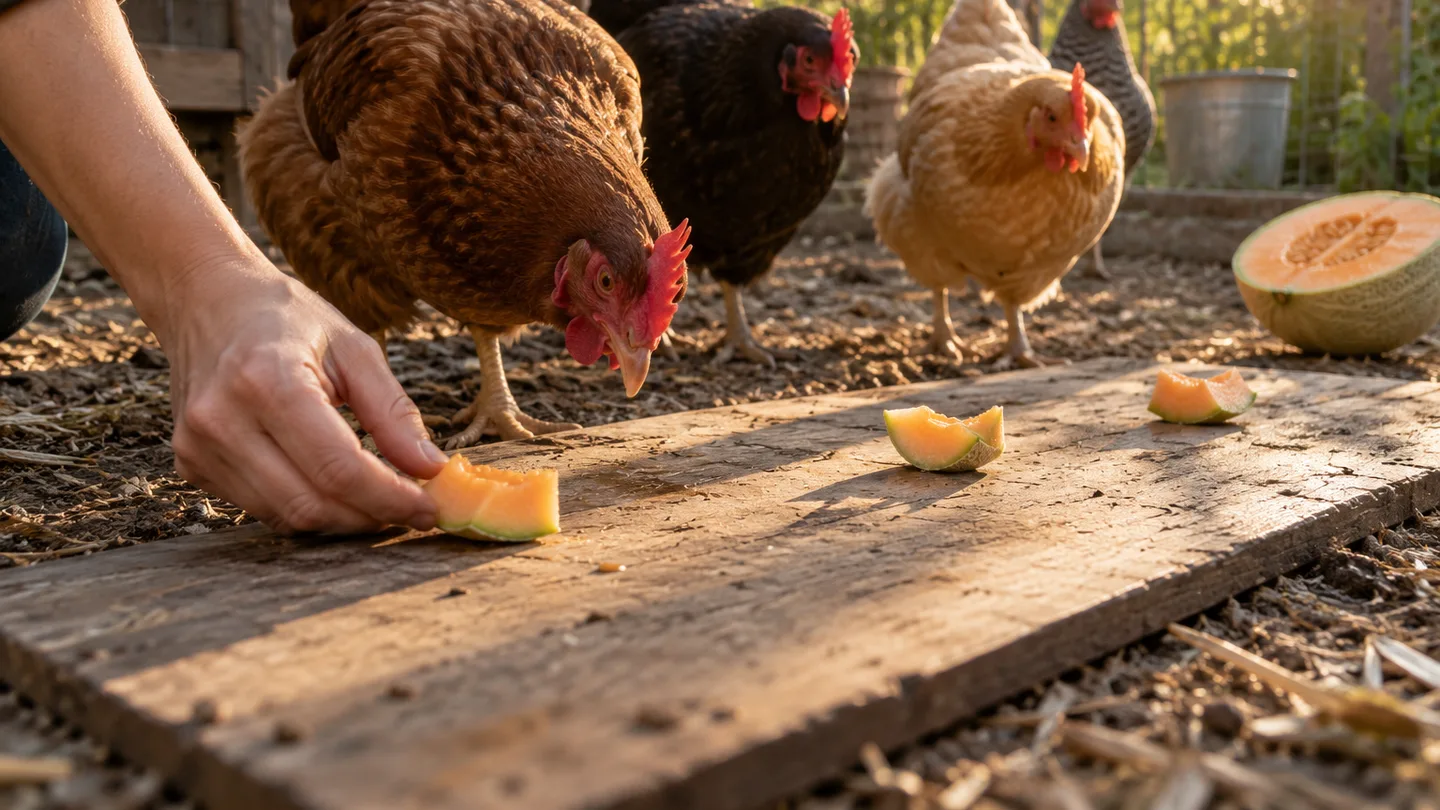
Use a conservative cleanup window for leftovers
Cut melon shouldn’t sit around in the run until evening. My conservative recommendation for a backyard feeding session is to remove leftovers within about two hours in ordinary weather, and within about one hour once temperatures are above 90°F (32°C). Think of those as practical cleanup limits, not a chicken-specific test result.
Heat and time make a forgotten piece harder to trust, especially when it has been pecked, stepped on, or mixed with bedding. Don’t leave cut melon out overnight, and don’t put exposed leftovers back into the fridge for people or birds. Clear the serving dish and wash it before using it again.
If you want a household food-handling reference to compare with that conservative rule, USDA’s leftovers and food safety guidance covers how long perishable food should remain at room temperature. Your run may be warmer than the room you’re sitting in, so use the actual conditions around the food rather than assuming it stayed cool.
If droppings change, pause the treat; persistent illness needs a vet
A juicy snack may coincide with a wetter-looking dropping, but one change doesn’t tell you why it happened. Pause the melon and watch the bird’s overall behavior, appetite, and droppings. Keep ordinary feed and fresh water available rather than trying to solve a possible problem with more treats.
If a bird stays lethargic, stops eating, has persistent diarrhea, or seems unwell in a way that continues after you remove the snack, contact a poultry vet. Don’t assume cantaloupe is the cause or try to treat a lasting problem at home. A short-lived change and an ongoing illness call for different responses.
This week, wash a ripe melon, offer one or two small pieces per adult hen, and watch whether every bird gets a turn and returns to regular feed. If you’re also working out the ongoing budget for your flock, use our guide to the monthly cost of keeping chickens to plan feed before adding more extras.