Raising Backyard Chickens for the First Time: 7 Numbers to Know
Four hens sound like a small order until you sketch the coop, run, feed bin, and daily water check. If you're raising backyard chickens for the first time, seven numbers will get you further than a glossy coop photo: 3–4 hens, 4 square feet indoors per hen, 10 square feet in the run, 100–120 grams of feed, one gallon of waterer capacity for 4–6 hens, 95°F in the first-week warm zone, and an 18–24-week first-egg window.
Treat these as planning anchors, not promises or legal minimums. Breed, climate, muddy weather, local rules, and the time you can give your birds will move the answer. The useful part is putting the numbers together before you order anything.
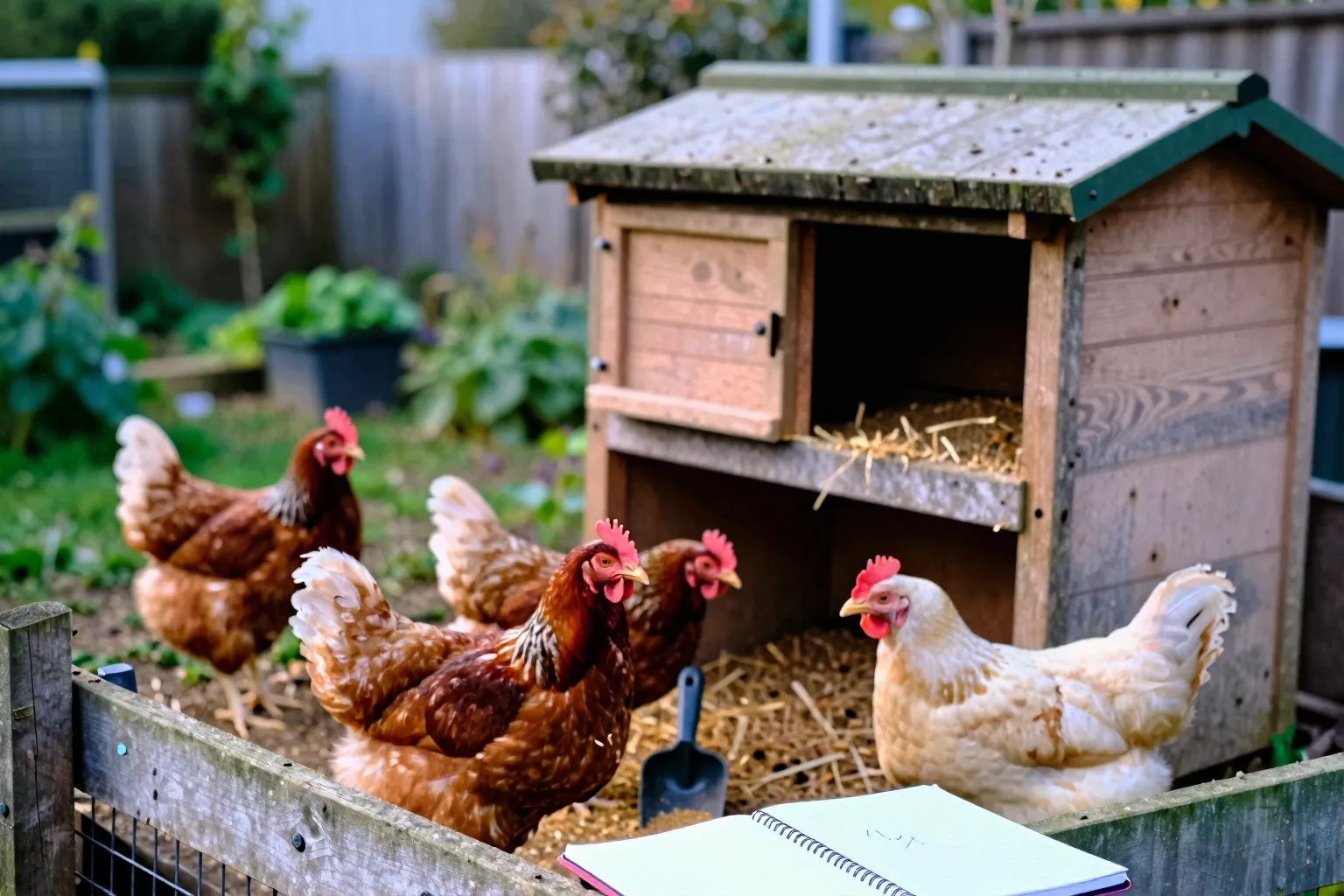
Begin with 3–4 hens, not a single bird
For many first-time keepers, 3–4 hens is a workable starting point when local rules, yard, budget, and daily routine all fit. Chickens are social, so one hen is a poor default. A single bird has no flock partner for ordinary interaction, and separation becomes harder if it ever needs individual care.
Three is the leaner option. It reduces the purchase and feed commitment. Four costs a little more to house and feed, but it gives you a more forgiving group if one bird must be separated for treatment or recovery. The practical judgment is simple: if your planned space can honestly fit four, four is usually the stronger beginner setup. Saving one bird's worth of floor space is not worth rebuilding the run later.
Chicks are a hands-on project. They need a brooder, fresh water, dry litter, and frequent checks while they grow. Started pullets are young hens already past that brooder stage. They usually cost more at purchase, but they let you skip the most equipment-heavy part of the setup.
The 4-square-foot indoor baseline
Use 4 square feet of usable indoor floor space per adult hen when your birds have dependable daily access to a run. For four hens, that means 16 square feet of usable indoor floor. A 4-by-4-foot room reaches that arithmetic, but only if feeders, waterers, partitions, and bulky nest-box cabinets don't take over the area.
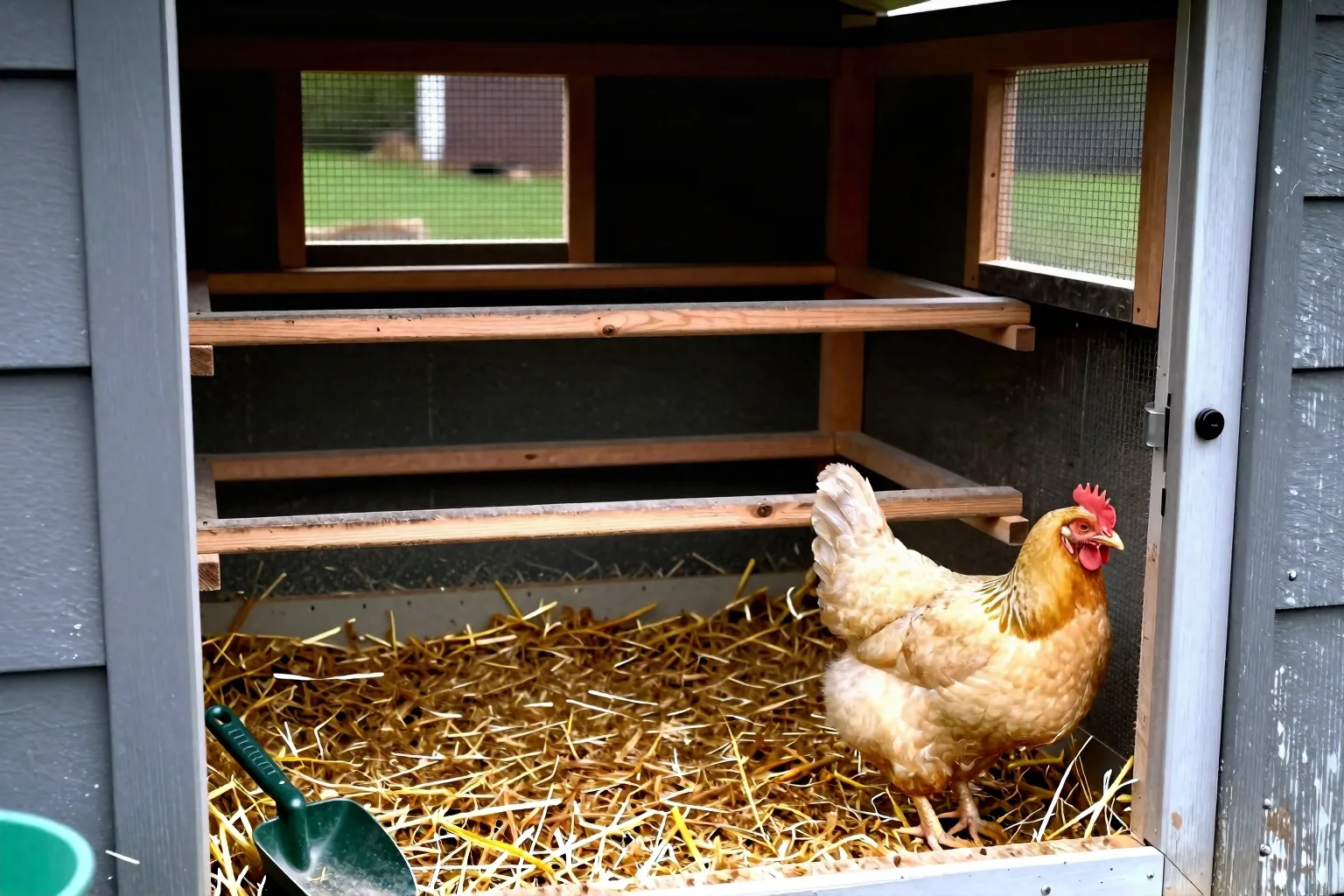
Count the floor your birds can actually stand and move across. Don't count a storage shelf, a solid cabinet, or dead space behind a fixture. A raised nest box may leave the floor open, while a large freestanding box does not. This small measuring distinction prevents a prefab coop from looking bigger on paper than it feels at night.
That figure is a baseline, not a whole housing plan. Large breeds, cold climates, long muddy spells, or periods when the run is unusable justify more room. Crowding lets droppings wet the litter faster. Wet litter holds ammonia, and limited escape space makes pecking conflicts harder to interrupt.
Space also doesn't replace the basics. Give your birds high ventilation openings that don't create a direct draft on the roost, dry bedding, enough roost access for the whole group, and a nighttime door with a latch that resists common predator tampering. For a fuller footprint check, read How much coop and run space do backyard chickens need? before you buy a prefab coop.
Why 10 square feet of run space changes daily care
Plan on 10 square feet of secure run space per adult hen as a realistic starting target. Four hens therefore need 40 square feet outdoors. That is a target for a run your birds can use regularly, not a claim about every local code or every breed.
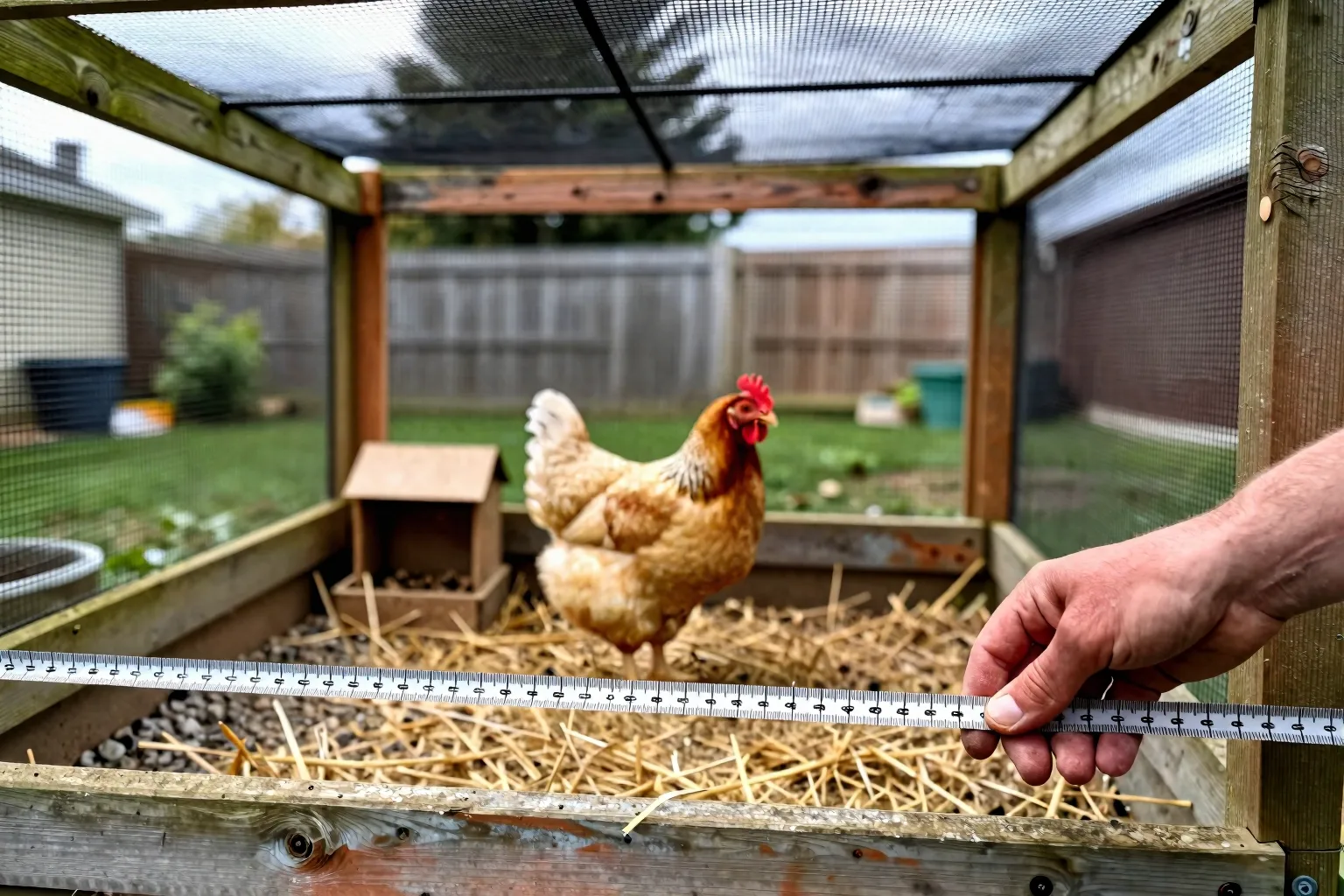
Free-ranging can add forage and enrichment, but it doesn't replace a dependable run. You may need to confine your birds during a hawk visit, a wet spell, garden work, or a day when nobody is home to supervise them. A run gives you an outdoor option that remains available when free range is not.
A workable run has a roofed or partly roofed section, shade, drainage, and a barrier that prevents both escape and reach-through. Use small-opening welded mesh where a predator could push a paw or snout toward a bird. Check the door, roof edge, corners, and ground line. Those are separate jobs. A strong wall does not compensate for a loose latch or a gap at the base.
Budget 100–120 grams of complete feed per hen each day
For an adult laying flock, budget 100–120 grams of complete feed per hen per day. Four hens at that range use about 12–14.4 kilograms over 30 days before spillage, rodents, wet feed, or other waste. The arithmetic is 4 hens × 100–120 grams × 30 days.
Treat that range as feed purchased, not a promise that every hen eats exactly the same amount. A large hen may use more than a small hen. Cold weather can raise maintenance needs. Forage may reduce what disappears from the feeder, while a poor feeder design can increase waste. Laying output, flock age, and feed quality also change the amount you need to buy.
Use chick starter for chicks, a grower ration for the next growth stage, and layer ration when the birds are at the appropriate laying stage. Don't feed high-calcium layer ration to young chicks. Their feed is formulated for a different stage of development.
For a cost estimate, multiply your local price per kilogram by 12–14.4 kilograms, then add a small allowance for waste. Check current local bag prices rather than relying on an old dollar figure. How to calculate monthly chicken feed costs for a small flock can help you rebuild the calculation when your flock size or feed price changes.
Keep one gallon of waterer capacity ready for every 4–6 hens
Keep one gallon of waterer capacity available for every 4–6 hens. Four hens can therefore start with one gallon of capacity, provided all birds can reach it and you check it often. Capacity is a refill interval. It is not a promise that the flock's daily consumption will be identical in every season.
Heat, laying, and dry feed can increase demand. In freezing weather, the problem may be available water rather than total daily use. A frozen drinker gives your birds no usable capacity. Put the waterer on a firm surface away from bedding, clean it daily, and check it twice daily during heat or freezing conditions.
Add a second station if a dominant hen guards the first one, if the run is long, or if distance makes access uneven. A larger drinker reduces refill frequency. It does not replace routine checks for ice, dirt, algae, leaks, or tipped containers.
If you buy chicks, 95°F is the week-one brooder target
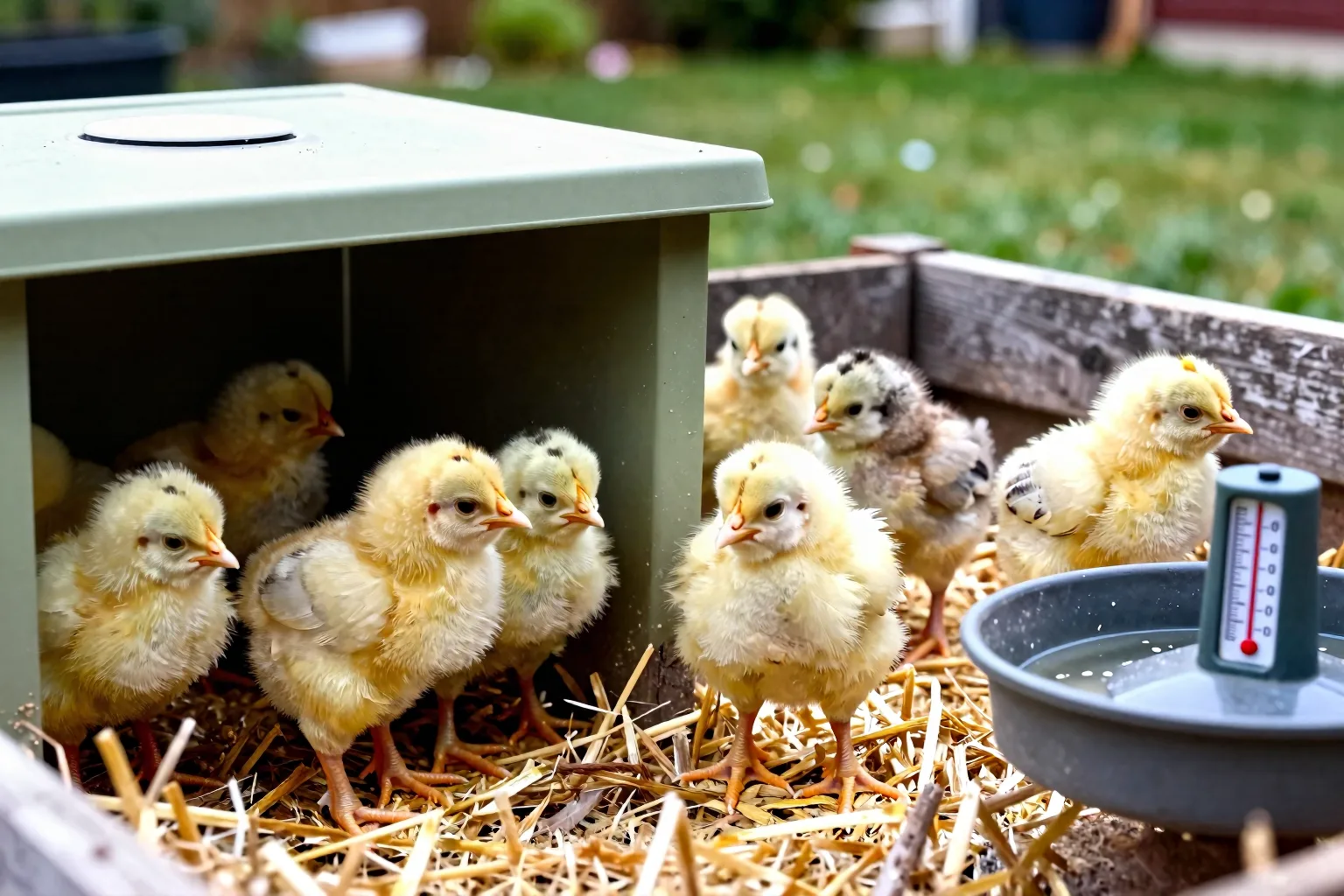
If you buy chicks, set the warm-zone target at about 95°F at chick height during week one. Reduce the target by roughly 5°F each week as the chicks feather out: about 90°F in week two, 85°F in week three, and 80°F in week four. Use those figures as a starting schedule, not a substitute for watching the birds.
A brooder should be a gradient, not a heated box with the same temperature in every corner. Put the heat source over one zone and leave a cooler area open. Chicks need to move toward warmth, then step away when they are comfortable. Secure the heat source so it cannot fall into litter, and keep the bedding dry. Place the thermometer at chick height in the warm zone, not high on the wall.
Watch the chicks as your second thermometer. Tight huddling under the heat suggests they are cold. Persistent spreading, panting, or avoiding the warm zone suggests overheating. A chick that is active, eating, drinking, and moving between zones is giving you a more useful reading than a wall-mounted dial alone. Once you buy started pullets that have moved beyond the brooder stage, this setup is not part of their daily housing. For the full timeline, see Brooder setup and chick temperature by week.
Expect the first egg around 18–24 weeks, not on a fixed date
Use 18–24 weeks as a planning window for a pullet's first egg, not as a deadline. Some birds begin outside it. The age at purchase matters too. A started pullet may already be close to that window, while a young chick still has the growing stage ahead.
Breed, body size, day length, nutrition, stress, and illness can all move the timing. Some commercial-type pullets may mature earlier than some heritage or ornamental birds. A breed label still isn't a production schedule. Early eggs can be small or irregular before laying settles into a more predictable pattern.
A pullet that is bright, eating, drinking, and gaining size is usually giving you a different signal from one that is lethargic, losing weight, breathing abnormally, or showing other illness signs. Don't explain every concerning change as delayed maturity. Contact an avian or farm-animal veterinarian, or a qualified local extension office, when the bird is unwell.
Put the seven anchors on paper before you order
Now turn the numbers into one concrete beginner setup. Use four hens as the worked example:
- Flock: four hens, if your local rules and routine allow them.
- Indoor space: 16 square feet of usable coop floor, with extra margin if confinement is likely.
- Run: 40 square feet of secure outdoor space, with shade, drainage, and a roofed section.
- Feed: roughly 12–14.4 kilograms of complete adult feed per 30 days before waste.
- Water: at least one gallon of accessible waterer capacity, checked daily.
- Chicks: a 95°F warm zone at chick height in week one, reduced by about 5°F each week.
- Laying: plan for an 18–24-week first-egg window, with no fixed-date promise.
Before ordering, check your local municipal zoning, livestock licensing, and nuisance ordinances. Walk the proposed route from house to coop. Inspect the latch, roof edge, mesh, and ground line. Then compare current feed prices. Pair the footprint with How to build a predator-resistant backyard chicken run if the run is still only an idea.
The cheapest flock is not the one with the smallest coop. It is the one whose space stays dry, whose feed isn't wasted, and whose daily checks fit your real schedule. That is the trade-off worth making before the birds arrive.
Do I need a rooster to get eggs?
No. A hen lays eggs without a rooster. You need a rooster if you want fertile eggs for hatching. A rooster can also create a separate noise or livestock-rule question, so check your local ordinance before adding one.
Is it easier to buy chicks or started pullets?
Neither choice wins for every household. Chicks need brooder space, heat checks, and close daily care for several weeks. Started pullets cost more at the purchase stage in many local markets, but they skip that brooder period and may be closer to the first-egg window. Compare current prices with the time and equipment you can provide.
Can backyard hens live in a run without free-ranging?
Yes, if the run is secure, appropriately sized, dry underfoot, shaded, sheltered, and interesting enough for daily use. Free-ranging adds forage and enrichment, but it also adds exposure and supervision trade-offs. Run-only housing can be a sensible choice for a suburban yard.
This week, mark the proposed 16-square-foot coop footprint and 40-square-foot run with stakes and string. Verify the rules and inspect every opening before you place an order. If you're buying chicks, open Brooder setup and chick temperature by week next; if you're budgeting adults, use How to calculate monthly chicken feed costs for a small flock. Keep authoritative egg-handling and household food-safety guidance bookmarked for the first eggs.
Frequently Asked Questions
Do I need a rooster to get eggs?
No. Hens lay eggs without a rooster; a rooster is only needed for fertile eggs if hatching is part of the plan, and local noise or livestock rules may restrict keeping one.
Is it easier for a beginner to buy chicks or started pullets?
Chicks require a brooder, close temperature checks, and several weeks before outdoor housing, while started pullets cost more upfront but skip the brooder stage and may reach the first-egg window sooner. Compare current local prices and the time you can provide.
Can backyard hens live in a run without free-ranging?
Yes. A secure, appropriately sized run can be the flock's regular outdoor area when it offers shelter, shade, dry footing, enrichment, and predator protection; free-ranging adds forage but also adds exposure and management trade-offs.