Do Weasels Eat Chickens? Yes, and Here's How to Secure Your Coop
Yes. Some weasels will kill and eat chickens if they can reach them, and a small opening can be enough to make a coop vulnerable. The practical answer is to inspect the whole enclosure, not just the door: look for gaps at ground level, along the walls, and where mesh meets the frame.
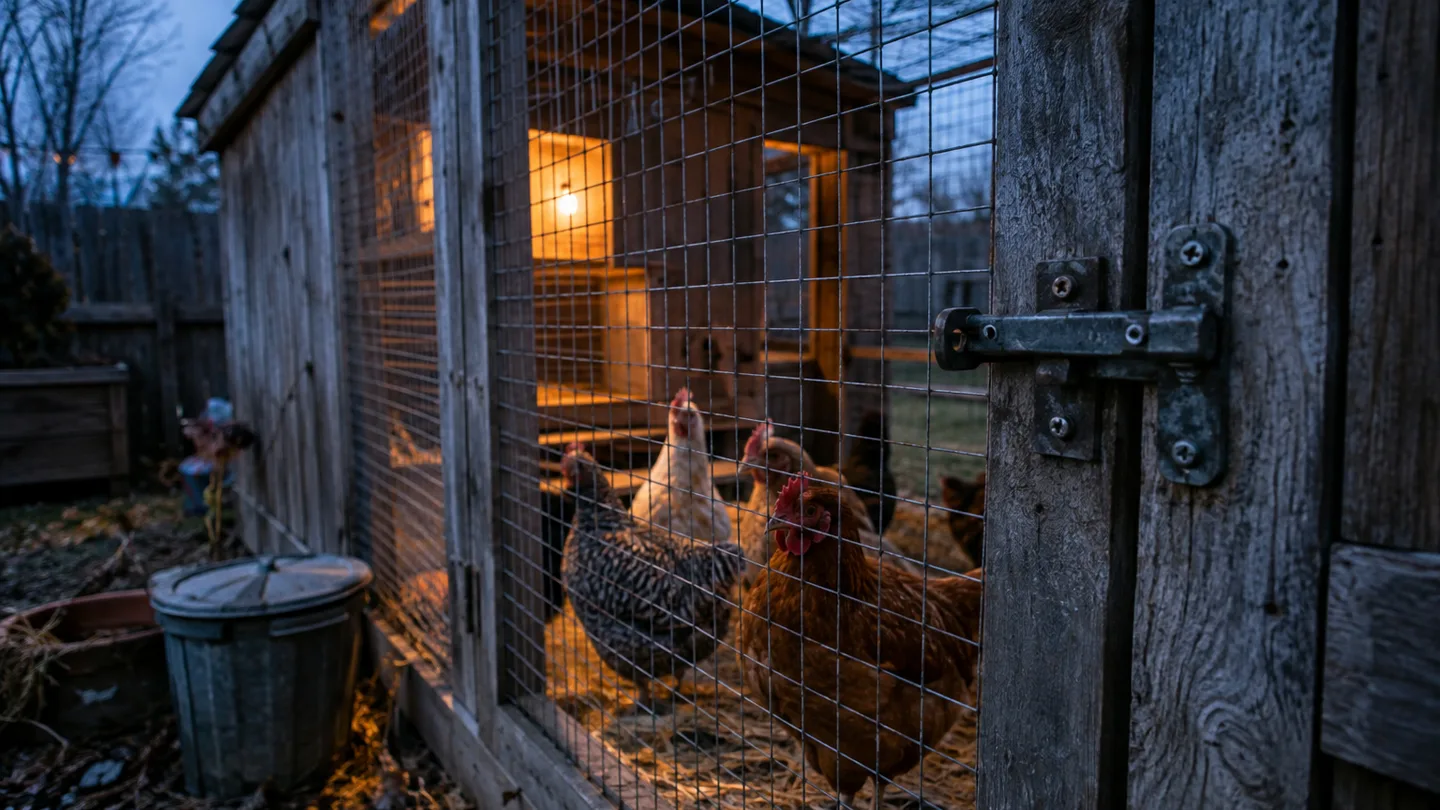
Yes—some weasels will kill and eat chickens, especially when they find an easy way in
Weasels are predators, and a chicken caught at close quarters can be prey. That doesn’t mean every missing bird or injured hen points to a weasel. Local species, the size of your birds, and the route into the coop all affect what’s possible.
Weasel bodies are long and slim. That shape can let one use an opening that would be too small for a bulkier animal, so don’t judge a gap by whether a raccoon could fit through it. Activity also varies by species and conditions. A daylight sighting—or the absence of one—doesn’t tell you whether your coop is safe at night.
My practical rule: treat a weasel as a reason to check the enclosure carefully, not as a diagnosis. If you’re weighing other likely visitors, the guide to do raccoons eat chickens helps you compare the different access problems without assuming every attack has the same cause.
Small openings and injury patterns are clues—not proof of a weasel
Look at the whole scene before settling on a culprit. A bird with an injury around the head or neck, a missing bird, or a small opening near the roost may raise the question. None identifies a weasel by itself. Other predators can injure birds, carry them away, or enter through a gap.
Start with the physical evidence you can check: Is there a loose mesh edge? Is soil disturbed under the run? Is a latch open, or is there a gap at the door track? Note where the birds were sleeping and whether you can account for the whole flock. A hole in the fence is useful information even if you never learn which animal used it.
Try not to force a tidy story onto uncertain signs. I’d inspect the structure before buying a deterrent or setting out to identify an animal. A repaired entry point helps whether the visitor was a weasel or something else.
Trace the route from ground level to the roofline before buying materials
Walk the outside perimeter slowly, then inspect the same route from inside. Start at soil level and check the run’s corners, joins, and any place the enclosure meets the coop. Move up to vents, wall seams, roof edges, and the tracks or frame around every door. A flashlight helps reveal daylight showing through a seam; a ruler or a 1/2-inch reference card gives you a consistent way to flag openings for repair.
Here’s the inspection order I’d use for a small backyard setup: ground and corners first, then wall-to-frame joins, vents, roofline, and doors. Mark each gap with tape or a note rather than trying to remember it later. Check whether mesh is actually attached to solid framing, not just folded over an edge.
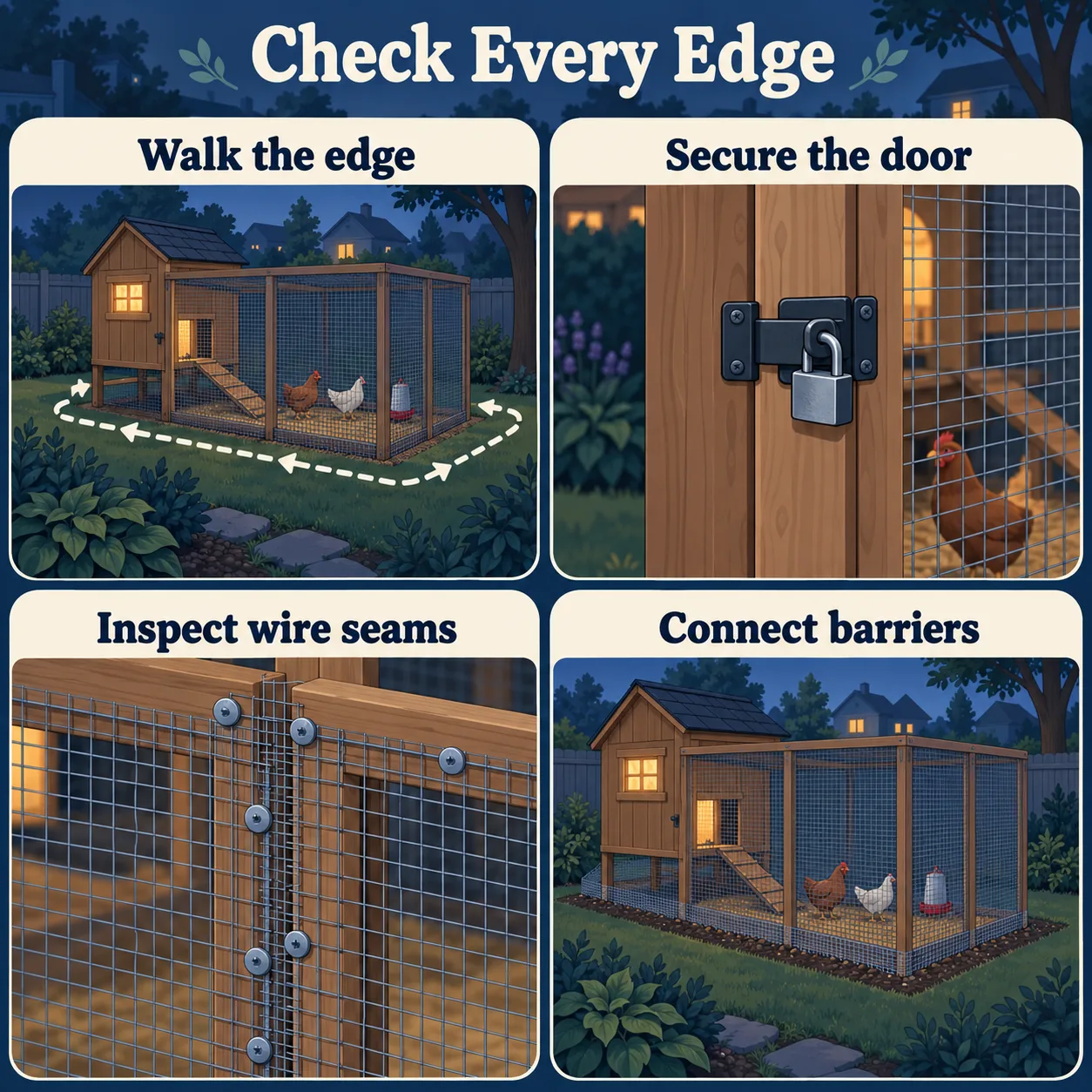
The card is a screening tool, not proof that a particular opening is safe for every local weasel. Species and individual animals vary, and a barrier can fail at its seam even when the mesh openings look small. For the same whole-structure approach, see Best predator proof chicken coop.
Worked example: Say your run measures 8 by 10 feet and you find a loose lower corner plus a narrow opening where a vent frame meets the wall. Mark both. The lower corner needs a secure ground-level join; the vent needs a framed mesh cover. Fixing only the corner leaves the vent route untouched. That’s why the audit comes before the shopping list.
Choose 1/2-inch hardware cloth for openings; chicken wire is a containment fence, not a predator barrier
For exposed openings, 1/2-inch hardware cloth is a commonly used protective baseline. Ordinary chicken wire is designed to contain birds, but its openings and lighter construction don’t make it equivalent to a firmly installed predator barrier. Check local cooperative extension guidance on predator-proof poultry housing for advice that fits the animals in your area.
Pay as much attention to the edges as to the mesh. Cut the cloth so it overlaps the framing, then fasten it into sound wood or another solid support. Cover sharp cut ends, close seams, and check corners for a gap created by an uneven frame. If you can pull the mesh away by hand, a determined animal may be able to work at that edge too.
Mesh alone can’t make a whole coop weasel-proof. A solid-looking panel won’t help if the adjacent vent, roof seam, or door track is open. My preference is to repair one continuous route from one sound surface to another, rather than add scattered patches that leave small unconnected gaps between them.
Before choosing a mesh size, consider the local predators and how the coop is built. Use a durable product suited to the exposure, and don’t treat a familiar measurement as a guarantee against every species or installation flaw.
Block digging with a 12–18-inch outward apron or a properly buried barrier
If an animal can reach the run from below, an outward-facing mesh apron can make digging at the wall harder. A commonly used planning range is 12–18 inches outward from the run. A buried barrier is another option, but soil type, slope, drainage, and the digging animals you’re dealing with affect which approach makes sense.
For a specific planning example, picture an 8-by-10-foot rectangular run. Its perimeter is 36 feet. Choosing an 18-inch apron means laying mesh 1.5 feet outward along that perimeter, for about 54 square feet before allowing for overlaps and corner details. I’d choose that depth for this example because it uses the deeper end of the common range; it’s a design choice, not a promise that no animal can dig under it.
Join the apron tightly to the run wall and secure it so the outer edge can’t be lifted easily. If you bury the barrier instead, make sure its connection to the wall is continuous. Soil movement or a slope can expose an edge over time, so inspect it after heavy weather and whenever you work on the run.
An apron addresses a route under the run. It does nothing for an uncovered vent, a loose door, or a gap along the roof. If you’re planning the ground barrier as a DIY project, Chicken predator protection diy is a useful next read.
Close pop-holes every night and make door edges meet the frame
A well-meshed run can still have a weak point at the pop-hole. Close it every night and check that the door meets the frame along its edges. Sliding doors deserve a close look at the track: a door can appear shut while leaving a space at the side or bottom.
Use the same 1/2-inch card as a quick way to find and mark suspicious gaps. It’s a basic inspection aid, not a species-proof test. Fix a poor fit with a suitable stop, guide, or frame repair rather than relying on the latch to pull a crooked door closed.
A reliable latch or automatic closer may make nightly closure easier, but neither replaces checking that the door closes fully. Build the lock-up into your evening routine: count the birds, shut the pop-hole, check the latch, and look at the door edge. After repairs, test the door by opening and closing it several times; watch for binding or a gap that changes as it moves.
Store feed in a sealed container and clear spills daily to limit rodent activity
Spilled feed and scraps can attract rodents. Since rodents are prey for weasels, reducing easy food around the coop may make the area less attractive to prey animals. That is a sensible housekeeping step, not a way to guarantee a weasel won’t visit.
Keep feed in a sealed, sturdy container and sweep up spills rather than leaving them overnight. Pick up scraps after feeding and keep storage lids closed. If you need rodent control, choose an approach that keeps chickens, pets, and non-target wildlife away from any bait or device; follow its label and local guidance. Don’t place a product where your birds can reach it.
Think of feed storage as one part of a layered plan. It won’t seal a vent or strengthen a door. For broader choices about the enclosure itself, chicken run predator protection can help you plan the next repair.
After a suspected attack, secure the flock first and get injured birds assessed
Move the birds to a secure enclosure you’ve checked, then count them. Don’t reopen the suspect run until you’ve found and repaired the likely access point or have another sound barrier in place. Check the coop and run for loose mesh, disturbed soil, an open latch, and damage along the roof or wall joins. Take a photograph or note the location before you repair it, so you can recheck the same spot later.
If a bird has a puncture wound, is bleeding, seems weak, or is behaving abnormally, contact a poultry veterinarian promptly. Small-looking wounds can still need professional assessment. Don’t improvise medication or a dose; follow veterinary advice and product labels. If you can’t reach a poultry vet, ask a general veterinarian who sees birds for guidance.
For questions about a wild animal or permitted next steps, consult your state or local wildlife agency. Rules for trapping or relocation vary by location, so don’t assume a method is legal or safe where you live. The agency can point you toward local requirements without turning a damaged coop into a wildlife-handling experiment.
Finish with a short repair list, then repeat the check weekly and after storms
Work in this order: cover open gaps with suitable mesh; fasten every mesh edge to solid framing; close the ground route with an apron or buried barrier where needed; then correct the door fit and closure. After each repair, inspect the join next to it. A patch can simply move the weak point a few inches along the frame.
Once a week, walk the perimeter and look for lifted edges, fresh digging, loose fasteners, and doors that no longer meet their frames. Repeat the check after storms, ground work, or changes to the coop. A settling run or a shifted latch can undo a previously sound fit.
This week, take a flashlight and a 1/2-inch reference card around your coop. Mark each opening, starting at ground level, and repair the route that leaves the clearest path into the birds’ space. Then put the next inspection on your calendar. A consistent check is more useful than buying another device before you know where the weak point is.
Common questions about weasels and backyard chickens
Do weasels eat chicken eggs as well as chickens?
They may take eggs when they can reach them. Check nest-box openings and the place you store eggs, not just the main run. A secure lid and sound mesh around openings help close off access.
Are weasels active in winter?
Don’t treat winter as a reliable break from predator-proofing. Activity depends on the local species and conditions, so keep using the same coop checks and nightly closure routine.
Can I trap or relocate a weasel from my property?
Rules vary by location. Check your state or local wildlife agency before trapping or relocating an animal, and ask about lawful, safe options for your area.
Frequently Asked Questions
Do weasels eat chicken eggs as well as chickens?
They may take eggs when accessible. Secure nest-box openings and egg-storage areas with the same attention to gaps and mesh as the rest of the coop.
Are weasels active in winter?
Weasels can remain active in cold weather; local species and conditions vary, so don’t treat winter as a reliable break from predator-proofing.
Can I trap or relocate a weasel from my property?
Rules and permitted methods vary by location. Check with your state or local wildlife agency before trapping or relocating wildlife.