Do Skunks Eat Chickens? What They Target—and How to Stop Them
If you find a fresh scrape beneath the run wire, it’s natural to ask whether a skunk is after your hens. Yes, skunks can eat chickens, but eggs, spilled feed, scraps, and chicks are easier food to reach than a healthy adult hen. Start by checking what the animal could get to, then make the coop and run harder to enter.
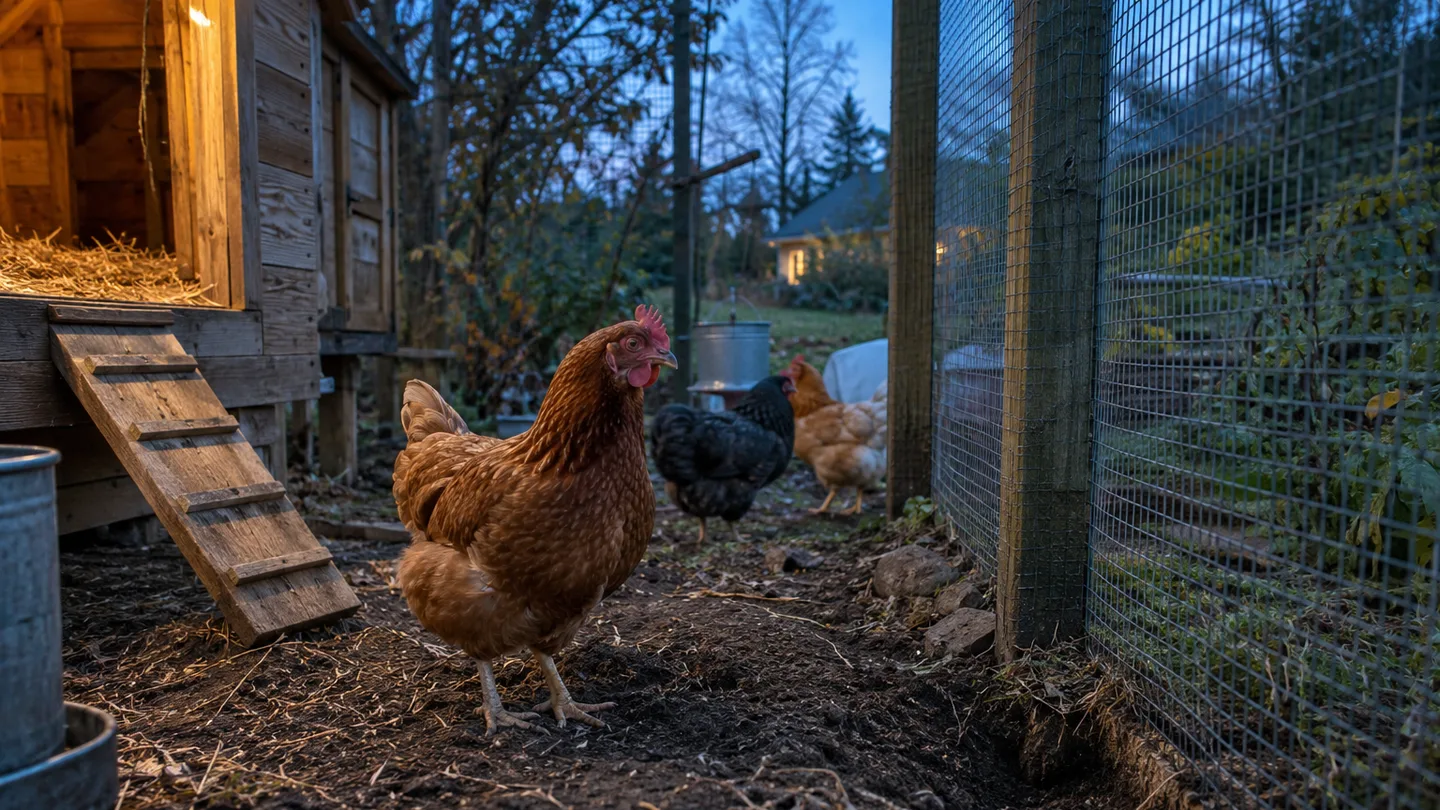
Yes, skunks can eat chickens—but eggs and chicks are easier targets
Skunks are opportunistic eaters. An accessible nest, a broody hen’s eggs, an unprotected feed bin, or a small chick may be a simpler target than a full-grown bird. That doesn’t make adult hens invulnerable. A bird that’s injured, trapped, roosting at ground level, or separated from the flock has less ability to get away.
For your flock, separate two questions: Did a skunk visit? And what was it trying to reach? A visit near the coop can be about feed, eggs, or insects at the run edge. Finding a skunk’s tracks alone doesn’t tell you that it attacked a hen. Look for evidence that connects the animal to a specific opening or food source before deciding what to fix.
My first check would be the lowest, easiest reward: spilled grain, an egg left in a nest, or a gap that lets an animal reach the nest area. That’s a more useful starting point than assuming every nighttime visit is a hunt for adult birds. If you’re comparing clues from other visitors, the guide to do raccoons eat chickens can help you think through a different set of possible signs.
Tracks, eggshells, and entry points: check the evidence first
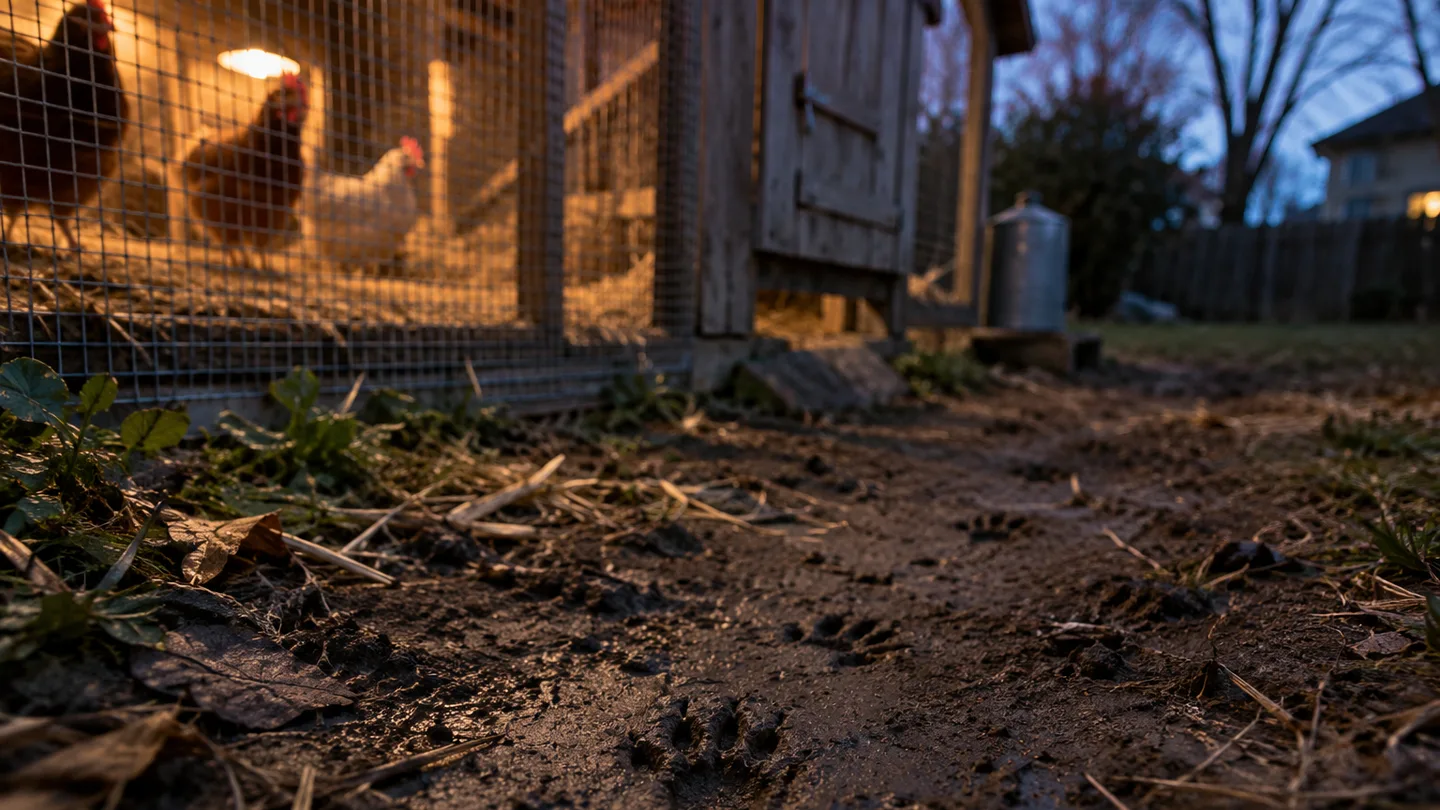
Skunk tracks can show five toes, and a skunk may dig at ground level while searching or trying to get under an enclosure. Treat those as clues, not a verdict. The footing, mud, and overlap from other animals can make a track hard to read. Egg damage and the location of a gap help give the print context.
Use this table to decide what to check next. It’s a field guide to possibilities, not a way to identify an animal from a single mark.
| Clue | What it may suggest | What to inspect next |
|---|---|---|
| Small, five-toed prints near the run edge | A skunk is one possibility | Look for fresh digging and a nearby opening |
| Eggs missing or disturbed at a low nest | An animal may have reached eggs | Check nest-box access and the coop’s lower seams |
| Damage around a latch or a higher opening | Consider a climber or an animal that can work a fastening | Check the latch, door frame, and roofline |
| A broad scrape or disturbed soil along a fence | Several digging animals could leave this kind of sign | Check both sides of the fence and nearby tracks |
Here’s a worked example, meant to show how to reason from clues rather than report a particular keeper’s incident. Suppose you find one fresh scrape under the run’s lower edge, a shallow path through spilled feed, and no damage around the door latch. First clear away the grain, then check whether the scrape meets a gap in the wire. If the tracks are unclear, take a photo and look again after rain or use a trail camera aimed at the run edge. The useful conclusion isn’t “a skunk definitely did it.” It’s “the ground-level seam and spilled feed are the first two things to address.”
When the evidence is ambiguous, don’t keep guessing from memory. Photograph fresh tracks beside an object for scale, note where the scrape begins and ends, and check a camera if you already use one. A camera can help identify what visits; the barrier still has to stop whatever comes.
Before dusk, remove the easy rewards: eggs, feed, and scraps
Make the evening routine short enough that you’ll keep doing it:
- Collect eggs. Check the nest boxes during the day and again before closing the coop if hens are still laying. Don’t leave a cracked egg or shell where a visitor can reach it.
- Put feed away. Store feed in a sturdy, lidded metal container, and close the lid each time. Choose a size that fits your flock’s use and the space you have; storage costs and useful capacity vary, so check current local prices rather than relying on a universal shopping figure.
- Sweep up spilled grain. Pay attention to the spot where you fill feeders. A few spilled handfuls are easy to overlook, but they leave an accessible food source at ground level.
- Remove kitchen scraps. Keep scraps out of the run overnight unless they’re inside a container that wildlife can’t open.
- Close and latch the coop. Check that the door meets its frame and that the latch is fully engaged before nightfall.
This routine doesn’t depend on proving which animal visited. Removing food and closing openings makes the run less inviting and reduces what a visitor can reach. If you’re planning a bigger upgrade, Best predator proof chicken coop is a useful next read for comparing the whole structure rather than one weak seam.
One practical trade-off: keeping a large feed bin beside the run may save steps, but it also puts a food source closer to the birds’ enclosure. If the bin has to stay nearby, close it tightly and clean up around it. Don’t buy a bigger container until you’ve checked how much feed your flock actually uses and where you can store it securely.
Stop digging at the coop base with 1/2-inch mesh and a 12-inch apron
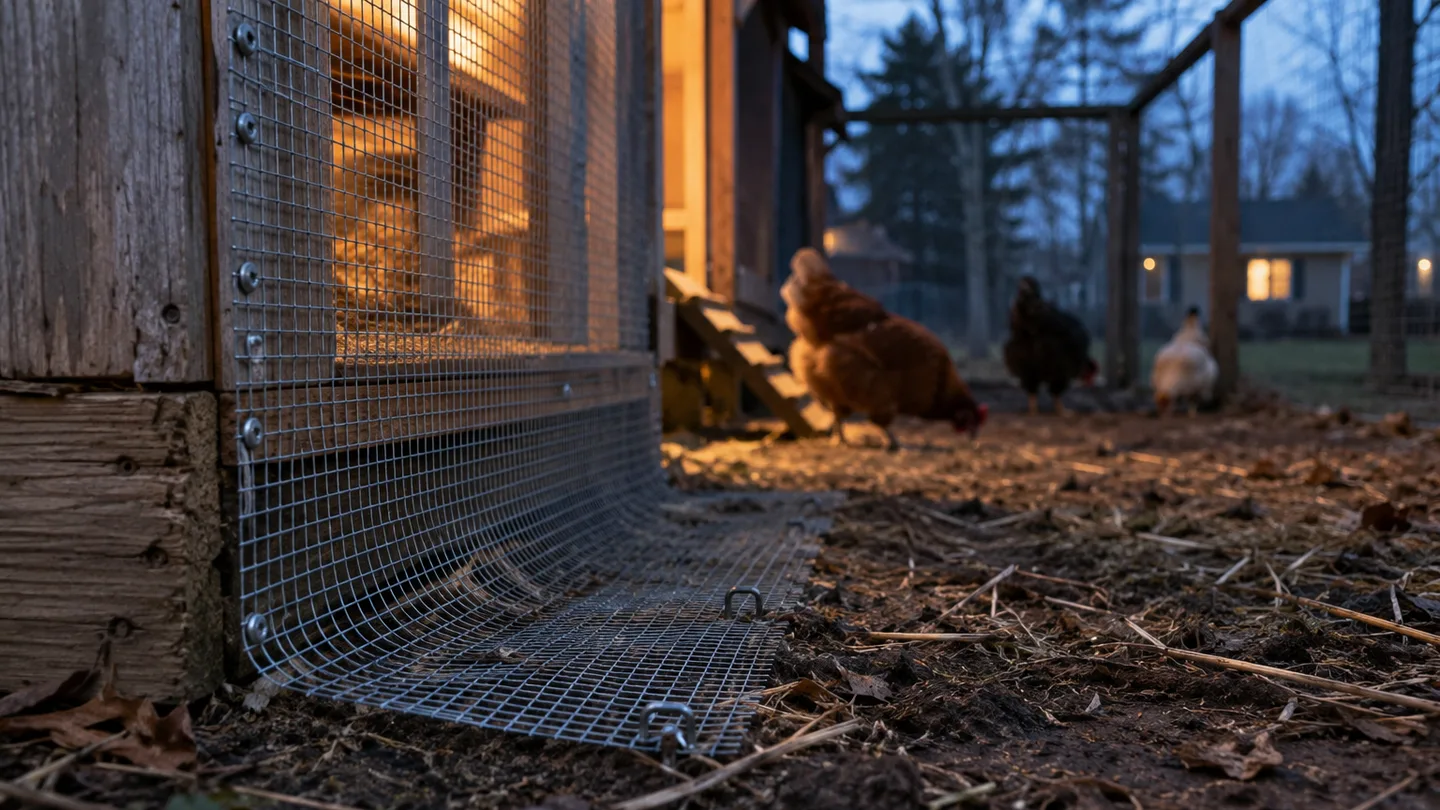
For a ground-level weak spot, a sensible DIY starting plan is sturdy 1/2-inch hardware cloth over openings and a roughly 12-inch outward apron along the run perimeter. Secure the mesh to sound framing. The small openings make it harder for an animal to reach through, while the outward apron puts a barrier in the way of an animal digging straight down at the fence line. Those dimensions are practical recommendations, not a promise that one layout suits every soil, run, or predator.
Think of the barrier in parts. Cover holes in the coop or run wall. Attach mesh firmly where it meets the frame. At ground level, an apron can lie flat outward from the run or be buried, depending on the site and how you build it. A buried barrier and a surface apron address digging in different ways; either needs a secure connection to the enclosure so an animal can’t simply work beneath a loose edge.
Spend time at corners, gates, and the coop floor. Those joints are easy to miss when you’re adding mesh to a long straight wall. Look for a gap where the mesh ends short of a post, a gate that leaves daylight at the bottom, or a floor edge that has no barrier at all. Fix the opening that exists on your run, rather than adding mesh only where it’s easiest to reach.
Mesh isn’t the whole security plan. A run with an open top still leaves access from above, and a well-covered run can still be compromised by a door that doesn’t latch. For the full perimeter checklist, chicken run predator protection covers the broader job. My preference is to fix the most obvious entry point first, then walk the whole boundary again; patching one corner can make the next weak seam easier to miss.
If a skunk is in the run, give it a clear way out
Keep people and pets back. Don’t corner, handle, or try to chase the animal into a tighter space. If you can open a route away from the house without approaching it or putting yourself in its path, do so from a safe position. If the skunk is trapped inside the coop, cannot leave, or appears disoriented or unusually unresponsive, contact your local wildlife agency or a licensed wildlife professional for advice.
Once the animal has left, secure your flock and check the run for an opening before leaving birds there overnight. If a hen is injured, or you notice persistent eye or breathing problems after an encounter, call a veterinarian. Avoid applying a home remedy or medication without veterinary guidance.
For local rules and safe response advice, consult your state or provincial wildlife agency’s skunk guidance. Trapping and relocation can carry risks for people, pets, and the animal, and local requirements may apply. Ask the relevant agency or a licensed professional before attempting either.
A five-minute weekly perimeter check can catch a new gap
Once a week, walk the run and check four places: the mesh-to-ground seam, the apron edges, the gate latch, and any fresh digging. Repeat the walk after a storm, a repair, or work that disturbs the soil beside the enclosure. Feel along the joined edges for looseness; a section that looks intact from standing height can still lift at a corner.
If you find an opening or a lifted apron, patch it before leaving your birds outside overnight. A small repair is easier to assess while you can see exactly where the barrier has failed. Keep a phone photo of the repaired spot so you can compare it on the next walk.
Your next step this week: collect the eggs before dusk, clear spilled feed, then inspect the run’s lowest corner and gate. If you find a gap, close it before tonight’s lock-up. Keep the photo-and-check routine going with the practical guide to chicken run predator protection.
Do skunks carry rabies?
Don’t approach or handle a wild skunk. If a person or pet is bitten or has a possible exposure, contact local animal control or public-health officials promptly for location-specific advice. For local guidance, check your animal-control or public-health advice on wildlife exposure.
Can skunk spray harm chickens?
If your bird has persistent eye irritation or breathing changes after an encounter, move it to fresh air if you can do that safely and contact a veterinarian. Don’t put products near the bird’s eyes or airways unless a vet directs you to.
Can you trap and relocate a skunk?
Check local wildlife rules and ask the relevant agency or a licensed wildlife professional before trapping or relocation. A trapped animal is harder to avoid, and handling it can put you or a pet close to a defensive skunk.
Frequently Asked Questions
Do skunks carry rabies?
Skunks can carry rabies, though an encounter does not mean an animal is infected. Avoid contact and call local animal control or public health officials if a skunk behaves abnormally or bites a person or pet.
Can skunk spray harm chickens?
Spray can irritate eyes and airways. Move birds to fresh air if safe, avoid getting spray in their eyes, and contact a veterinarian if they have persistent eye or breathing symptoms.
Can you trap and relocate a skunk?
Rules differ by location, and trapping can expose people or pets to bites and spray. Check local wildlife regulations and ask the relevant agency or a licensed wildlife professional before attempting it.