Breeding Backyard Chickens: Rooster Ratios, Timing and Care
Six hens and one rooster is a workable breeding group on paper. In a tight run, though, the same seven birds can become a hen-protection problem: bare backs, a bullied feeder, and eggs whose father you can’t identify. Breeding backyard chickens works best when you choose the male, space, and 21-day calendar before you set a single egg.
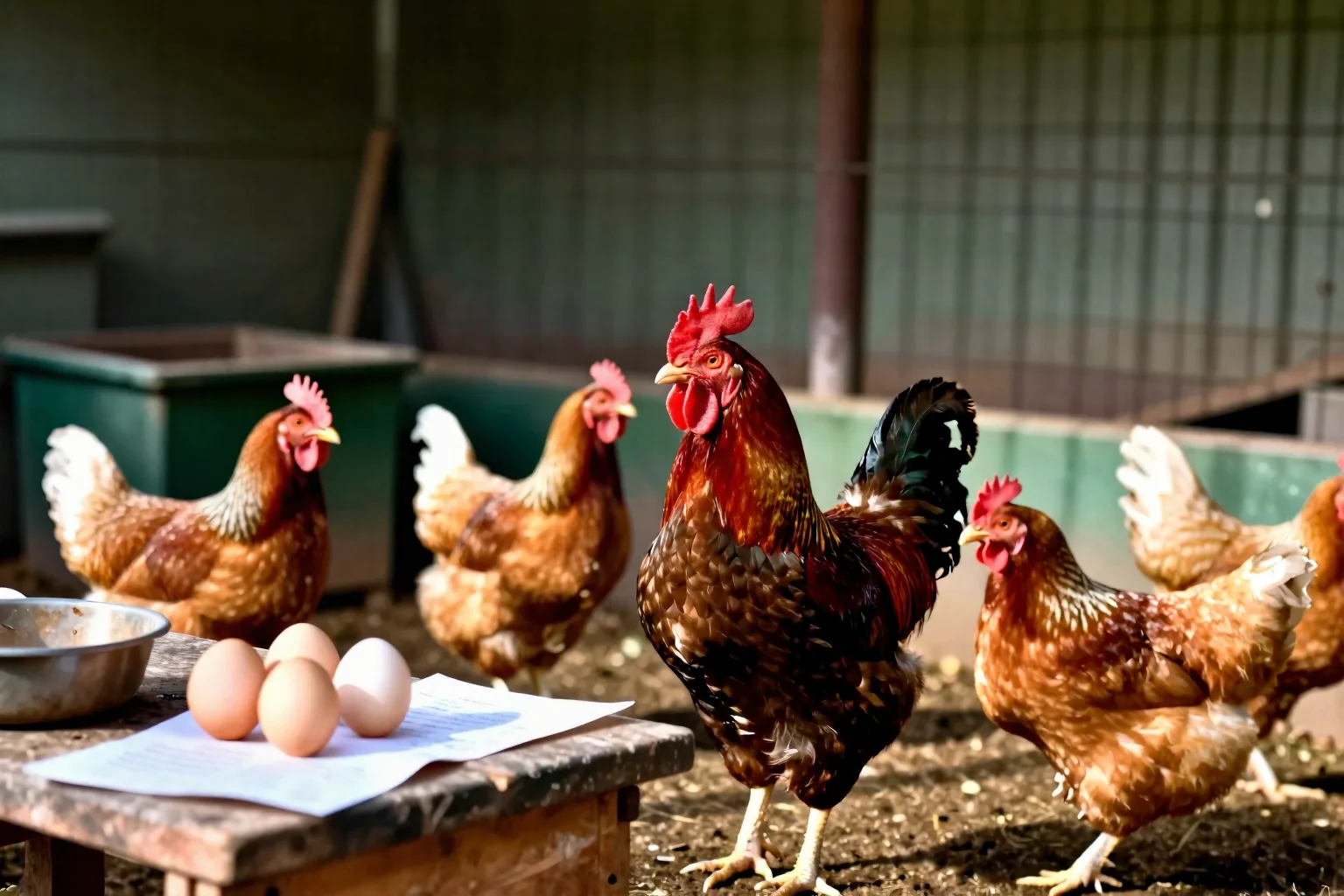
You don’t need a rooster for breakfast eggs. You need one only if you want your hens to produce chicks, or you plan to buy fertile eggs from someone else. That distinction saves many small-flock keepers from taking on a noisy, strong-willed bird they never actually needed.
The first decision: breed your own chicks or buy fertile eggs?
Your first choice is not which colour of rooster to buy. It’s whether you want a permanent male at all.
A permanent rooster gives you the simplest route to known parentage. He lives with the hens, mates naturally, and can fertilize eggs for your own incubator or a broody hen. The trade-off is daily management. You’ll need enough room for the full group, a plan for extra cockerels, and a response if his temperament turns rough. Noise may also settle the question before biology does, so check your local municipal rules for keeping roosters before bringing one home.
A temporary breeding pen is a useful middle path. You can place one selected rooster with a selected group of hens, collect eggs for the hatch, then return the hens to the main flock or move the male on. This takes more fencing and record-keeping, but it gives you cleaner parentage without feeding and housing a rooster year-round.
Purchased fertile eggs are usually the cleanest option for three to five hens. You avoid rooster noise and overmating, but you give up direct control over the parents and must accept the seller’s description of the cross or breed. For six to ten hens, one calm, healthy rooster is a reasonable starting route if local rules and space allow it. For eleven or twelve, one male may still be enough; adding a second should solve a specific problem, not satisfy a vague feeling that more males means more fertility.
Decision point: choose a permanent rooster only if you can house and monitor him after the hatch. Otherwise, arrange fertile eggs or a temporary mating group.
Use the rooster-to-hen ratio as a welfare limit
A practical starting range is about one rooster for six to ten hens. Treat that as a management range, not a biological law. A gentle, lighter rooster with plenty of space may do well at the lower end. A heavy, active, or persistent male may need more hens, more room, or removal from the group.
One rooster with only three to five hens can overmate them, especially if the birds cannot get out of his line of sight. Watch the hens rather than defending the ratio. Bare feathers, repeated chasing, weight loss, and a hen that stops reaching food are the signs that your actual group is too tight.
A heavy-breed cockerel can weigh roughly twice as much as a light Mediterranean male, depending on breed and condition. That difference changes the physical cost of each mating and the damage a poorly matched pair can cause. Breed size is not the whole decision, but it belongs near the top of your list.
For space planning, use roughly four square feet of indoor floor area and eight to ten square feet of run area per adult bird as a starting floor. More is sensible in wet climates, muddy seasons, or setups where birds stay confined for days.
| Breeding group | Adults | Indoor starting floor | Run starting floor |
|---|---|---|---|
| One rooster and six hens | 7 | About 28 square feet | About 56 to 70 square feet |
| One rooster and nine hens | 10 | About 40 square feet | About 80 to 100 square feet |
Those figures are a floor for planning, not a promise of comfortable behaviour. Extra room creates escape routes, separate feeding spots, and dry ground. A second rooster usually adds competition, fighting risk, and uncertain parentage before it fixes overmating. If hens are being injured, increase usable space or separate the male first.
Pick breeding birds by health and purpose, not colour alone
Choose breeding birds as if you’ll have to live with their temperament in every chick. Look for sound legs and feet, a straight and usable beak, normal breathing, clean skin and vent, steady body condition, and no recurring illness. A rooster’s feet and spurs deserve the same attention as his plumage.
Many standard breeds become reproductively mature around five to seven months, while large or slow-maturing breeds may need longer. Use that as a planning window. A bird that is technically old enough but still thin, unsteady, or stressed is not ready for a breeding job.
Write down the purpose before you select parents. Replacement layers, preserving a breed type, improving temperament, and producing a useful cross are different projects. For replacement layers, egg production and calm behaviour may matter most. For a cross, you may accept mixed feather colour while selecting for size, hardiness, or a quiet disposition.
Plumage is easy to judge and easy to overvalue. A beautiful bird can still pass along poor feet, a nervous temperament, weak body condition, or a tendency toward chronic illness. Keep simple records of parentage and later chick traits. Some useful traits cannot be judged until the young birds have grown.
Build a mating pen that lets you see what is happening
A separate pen earns its keep when you need known parentage, want to prevent another rooster from fertilizing the eggs, or need to protect one hen from a male who keeps targeting her. It also turns a vague flock problem into something you can observe.
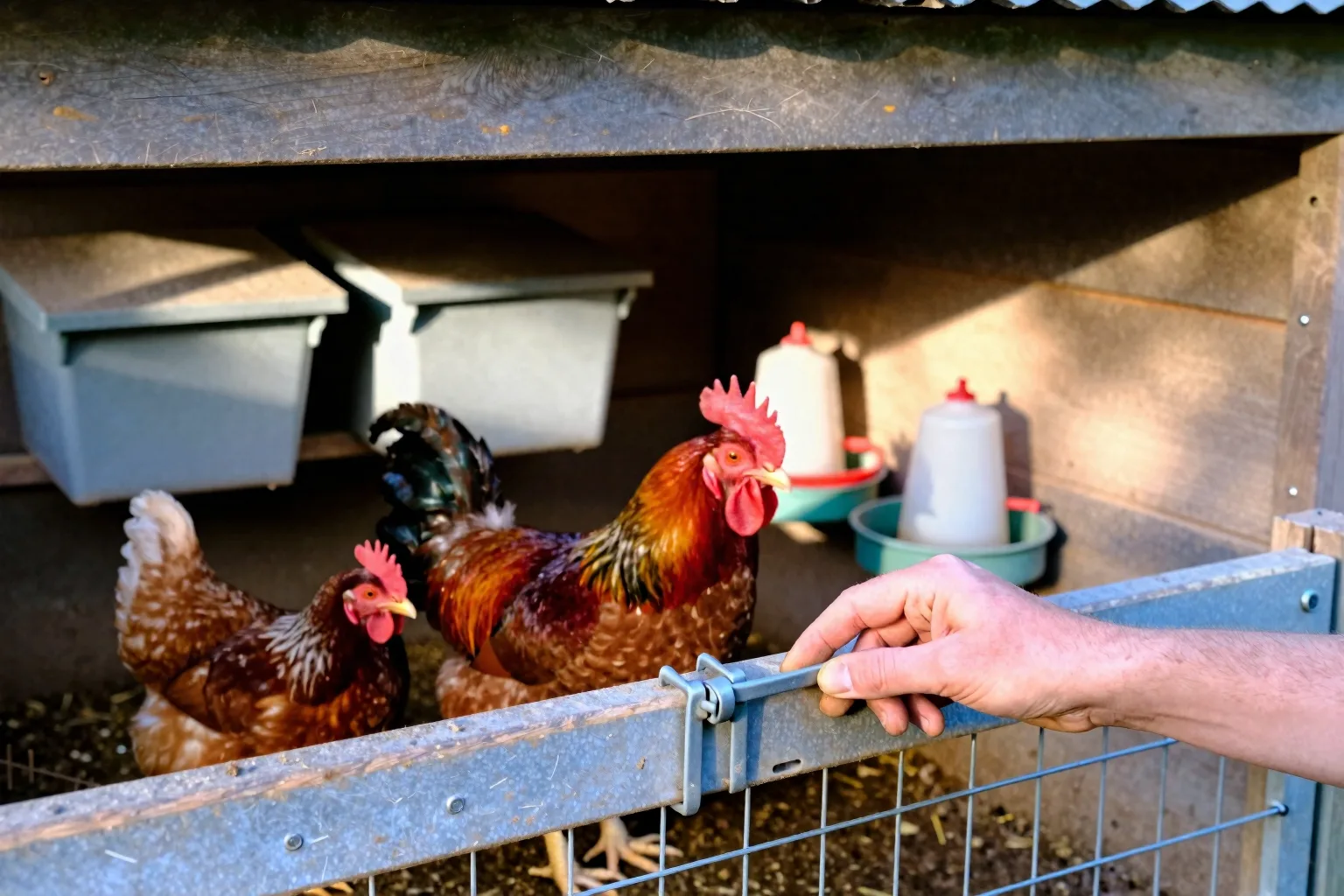
Make the pen dry, secure, and predator-resistant. Give the birds shade, a stable perch, nest space, and enough room for a hen to move away rather than being trapped against a wall. Two feeding points and two water points are a sensible small-pen baseline. Put them apart so one bird cannot guard both.
For the first week, spend ten quiet minutes at the run gate. Check whether every hen can eat, drink, rest, and perch. Look for mating spread across the group rather than one hen being pursued repeatedly. A hen parked in a nest box for hours can be hiding, not laying; I’d read that as a prompt to inspect her for broodiness, illness, or rooster pressure rather than as a diagnosis.
I’d also read a rooster running the fence line as a sign that pressure is constant, not as a harmless quirk. Check for a dog, a neighbouring flock, a predator, or a barrier that keeps him from reaching the hens. A free-ranging flock can produce fertile eggs, but the father of each chick may be unknown. That is fine for a casual hatch and a poor fit for a deliberate breeding record.
Run the 21-day clock: pairing, fertile eggs, storage and hatch
Start with the father question, then build the calendar backwards from the hatch. If you change roosters, wait about three weeks before treating the eggs as reliably fathered by the new male. Hens can carry sperm from an earlier mating for a period after the male is removed, so collecting immediately after a change can mix parentage.
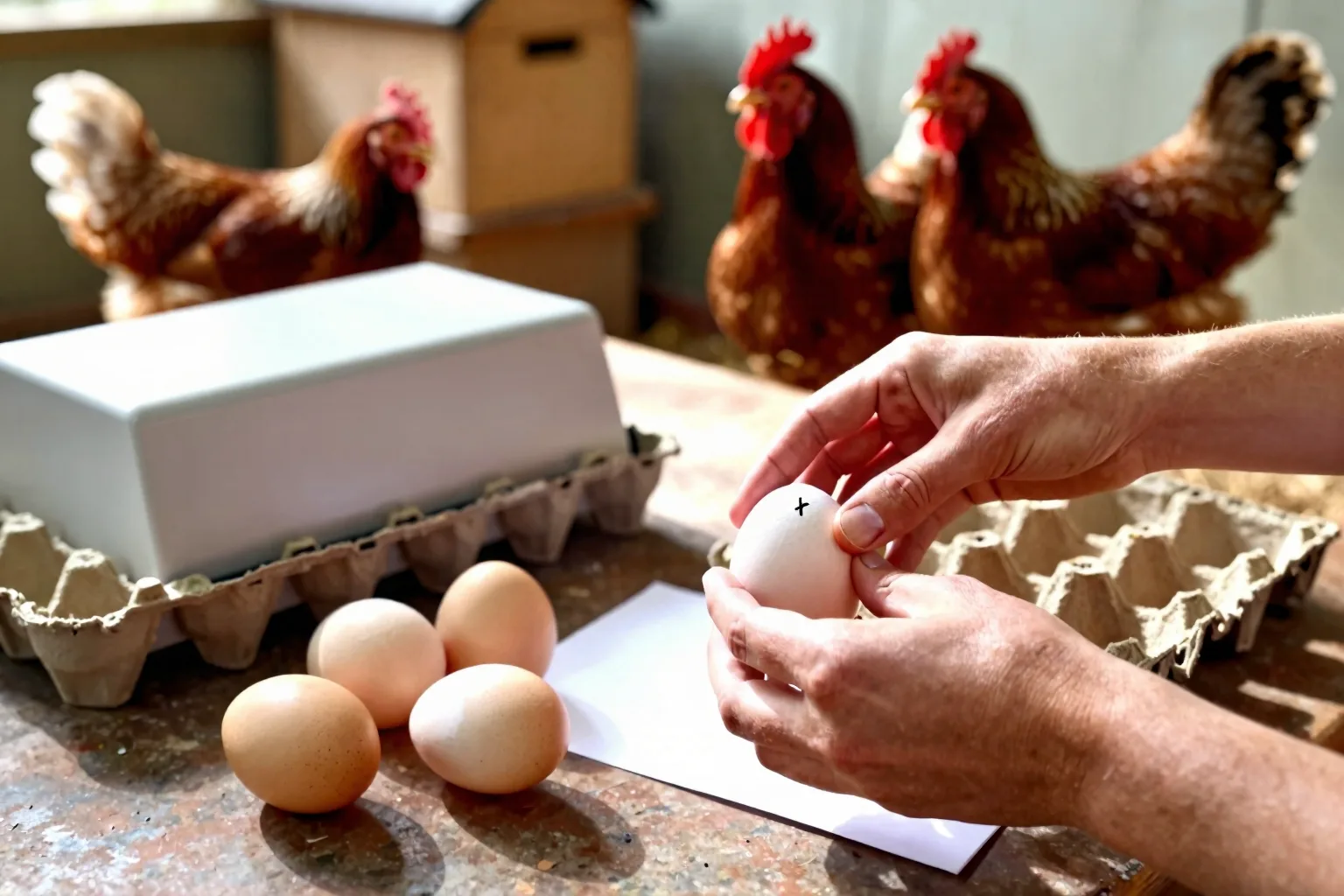
Collect hatching eggs daily. Set aside cracked eggs and eggs with heavy contamination. Don’t wash the eggs you intend to hatch, because scrubbing removes part of the shell’s natural protective surface. Store them pointed end down in a cool, stable room, not in the household refrigerator, and aim to set them within about seven days. Keep a pencil label on the large end with the hen group and collection date.
- Set day 0: place the clean, labelled eggs in a stable incubator or under a prepared broody hen. Keep your settings consistent rather than opening the incubator repeatedly to chase a single reading.
- About day 7: candle in a dark room. A developing network of vessels and a growing dark shape show that an embryo has started. A clear egg may be infertile or may have stopped very early.
- About day 14: candle again if you need to remove clear or failed eggs. A blood ring or detached early embryo is a different result from an egg that developed well and died late.
- About day 18: move into lockdown according to your incubator’s instructions. Avoid unnecessary turning and opening during the final stage.
- About day 21: expect the main hatch window, with a day or two of variation in either direction. Leave a slow, apparently healthy chick time to finish before deciding the hatch has failed.
Fertility and hatch success are not the same measurement. A fertile egg contains an embryo that begins development. Hatch success also depends on storage, temperature, humidity, turning, shell condition, and the chick’s final position. For the machine-specific details, keep Chicken egg incubation temperature and humidity by day beside the incubator. You can also compare your method with extension guidance on hatching-egg storage and incubation.
Feed the breeders for body condition, not maximum production
Plan on roughly 100 to 120 grams of complete feed per adult chicken per day as a starting estimate. Over 30 days, that is about 3 to 3.6 kilograms per bird before waste. Breed size, pasture, heat, cold, molt, treats, and feeder design can move the real figure.
If hens and a rooster share one feeder, an all-flock ration with free-choice oyster shell is often the cleaner arrangement. The hens can choose extra calcium, while the rooster is not forced to eat a layer ration designed around an actively laying bird. Use the feed label as the final authority, especially if your birds are growing, moulting, or not laying.
Give constant access to clean water. Add insoluble grit when birds eat grass, whole grains, or other materials that need grinding; complete feed alone does not create the same grit requirement. Keep treats modest, and discard feed that is mouldy, damp, or rancid. Excess body fat, severe molt, heat stress, and poor nutrition can all reduce laying or mating performance.
Chicks need a separate age-appropriate starter after hatch. Work out that brooder, heat source, bedding, drinker, and chick-safe feeder before setting eggs. The running flock budget is easier to rebuild with How much feed do laying hens eat per month than with a single bag estimate.
Weekly care that catches overmating before it becomes an injury
The quickest useful inspection is hands-on. Lift each hen and check the back, neck, vent, legs, feet, and breastbone. Look at the rooster’s feet and spurs as well. You’re looking for a change from last week, not a perfect feather pattern.
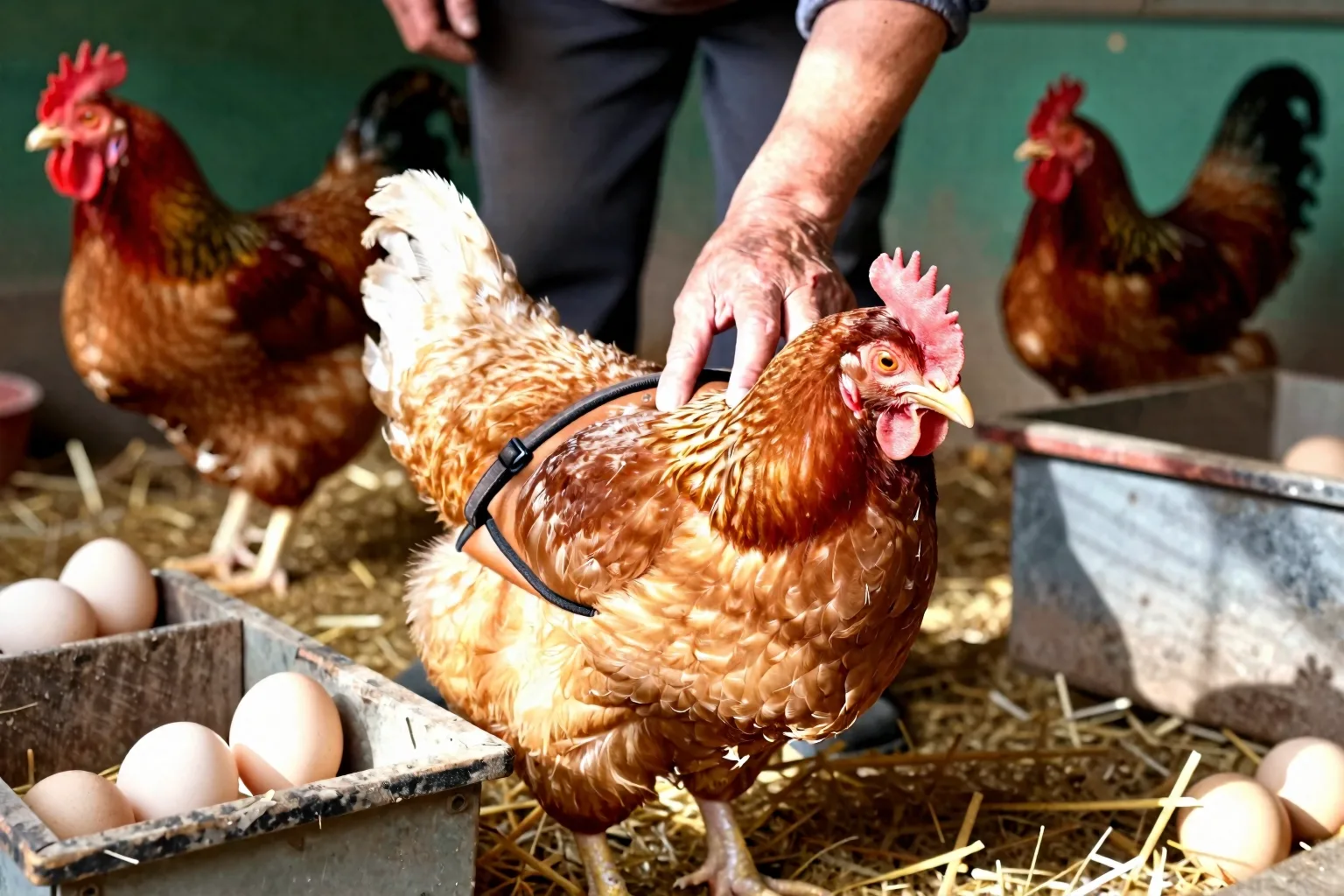
Separate the rooster promptly if a hen has bare skin with fresh scratches, bleeding, deep wounds, persistent weight loss, limping, or no safe way to escape him. A hen that stays hidden, refuses the feeder, or avoids the perch deserves inspection even if her feathers look intact. The ratio is a starting tool; the condition of the least confident hen is the deciding evidence.
A properly fitted hen saddle can protect feathers and skin for a while. It cannot correct an excessive ratio, a rough rooster, poor space, or a mating pattern focused on one bird. Check the fit and the skin underneath. I’d check under them weekly, since a warm damp patch under fabric is exactly where mites settle in.
In hot weather, shade and additional clean water matter more than keeping the breeding pen crowded. In cold weather, keep bedding dry and ventilation above the birds’ heads while blocking direct drafts. The practical winter details are covered in Winter chicken coop care without supplemental heat.
If you find mites or lice, use a poultry-labeled treatment according to its current label and local veterinary guidance. Don’t improvise a dose from a product meant for another species. Deep wounds, spreading infection, breathing difficulty, severe weakness, or ongoing unexplained weight loss are the point where a poultry veterinarian or local extension office should guide the next step.
Keep parentage and health records so the next hatch improves
Your record can be a notebook page. Give each hen and rooster an ID. Add breed or cross, hatch date if known, mating group, egg-set date, candling result, hatch date, chick count, and later notes on growth, health, egg traits, and temperament.
Separate fertility from hatch rate. If ten eggs are set, eight show development, and six chicks hatch, fertility is eight divided by ten, or 80 percent. Hatch rate among fertile eggs is six divided by eight, or 75 percent. Overall hatch from the original set is six divided by ten, or 60 percent. Those numbers point to different next checks. A low development count directs you toward parentage, rooster condition, or egg handling. Good development with poor hatch directs you toward incubation or late-stage problems.
Repeated sibling or parent-offspring mating can concentrate unwanted inherited traits as well as wanted ones. In a small flock, don’t keep breeding the prettiest related birds simply because they are available. After repeated close matings, an unrelated, healthy replacement bird may give you more useful genetic room than another generation of closely related chicks.
Quarantine new birds for a conservative 30 days with separate equipment and careful observation before introduction. That period does not prove a bird is disease-free. It gives you time to notice changes in droppings, breathing, appetite, weight, skin, and behaviour before the newcomer shares feed, water, and housing.
A workable first-season plan for a flock of 3 to 12 hens
For six to ten hens, the workable first season is one calm, healthy rooster, enough room for seven to eleven adults, and a breeding pen you can inspect every day. After pairing, allow about three weeks for cleaner parentage. Then collect and label a first set of roughly six to twelve eggs. That is a manageable starting batch for many backyard brooder setups, though hatch numbers will vary.
For three to five hens, I’d usually choose purchased fertile eggs or a temporary breeding arrangement instead of a permanent rooster. The exception is a keeper with extra space, a quiet male, and time to inspect every hen often. If the male is injuring one bird, the plan has already failed its welfare test, even if the eggs are fertile.
- Check local rules, neighbour-sensitive noise limits, and where a rooster could be housed.
- Measure usable coop and run floor, not the outside dimensions of a catalogue.
- Select parents for health, body condition, temperament, and your stated breeding purpose.
- Arrange the brooder before setting eggs. Use How to set up a chicken brooder for the first six weeks as your preparation checklist.
- Pair the birds, observe the first week, and separate the male if a hen cannot eat, rest, or escape.
- Collect, label, store, and set eggs. Candle around days 7 and 14, then record the hatch.
Stop if parentage is unclear and your goal requires known lines. Stop if a hen is losing condition or carrying injuries. Stop if the rooster is persistently aggressive toward people. A hatch is not a success if the adults supplying it are being managed unsafely.
Can you tell whether a chicken egg is fertile before incubating it?
There is no dependable external sign on an intact egg. Candling after roughly five to seven days of incubation is the useful non-destructive check. Cracking an egg can reveal a germinal disc, but that egg can no longer be hatched, and the disc alone is not a reason to set every table egg you open.
Can chickens from two different breeds be bred together?
Yes. The chicks will be crossbred. Their colour, size, egg traits, temperament, and later fertility may vary rather than reproduce a fixed breed type. Keep parentage records if you want to repeat the cross or judge whether it actually improved your flock.
What should you do if a rooster becomes aggressive toward people?
Protect children and visitors with a secure barrier, and separate the rooster without chasing or provoking him. If human-directed aggression persists, rehoming or replacing him is often safer than trying to manage it indefinitely. A rooster that behaves well with hens but repeatedly challenges people is still a poor fit for a small household flock.
Your next action this week: count your hens, measure the usable coop and run, check the rooster rules where you live, and choose one route: permanent rooster, temporary breeding pen, or purchased fertile eggs. If you choose hatching, prepare the brooder before you set anything.
Frequently Asked Questions
Can you tell whether a chicken egg is fertile before incubating it?
There is no dependable external sign. Explain that candling after about 5 to 7 days of incubation is the useful non-destructive check, while cracking an egg can show a germinal disc but makes it unusable for hatching.
Can chickens from two different breeds be bred together?
Yes. The chicks will be crossbred, and their colour, size, egg traits, temperament, and fertility may vary rather than breeding true. Keep clear parentage records if you want to repeat or evaluate the cross.
What should you do if a rooster becomes aggressive toward people?
Protect children and visitors, use a secure barrier, and separate the rooster without chasing or provoking him. If human-directed aggression persists, explain that rehoming or replacing him is often safer than trying to manage it indefinitely.